Comp proceedings not binding in worker’s bad-faith action against insurer


The Colorado Court of Appeals ruled that findings of fact and conclusions of law in a workers compensation proceeding concerning issues other than compensability and benefits are not binding on an insurance company in the injured worker’s subsequent bad-faith claim against the insurer.

Aaron Madalena was an installer for SunTalk Solar. He reported a back injury to his employer in October 2015. SunTalk reported the injury to its workers compensation insurer, Zurich American Insurance Co., which denied the claim following its investigation, according to Madalena v. Zurich American Insurance Co., filed Thursday.

An administrative law judge later found the injury compensable and an Industrial Claim Appeals Office panel affirmed, after which Zurich accepted Mr. Madalena’s claim.

After Zurich terminated his benefits, Mr. Madalena applied for a hearing, which resulted in a ruling that he was entitled to permanent total disability payments. Zurich did not appeal.

Mr. Madalena then sued Zurich in district court for acting in bad faith by unreasonably denying him workers comp benefits and delaying payment. The first bad-faith case resulted in a mistrial, but the second trial resulted in a verdict for Zurich, ruling the insurer’s actions did not cause damages. 

The Colorado Court of Appeals said the trial judge did not err, ruling that “the legal issue underlying the bad-faith insurance case — whether the Zurich defendants had breached their duty to deal with Madalena in good faith — was distinct from the legal issue underlying the workers compensation proceedings — whether Madalena’s injury was compensable.”

WorkCompCentral is a sister publication of Business Insurance. More stories here.


Source link

Dollar General fined more than $245K for exposing workers to fire hazards


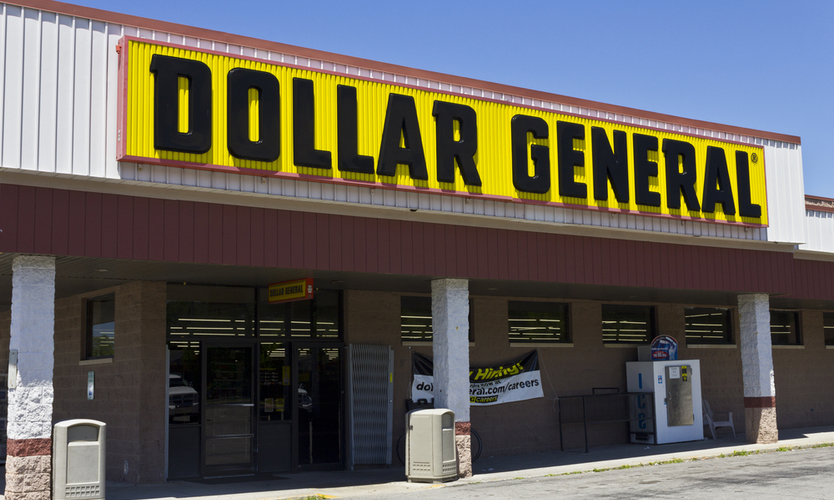
The U.S. Occupational Safety and Health Administration has cited Dollar General Corp. for exposing workers to fire hazards at one if its Pennsylvania locations, with the proposed fines of $245,544 adding to the millions in financial penalties against the company since 2017.

OSHA on Friday announced it issued a citation for one willful violation and one repeat violation after inspectors were tipped off to various safety hazards at the Jersey Shore, Pennsylvania, Dollar General store in November 2022.

Inspectors visited the location and found employees exposed to fire hazards related to blocked exit routes and electrical panels, according to OSHA.

OSHA said the fines against the Pennsylvania store add to the growing number of citations and penalties against Dollar General nationwide stemming from more than 180 investigations.

The retailer has been fined a total of $15 million since 2017.

The company has 15 days to contest the latest citation.

Dollar General Corp. is based in Goodlettsville, Tennessee, and operates about 18,000 stores and 17 distribution centers in 47 states.  


Source link

Ohio food processor cited in worker’s leg amputation


An Ohio food processing company has been fined $1.9 million and cited for 11 willful, four serious, one repeat and one other-than-serious violations after the U.S. Occupational Safety and Health Administration said its workplace safety failures led to an employee’s leg amputation.

OSHA on Thursday announced citations against Cincinnati-based Zwanenberg Food Group USA Inc., a subsidiary of Holland-based Zwanenberg Food Group BV, after inspectors said the employer failed to train sanitation workers on equipment lockout procedures before cleaning machines.

The case followed an Oct. 12, 2022, incident in which a temporary worker, on the job for only nine months, suffered critical injuries after falling into an industrial blender.

While cleaning the machine, the worker’s leg became caught in the rotating paddle augers, an accident that ultimately led to the leg’s amputation.

OSHA said the company was cited for similar violations just two weeks before the incident.

The company was cited for failing to verify changes to the lockout/tagout procedures, failing to retrain workers when changes occurred, failing to periodically test procedures and correct deviations, and failing to issue workers personal protective equipment.

OSHA said it placed the company in its Severe Violator Enforcement Program in 2017.

The company was given 15 days to contest the citations and proposed fines. OSHA said the company already challenged the latest violations.  

Zwanenberg Food Group operates production facilities in the Netherlands, the United Kingdom and the U.S.

It was cited for machine safety violations and other hazards in 2017 and 2022.


Source link

The BI Top 10: Week of April 3, 2023


Zurich featured in the first two stories in this week’s Top 10, led by the report that the Swiss insurer had exited the United Nation’s Net-Zero Insurance Alliance a few days after Munich Re announced its own departure from the pact.


Source link

Massachusetts announces $130M comp rate rollback


Massachusetts businesses are poised to save about $130 million in workers compensation insurance premiums beginning July 1 after the state announced it reached a settlement with the Workers’ Compensation Rating and Inspection Bureau and the State Rating Bureau.

The settlement, announced Wednesday by Massachusetts Attorney General Andrea Joy Campbell, resolves an administrative rate trial at the Division of Insurance and is expected to result in a 10.2% rollback of comp insurance rates for small businesses and other employers.

“By lowering workers compensation insurance rates, we can help better protect workers and ensure that small businesses can offer higher wages, better benefits and lower prices,” Ms. Campbell said in a statement.

Workers comp insurance is mandatory for all employers in Massachusetts. Rates are set at least every two years during administrative rate trials before the state insurance commissioner, and the attorney general’s office litigates the cases to ensure fair rates for policyholders, according to Ms. Campbell.

Ms. Campbell said her office stepped in this winter after data filed by the state’s insurance companies suggested a rate decrease of about 4%.

The attorney general said she identified shortcomings in the industry’s projections and argued for a larger decrease, which ultimately resulted in the average 10.2% rollback announced this week.

Ms. Campbell said her office this winter succeeded in obtaining an order to review the projected rate decreases sooner than the typical two-year cycle.

The attorney general’s office said during the past five years it has saved employers hundreds of millions of dollars by intervening in comp insurance administrative rate cases.   


Source link

Increasing number of workers in Texas are covered by comp


Eighty-three percent of employees in Texas are covered by workers compensation, the highest percentage in 12 years, according to data released Thursday by the Texas Department of Insurance, Division of Workers’ Compensation’s Research.

Texas, the only state where workers comp is optional, saw the employer subscription rate increase to 75% in 2022 from 72% in 2018 — all down from an all-time high of 78% in 2016.

Trends cited in the report included that the number of small employers opting in decreased while staying stable for large employers. Industries with the largest number of companies opting to carry coverage include mining, utilities and construction.

The most common reason non-subscribers gave for not having workers comp coverage was that they had too few employees, according to the report.

Thirty percent of opt-out employers — representing 73% of employees in the state without coverage — provided occupational benefits plans in 2022 to manage worker injuries and health. That percentage has been “relatively stable” since 2012, according to the report.

Such alternative occupational benefit plans often pay medical, wage replacement, or other types of benefits to employees injured on-the-job, and are not regulated by the state.


Source link

West Virginia appeals court rules electrician’s cancer claim compensable


West Virginia’s highest court has tossed out an appeal by a company that argued it shouldn’t be forced to compensate an electrician who claims he developed leukemia after decades of workplace exposure to cancer-causing chemicals.  

In a Wednesday decision, the West Virginia Supreme Court of Appeals determined Chapman Corp. was responsible for a compensable workers compensation claim to Teddy Kemp, who says he developed chronic lymphocytic leukemia due to occupational exposure.

Mr. Kemp, a chemical plant electrician who claims he was exposed to numerous chemicals during his 39-year career, was diagnosed with leukemia in 2016.

The workers comp claims administrator rejected Mr. Kemp’s benefits petition in May 2019, but the state Workers’ Compensation Office of Judges reversed the decision in late 2020, a determination subsequently upheld by a review board.

Physicians reviewing the matter for the employer concluded the evidence didn’t point toward an occupational cause of disease development and that Mr. Kemp fit the typical profile for a leukemia diagnosis among the general population due to age and other factors.

Doctors for the claimant, however, believed evidence pointed toward a connection between the disease and workplace chemicals.

The high court, in dismissing the employer’s appeal, ruled Mr. Kemp presented ample evidence showing his significant exposure to benzene throughout his career was likely a strong factor in his developing leukemia.

The court determined the workers comp judges and review board did not err in finding Mr. Kemp’s comp claim compensable.   


Source link

Ohio lumber company pays fine in sawmill injury to 15-year-old


A Dundee, Ohio-based lumber company has paid a $22,093 fine in connection with a sawmill injury involving a teen worker.

Walnut Creek Lumber Ltd. agreed to the financial penalty after the U.S. Department of Labor said a 15-year-old worker who became entangled in the gears of a powered wood processing machine should have never been performing the task in the first place.

Regulators said federal child labor laws forbid minors under the age of 18 from employment in hazardous occupations.

The company employed teenage workers to move and stack wood pieces to be processed into lumber, according to the DOL.

“No child should ever be exposed to dangerous workplace machinery,” DOL Wage and Hour Division District Director Matthew Utley said in a statement.

The DOL said Wage and Hour Division investigators also learned the company employed four other minors under the age of 16 outside the hours allowed by the Fair Labor Standards Act.

The exact date of the sawmill incident was not given, and the DOL did not elaborate on the specific nature of the teen’s injuries. 


Source link

South Carolina high court reverses in case of worker hurt in car accident


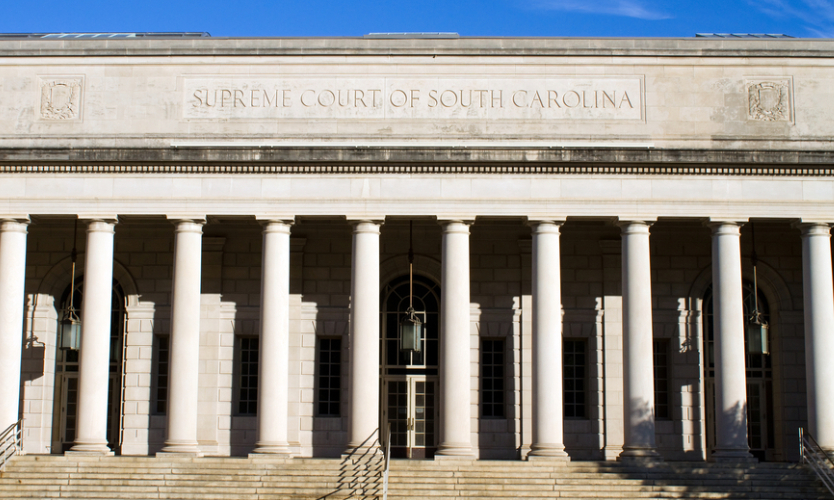
The South Carolina Supreme Court reversed a lower appeals court ruling that found a woman injured in a car accident with her co-worker behind the wheel was entitled to collect uninsured motorist benefits.

The high court, in a case decided in January but publicized Thursday, ruled that plaintiff Stephany Connelly was not permitted by law to recover uninsured motorist benefits after she was injured in a car accident.

Ms. Connelly was a passenger in a vehicle driven by her co-worker, Freya Trezona, when she was injured in an accident. The two were working at the time.

Because workers compensation benefits didn’t fully redress her injuries, Ms. Connelly filed a claim for uninsured motorist benefits with insurers for herself and Ms. Trezona.  

Both companies denied the claim, determining the injuries should be covered by comp.

Ms. Connelly sued, seeking declaratory judgment that both insurers provide coverage. The parties disputed language in the uninsured motorist statute involving “legally entitled to recover.”

A trial judge and an appeals court both subsequently determined the language to be ambiguous, allowing the suit to proceed.  

The high court reversed the lower rulings, finding that phrase to be unambiguous.

“Because the [comp] Act prevents Connelly from ever becoming ‘legally entitled to recover’ from Trezona under these facts, we reverse,” the court wrote.

Although the accident happened during working hours, the two women were riding in a vehicle owned by Ms. Trezona and covered by her auto insurance policy.

Ms. Connelly had her own auto policy containing uninsured motorist coverage.  


Source link

South Carolina OSHA discriminates against Black industries: Union


The Union of Southern Service Workers has lodged a complaint with the U.S. Department of Labor, claiming the South Carolina Occupational Safety and Health Administration has engaged in discrimination by excluding Black workers from the protection of programmed work site inspections.

Attorneys for the union wrote Tuesday that South Carolina OSHA exposed Black workers to an “unacceptable and inequitable risk of injuries and illnesses” by conducting little or no programmed inspections in the food services, general merchandise and warehousing industries, which employ large numbers of Black South Carolina workers.

“While neglecting these industries, SC OSHA has devoted its enforcement resources to industries that employ far fewer Black workers,” the complaint reads. “There is no legitimate justification for this severe racial disparity.”

The union said it conducted an analysis of South Carolina’s OSHA inspections by industry from 2018, 2019, 2021 and 2022 – leaving out 2020 because of the COVID-19 pandemic.

The complaint says South Carolina OSHA does a vast majority of its programmed inspections in the construction and specialty trade contractor industries, which employ “far fewer” Black state residents than the service industries.

“SC OSHA neglects key industries whose workforce is 42% black employees, while focusing the vast majority of its programmed inspections on industries made up of only 18% Black workers” the complaint states.

The union claims the inspection disparity cannot be explained by a difference in the dangers faced by workers in the various industries.

South Carolina is one of 22 states that have state-level OSHA plans that cover the public and private sectors. 


Source link

Exit mobile version