OSHA withdraws opposition to Arizona workplace safety plan


The Occupational Safety and Health Administration has withdrawn its proposal to revoke final approval of Arizona’s state-level occupational safety and health plan, a move that will now leave the state’s plan in place.

OSHA on Tuesday said it would no longer move to reconsider Arizona’s plan, which it previously opposed because of what the federal agency had called a decade-long pattern of failures to adopt adequate maximum penalty levels, workplace safety and health standards, National Emphasis Programs and the COVID-19 Healthcare Emergency Temporary Standard.

OSHA issued a notice in April 2022 that proposed reconsideration and revocation of the state plan, and it took public comments on the notice through early July 2022.

At the end of the comment period, Arizona advised OSHA that the state plan would contain actions to address the agency’s concerns.

Those actions include adopting certain federal standards and directives, enacting state laws to ensure maximum and minimum penalty levels align with OSHA federal levels and authorizing the adoption of an emergency temporary standard that comports with OSHA and the Industrial Commission of Arizona in cases involving “grave dangers,” according to OSHA.

OSHA noted its opposition withdrawal comes despite recent reports of a downward trend in Arizona workplace inspections under the state plan’s enforcement program, since the reports were released after the April 2022 Federal Register notice. 



Source link

Experts link psychosocial issues to high prevalence of injuries in construction


While the high-risk construction industry and the Occupational Safety and Health Administration have zeroed in on mitigating injuries that stem from such incidents as falls and electrocutions, a panel of safety experts says one risk factor may be overlooked in construction in particular: psychosocial factors.

At the root of the most-fatal incidents could be issues related to “the social, organizational, and managerial features of a job that affect the worker’s feelings, attitudes, behaviors, and physiology,” according to four occupational health experts, writing in a Wednesday blog post for the Centers for Disease Control and Prevention. 

“Working conditions such as high demands, low control over work tasks, lack of support from a supervisor or coworkers, and job dissatisfaction are all examples of negative psychosocial factors that can cause adverse health effects,” the authors wrote.

Such issues can lead to such factors as heightened stress, higher injury rates, more frequent incidents, and higher susceptibility to musculoskeletal disorders, according to the post.

Musculoskeletal disorders, which account for 20% of nonfatal construction injuries, are particularly risky and connected to psychosocial factors, they wrote. “Stress and adverse psychosocial factors can make workers more prone to injury and negatively impact the functioning of multiple organ systems.”

“Research focused on psychosocial factors and the construction industry has found strong evidence that low job satisfaction, high perceived job stress and unrealistic job goals or expectations, and perceived lack of control over the work environment resulted in greater lower back and neck or shoulder pain among construction workers,” the authors wrote. 


Source link

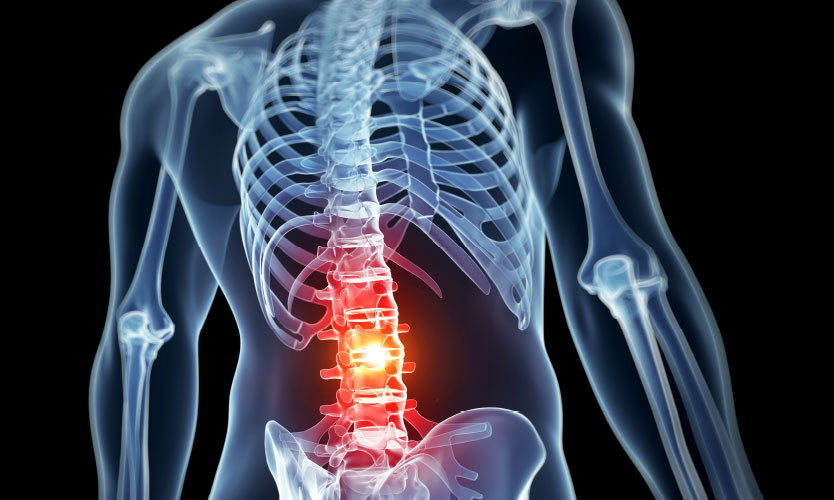
Bill addresses comp awards on subsequent spinal injuries


A bill that would limit awards for subsequent workplace injuries to the “same part of the spine” was introduced in the Illinois General Assembly on Tuesday.

H.B. 2345 would amend the Workers’ Compensation Act, stating that “for purposes of computing compensation for an employee who had a prior compensated injury to the spine, the prior compensation shall be deducted from compensation awarded for a subsequent injury: to that same part of the spine, which the bill describes in detail.

The bill was referred to the Rules Committee and would go into effect immediately upon passage. 


Source link

Travelers launches online construction industry platform


Insurer Travelers Cos. Inc. on Tuesday announced the unveiling of an online platform designed to provide insight and information to construction customers on issues relating to workplace safety and productivity.

The Travelers Innovation Network for Construction, which is being offered by the insurer, gives construction companies access to information about technology solutions and guidance that can help them mitigate employee and business risk exposures and challenges, according to the company.

Construction customers are also eligible to receive discounts on certain solutions and products offered through the platform.  

Worksite solutions offered through the platform include exposure assessment, site monitoring, vibration risk analysis, water loss detection and virtual jobsite capture.

Employee solutions include online training, a web-based learning platform, worker background checks, virtual ergonomic consultations and wearable technologies for worker movement.

Business solutions are also offered including project management, project safety management and equipment management.   

The platform contains solutions from various service providers, such as Procore, Triax, Monnit, IntelliCorp, OpenSpace and others.

Travelers said the goal of the platform is to help construction customers make informed decisions by being able to tap into a wide selection of risk management tools vetted by the insurer’s team of construction specialists.


Source link

OSHA to provide protections for immigrant workers reporting safety issues


Workers whose immigration status discourages them from sharing information with investigators or reporting workplace safety and health issues will gain immigration protections from the Occupational Safety and Health Administration starting March 30.

The U.S. Department of Labor on Monday announced new authorities for OSHA to issue certifications in support of visa applications, which will allow victims of human trafficking and those who voice workplace safety concerns to “help law enforcement detect, investigate and prosecute crimes without fear of retaliation based on their immigration status.”

The program will help the agency “better fulfill its mission to make U.S. workplaces as safe and healthy as possible,” said Assistant Secretary for Occupational Safety and Health Doug Parker in a statement. “Workers in the U.S. need to feel empowered and able to trust OSHA and the U.S. Department of Labor enough to voice their concerns about workplace safety regardless of their immigration status and fears of retaliation.” 


Source link

Comp back patients report lower function following physical therapy


Injured workers with low back pain whose injuries are covered by workers compensation insurers and employers reported the lowest improvements in function following physical therapy than patients covered by all other payment systems, according to study released Tuesday by the Workers Compensation Research Institute.

The data used in the study was collected at admission and discharge from low back pain patients who received outpatient physical therapy or occupational therapy in the United States from 2017 to 2021 and included 1.3 million patients in total, covered under workers compensation, private insurance, Medicare, Medicaid, auto insurance, other insurance, or self-paid.

Of them, workers comp patients reported the smallest improvements in function.

WCRI noted in its analysis that features unique to the comp system, such as no copays and instances where providers are called to determine maximum medical improvement status for workers, “could potentially explain the differences between workers comp and non-workers comp patients.”

Another explanation, WCRI said, may be the presence of biopsychosocial factors “which may have disproportionate prevalence and impact on workers comp patients.” The report said that “work-related low back pain disability tends to be substantially influenced by non-clinical factors such as poor recovery expectations after an injury, fear of pain due to movement, catastrophizing, perceived injustice, job dissatisfaction, pessimism, being fearful in general, having low levels of motivation” and a “lack of family or community support systems.”


Source link

Tree service firm cited in worker’s woodchipper death


A Pennsylvania tree service company has been cited by the Occupational Safety and Health Administration after a teenage worker died from injuries suffered in a woodchipper incident.

OSHA said Monday that it issued citations for 10 serious violations to Schnecksville, Pennsylvania-based Adam’s Tree Service, which also does business as Adam’s Tree Removal and Trimming, Adam’s Tree and Adam Construction Excavator LLC.  The agency proposed penalties of $124,987.

The citations were in response to the death of a 17-year-old worker, who suffered fatal injuries after being pulled into a woodchipper at a job site in Allentown, Pennsylvania, on April 9, 2022.

OSHA said the company violated federal child labor laws when it allowed the teen to operate the woodchipper, failed to train workers on how to safely operate woodchippers, failed to provide personnel with first aid training, failed to ensure employees use personal protective equipment, and failed to have fire extinguishers at worksites.

The company has 15 days to contest the citations.


Source link

OSHA cites grain cooperative after worker suffers amputation


The Occupational Safety and Health Administration on Monday cited an Illinois grain cooperative after a worker suffered a partial leg amputation while attempting to clean a soybean bin.

OSHA issued citations for four willful violations and one repeat violation to Atlanta, Illinois-based Topflight Grain Cooperative after the 27-year-old worker fell into the bin and was injured by a running paddle conveyor on Aug. 15, 2022. The agency proposed penalties of $629,946.

The cooperative, which was cited for similar violations at a different facility in 2021, has 15 days to contest the latest citations.


Source link

Maryland bill would add legal fees in medical comp cases


A proposal by Maryland lawmakers would provide for the payment of legal fees in medical workers compensation cases.

House Bill 1012, introduced Friday, states that in cases in which no compensation is payable to an injured worker, but the individual is awarded medical benefits during a hearing, employers and insurers would be directed to pay a maximum of $2,000 for legal services on behalf of the covered employee.

In such instances, the Workers’ Compensation Commission would be required to order an employer or its insurer, a self-insured employer, or the Uninsured Employers’ Fund to pay the legal fees for the worker in connection with his or her comp claim.

If the proposed legislation becomes law, it will take effect Oct. 1.

The measure is now before the House Economic Matters Committee.


Source link

Rhode Island bill revises third-party liability in workers comp


Rhode Island lawmakers have filed legislation that would amend provisions in the state’s workers compensation law in cases involving third-party liability.  

House Bill 5508, introduced Friday, addresses cases in which workers become injured under circumstances involving legal liability in individuals other than employers, and the employee seeks recovery of damages against those parties.

The measure states that any money received by injured workers through judgments, settlements or awards for past or future pain and suffering, loss of consortium, loss of society, loss of wages and earning capacity or other damages not fully compensated by workers comp do not have to be reimbursed to third parties.

Current law states that employees who recover damages from third parties, and who are required to reimburse those parties, are entitled to withhold from reimbursement certain litigation costs.

That provision would remain in effect.

Currently, injured workers are required to reimburse third parties when their comp benefits exceed the amount of damages they recover from individuals other than employers who may be partially responsible for workplace injuries.   

The bill also contains a provision that says reimbursable compensation to third parties shall be reduced by any percentage of a worker’s comparative negligence.

Current law says insurers are entitled to suspend worker comp benefits when monetary damages recovered by employees exceed the compensation paid as of the date of the third-party judgment or settlement. That wording would remain in effect.  

Under the bill, any dispute regarding the appropriate reimbursement apportionment amount shall be addressed by the court handling the underlying third-party claim.   


Source link

Exit mobile version