Injuries from hospital shooting should have been compensable: Appeals court


The New York Court of Appeals on Thursday ruled that a lower appeals court wrongly determined that a first-year resident at Bronx-Lebanon Hospital who was shot and injured by a disgruntled former hospital employee was not covered by workers compensation.

Justin Timperio was working on a nonpublic floor of the hospital in June 2017 when he was shot by Henry Bello, a former hospital worker who carried out a workplace shooting using an AR-15 rifle. Mr. Bello also killed one doctor and wounded four other employees, before killing himself.

Mr. Timperio sought workers comp benefits for his injuries and also filed a negligence lawsuit against the hospital and the store where the rifle was purchased.

The New York Supreme Court Appellate Division determined that there was a lack of evidence establishing an “employment-related animus” in the shooting, and it ruled that the workers comp claim was not compensable.

In reversing the appellate division, the Court of Appeals found that the injury should have been presumed to be compensable, since the workplace shooting occurred during the course of Mr. Timperio’s job.

The appellate division had overturned a Workers’ Compensation Board decision that found the claim to be compensable, and the appeals court reinstated the board’s compensability determination.  


Source link

Companies cited for hospital demolition asbestos hazards


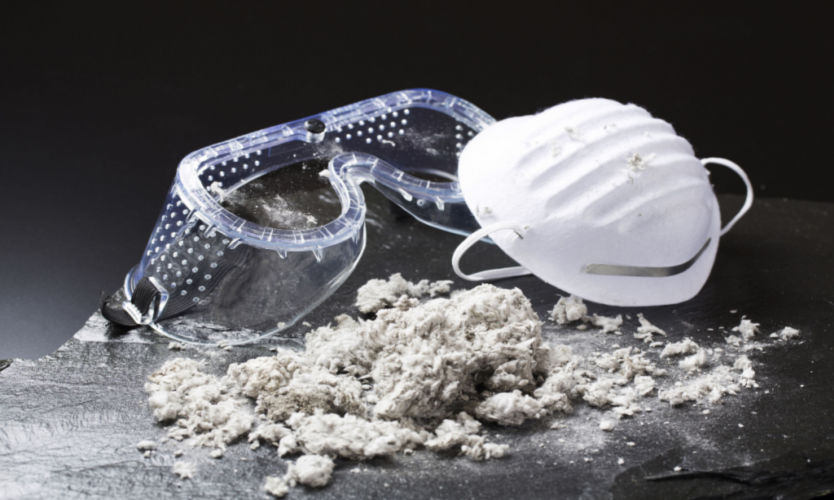
The U.S. Occupational Safety and Health Administration said Wednesday that it cited a Chicago demolition subcontractor for 36 safety and health violations after federal investigators determined it exposed workers to asbestos hazards in November 2023.

OSHA cited K.L.F. Enterprises for “willful” and other violations after inspectors discovered that the company had a building survey showing that a hospital its employees were demolishing contained asbestos for fireproofing but that K.L.F. failed to inform workers about the dangers.

The agency issued the company $392,002 in penalties.

OSHA said K.L.F. also failed to notify the demolition site’s general contractor, Chicago-based Reed Illinois Corp., doing business as Reed Construction, and the building’s owner, V. Covington LLC of Waukegan, of the discovery of asbestos during demolition.

OSHA additionally cited Reed Construction for not ensuring its subcontractors met federal health and safety standards, and the agency proposed $32,262 in penalties.

V. Covington was cited for a serious violation and issued a proposed penalty of $16,131 for failing to ensure K.L.F. Enterprises and another subcontractor, Alliance Environmental Control Inc., complied with a federal asbestos standard.

Lansing, Illinois-based Alliance Environmental was issued a citation for a serious violation and faces a proposed penalty of $6,452.

All companies have 15 business days to contest the citations and proposed penalties.


Source link

Food supplier to pay $1.7 million for workplace safety hazards


A Cincinnati-based food supplier has agreed to pay $1.7 million in federal penalties related to several workplace hazards discovered during investigations by the U.S. Occupational Safety and Health Administration, the agency said Thursday.

Zwanenberg Food Group USA Inc. also agreed to invest $1.9 million in safety improvements at its Cincinnati facility.

The settlement resolves citations issued in 2022 and 2023 after OSHA inspectors found the company exposed employees to machine guarding hazards and failed to de-energize equipment.

Zwanenberg agreed to make numerous safety improvements, including hiring an independent, third-party agency to audit all equipment; developing lockout/tagout procedures for equipment; meeting with OSHA quarterly to discuss workplace safety and health; retaining a third-party consultant to inspect protective equipment; and conducting an independent audit of its safety training programs.

Zwanenberg Food Group USA, a subsidiary of Netherlands-based Zwanenberg Food Group BV, has 12 production facilities in the U.S., Netherlands and United Kingdom. The company employs about 175 workers at its Cincinnati plant.


Source link

New York bill would change way medical treatments can be denied


A bill that would give injured workers and their physicians more control over medical treatment was introduced Wednesday in the New York State Assembly.

A.B. 10250, referred to the Labor Committee, would amend state law on medical procedures, crossing out language that requires providers to demonstrate “appropriateness and medical necessity” of such treatment for pre-authorized procedures, and substituting language that the state’s list of procedures cannot be “used as a basis to deny treatment not contained  therein.”

The bill stipulates that the state’s list of pre-authorized procedures exists “solely for the purpose of expediting authorization of treatment of injured workers.”


Source link

Video: Comp Spotlight with Jennifer Cogbill of Gallagher Bassett


Source link

Workplace drug test cheating increases dramatically


The percentage of employees in the general U.S. workforce whose drug tests showed signs of tampering increased by more than six-fold in 2023 compared with the prior year and was the highest in more than 30 years of annual reporting, workplace drug testing company Quest Diagnostics reported Wednesday.

In analyzing 9.8 million workforce drug tests, company researchers found evidence of tampering  “in an attempt to conceal drug use” that included a 633% increase in substituted urine and a 45.2% increase in invalid urine specimens.

According to Quest, the increasing rates of substituted or invalid specimens coincided with “historically high” rates of both general U.S. workforce drug positivity and post-accident marijuana positivity.

Drug positivity in the general U.S. workforce was 5.7% in both 2022 and 2023. This marked the highest level in more than two decades, up more than 30% from the low of 3.5% in 2010-2012.

Quest also reported a 114.3% increase in post-accident positivity between 2015 and 2023 in the general U.S. workforce.


Source link

Court overturns denial of survivor benefits over fatal heart attack


The Illinois Appellate Court on Friday overturned a denial of benefits for the son of a construction manager who died of a heart attack while shoveling snow in 2006.

The coroner concluded that Richard Cronk, who worked for Kimball Hill Homes, died of hypertensive cardiovascular disease with coronary atherosclerosis as a significant contributing factor, according to Cronk v. IWCC (Kimball Hill Homes).

Kimball Hill settled a death benefits claim with Mr. Cronk’s wife in 2009, but maintained that the death was unrelated to employment.

Mr. Cronk’s son later filed a claim for benefits. An arbitrator found that Mr. Cronk’s death was not related to his employment and ruled the son was not entitled to survivor benefits, even if Mr. Cronk’s death was work-related, since the son was not enrolled full time in school and over the age of 18 when his father died. The Workers’ Compensation Commission affirmed.

The Illinois Appellate Court said an injury occurs “in the course” of employment when it happens during employment, while a worker fulfills those duties or engages in some incidental employment duties. The court wrote that “the manifest weight of the evidence demonstrates that decedent’s cardiac arrest while shoveling snow at one of employer’s newly built homes occurred in the course of his employment.”

The court also said the commission further erred in finding that the son was not eligible for benefits, as he had just turned 18 and would enroll in college in a year, in line with state comp law that says a dependent who is under 25 and a student qualifies for death benefits. In justifying the reversal, the court said such a brief interruption in the son’s education did not preclude him from benefits.

WorkCompCentral is a sister publication of Business Insurance. More stories here.


Source link

Comp inpatient stays, pharmaceutical prescriptions drop: NCCI


ORLANDO – The workers compensation system has seen a 34% drop in inpatient hospital stays for injured workers since 2012, researchers with the National Council on Compensation Insurance said Tuesday.

“This is a national phenomenon,” said Raji Chadarevian, the NCCI’s executive director of actuarial research, at the organization’s Annual Insights Symposium,.

Inpatient stays are becoming less frequent as more injured workers who require surgery are having procedures done at ambulatory surgery centers, which have seen an influx in comp patients during the past several years.  

Hospital stays have also seen significant cost increases, with the average cost for one day in the hospital rising from $5,700 in 2012 to $8,500 in 2023, said Jon Sinclair, director and actuary with the NCCI.

“These stays are essential to understanding our story,” Mr. Sinclair said.

Pharmaceutical prescriptions, another workers comp cost driver, have been falling since 2012, and estimates for future liabilities for drugs in comp settlements have been “significantly dropping,” Mr. Chadarevian said.

Not all drug types are decreasing — prescriptions for topical creams and gels have increased 96% since 2012, he said.

“This is certainly one type of drug to keep an eye on moving forward,” Mr. Sinclair said.

NCCI attributes the decrease in drug costs to fewer opioids being prescribed to injured workers and the shift to generic drugs from name brands.  


Source link

Comp industry wary of rise of migraine meds


Costly prescriptions to treat neurologically caused migraines comprise the only drug class on the rise in workers compensation, driven by new drugs and the fact that migraines are common among the populace.

A drug trends report released April 30 by Enlyte LLC showed declines in the prescribing of medications to injured workers across the board with one notable exception: migraine medications, which jumped 17% in utilization and 10.2% in costs year over year.

Dubbed by workers compensation experts as a trend to watch, the new type of medication targets migraine-inducing calcitonin gene‐related peptides. The first drug — erenumab — hit the market in 2018 after receiving Food and Drug Administration approval, and several other drugs have followed, with most injectable-only. Since then, those managing injured worker claims say they’ve gradually seen more prescriptions among comp patients.

“In our arena it’s typically related to some type of traumatic brain injury or some other trigger that’s been accepted on the claim that has something to do with (migraines) or, there’s brain damage or something that’s causing it,” said Nikki Wilson, Omaha, Nebraska-based senior director of clinical pharmacy services at Enlyte.

“That’s one of the big reasons it is rising, because these new drugs on the market work so well, and they’re being recognized by the guidelines, as well as an option for first-line treatment” of migraines, she said.

Silvia Sacalis, Tampa, Florida-based vice president of clinical services for Healthesystems LLC, said the newer drugs have in some cases replaced other types of drugs that help treat migraines. She said the newer drugs have risen in popularity among doctors treating traumatic brain injuries in part due to effectiveness.

Another reason for the uptick is that migraines can be triggered by injuries or stress on the body, effectively connecting the prescription to the work injury, according to Ms. Wilson, who said it’s “up to the discretion of the carrier or who’s covering the comp injury if they’re going to accept that or not.”

Dr. Marcos Iglesias, Hartford, Connecticut-based chief medical director at Travelers Cos. Inc., said it’s imperative that the drugs, which come at a higher cost than most pain-relieving nonsteroidal anti-inflammatory drugs or acetaminophen, are not used for headaches – an issue that has cropped up as the conditions can be similar but are starkly different.

Several medical organizations have noted some patient confusion over migraines — described as a debilitating neurological condition that can include such symptoms as nausea, vomiting, eye and neck pain, and muscle aches — as compared with such conditions as tension headaches. 

“It’s all about the appropriate use,” Dr. Iglesias said. “We need to make sure … they’re being prescribed for migraines, not just for headaches. There’s a lot of utilization review and education around those because (the drugs) can be expensive. If a claimant has a migraine as a result of a work injury, that may be the type of medication we use.”

Reema Hammoud, Southfield, Michigan-based assistant vice president of clinical pharmacy for Sedgwick Claims Management Services Inc., said the comp industry is also cautious as the drugs are relatively new.

“We don’t have a lot of data on these drugs yet,” she said, noting they are based on newer medical research and come with “a risk of infection” and may also have some “cardiovascular effects.”

“We don’t know the long-term side effects of these drugs,” Ms. Hammoud said.

Ms. Sacalis said some of the newer drugs may also worsen hypertension – a common comorbidity — and that the injectable medications can cause problems at the injection site.


Source link

Exit mobile version