Opioids continue to drop in comp, migraine meds on the rise: report


Opioid prescriptions per workers compensation claim dropped by 9.7% in 2023, spearheading drops in prescribing of other common alternative medications used to manage pain, according to a drug trends report released Tuesday by Enlyte LLC.

Anticonvulsants, or neurological drugs intended to manage nerve pain, saw the second-largest drop in utilization at 7.4%. Antidepressants and non-steroidal anti-inflammatory drugs, both used to help manage pain, saw 6.1% and 3% decreases, respectively, according to the report.

Overall, Enlyte’s data showed dips in prescribing across the board with one exception: migraine medications, which jumped 17%.

On drug costs, eight of the top 10 therapeutic classes of drugs prescribed in workers comp showed increases in costs per script — with two classes rising by double digits. Respiratory drugs costs increased by 14.7% and migraine drugs by 10.2%. 


Source link

DOL cites mines in 11 states after impact inspections


The U.S. Department of Labor said Tuesday that it issued widespread citations following impact inspections at 14 mines in 11 states.

The DOL’s Mine Safety and Health Administration found 199 violations during the inspections, which took place throughout March.

The agency, which began conducting impact inspections after an April 2010 explosion that killed 29 miners in West Virginia, said mines were cited in Alabama, Colorado, Illinois, Kentucky, Louisiana, Michigan, Oklahoma, Pennsylvania, Utah, Virginia and West Virginia.

“The results of March’s impact inspections uncovered several serious violations, including putting miners at risk of fire and explosion hazards and impeding miners’ ability to escape emergency situations,” Chris Williamson, assistant secretary for mine safety and health, said in a statement.

The agency said the mines that were inspected had poor compliance history, previous accidents, injuries and illnesses.

Of the 199 identified violations, 74 were evaluated as “significant and substantial.”  

The agency said it has identified 3,333 violations through mine impact inspections since 2023.


Source link

Worker with prior injuries can proceed with claim


The Tennessee Workers’ Compensation Appeals Board partially reversed on Friday a trial judge’s ruling that denied additional medical benefits to an injured worker who initially failed to disclose prior injuries.

Jonathan Webb claimed he injured his left knee after tripping on a floor mat. He worked for a temporary staffing agency and was assigned to work as an inspector at manufacturer Matsuo Industries USA Inc.

Mr. Webb didn’t report the incident until the next day. He claimed he had a confrontation with another worker who had asked him to stay and perform additional work the day of the incident.

Mr. Webb was later fired and Matsuo denied responsibility for the injury.

The case ended up in litigation, and during discovery the employer learned Mr. Webb failed to disclose prior injuries to his left knee.

The trial judge found Mr. Webb failed to show evidence that he would likely prevail at trial.

On appeal, Mr. Webb argued the trial judge failed to consider medical records supporting his work injury claim.

The workers comp board determined that it was improper for the trial judge to dismiss the case at this stage of the litigation.

“We conclude there is sufficient evidence in the record to support a finding that Employee is likely to prevail in proving the occurrence of a work-related event …,” the board wrote.

The board remanded the case to the trial court for additional proceedings. 


Source link

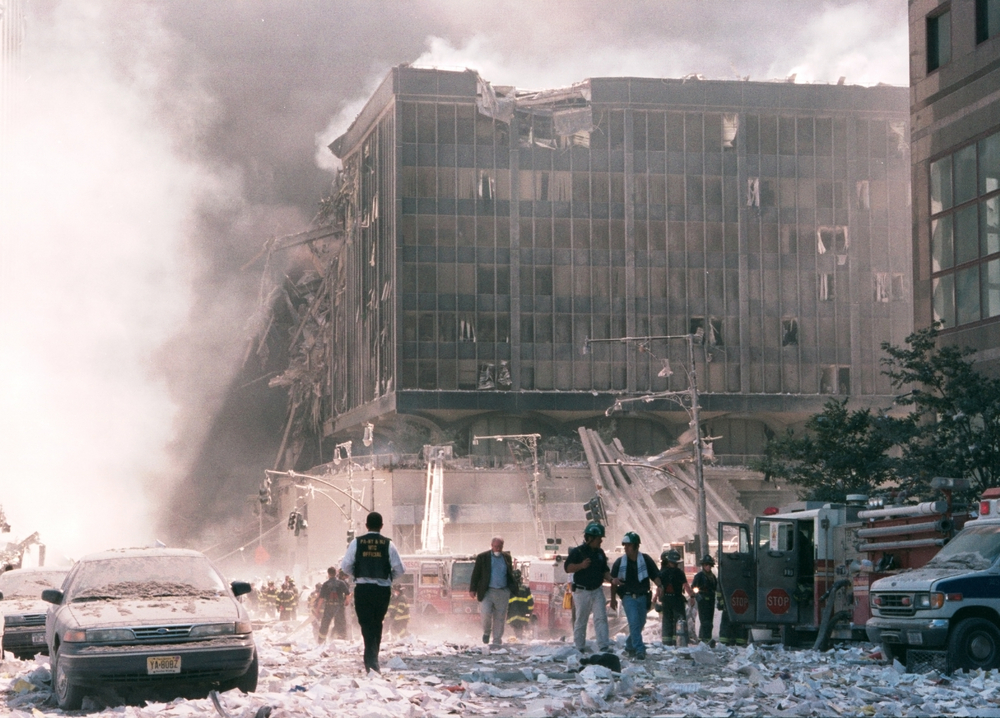
N.Y. court reverses denial of 9/11-related claim


A New York appellate court on Thursday reversed the denial of a workers compensation claim filed by a former New York City court officer who alleged he became sick or injured due to his cleanup efforts at the World Trade Center after the 9/11 terrorist attacks.

The Appellate Division of the state Supreme Court said the Workers’ Compensation Board wrongly upheld a compensation law judge’s denial of comp benefits to Robert Liotta, who was working near the World Trade Center at the time of the attacks, and subsequently assisted in cleanup and recovery efforts.

The workers comp judge denied the claim, finding that Mr. Liotta didn’t participate in the “rescue, recovery and/or cleanup operations” at the site. The workers comp board later declined to review the decision.

The exact nature of Mr. Liotta’s injuries or illness was not specified in the appeals court ruling. 

Mr. Liotta argued that he was entitled to benefits because he assisted in evacuating the courthouse where he worked and the building across the street and that he later helped to clear the area and assist emergency responders.

The appeals court ruled the claim denial was improper because Mr. Liotta’s efforts to help clear the area, which was located within the “statutorily defined WTC site,” had a “tangible connection to the rescue efforts.”

The court remitted the case to the workers comp board for further proceedings. 


Source link

Widow improperly denied compensation in industrial accident: Court


The Ohio Industrial Commission must revisit a case brought by the widow of a deceased worker who sought compensation for her husband’s loss of use of his extremities due to an industrial accident, an appellate court ruled Thursday.

The Court of Appeals of Ohio ordered the Industrial Commission to vacate a November 2016 decision that denied Pin Cha Byk’s claim for loss-of-use compensation and a petition for accrued benefits.

Ms. Byk’s husband, Bohdanus Byk, a laborer for Republic Steel Corp., was seriously injured in August 2012 when he fell off a platform, landed on concrete and sustained blunt trauma injuries to his head and ribs.

Mr. Byk had brain surgery, but he remained in a persistent vegetative state until his May 2015 death.

Before he died, Ms. Byk petitioned for compensation for her husband’s loss of use of his limbs, and a hearing officer granted the award. The employer appealed, arguing the loss of use of Mr. Byk’s limbs was due to a brain injury and not a direct injury to the limbs.  

Another hearing officer subsequently vacated the award.

The appeals court wrote that the Industrial Commission relied on “flawed legal reasoning” in affirming the hearing officer’s decision denying the benefits, stating that it erred in finding that the scheduled-loss compensation requires proof of “direct trauma” to an injured worker’s extremities to accept a claim for loss of use of an extremity. 


Source link

DOL issues final farmworker protection rule


The U.S. Department of Labor announced Friday its final rule designed to protect agricultural employees in the workplace.

The rule takes effect June 28.

The DOL said the measure “targets vulnerability and abuses” [experienced by farmworkers who are hired under the federal H-2A program, which allows employers to hire temporary foreign workers if the agency finds there is a lack of qualified U.S. laborers in the agricultural sector.

“This rule ensures farmworkers employed through the H-2A program are treated fairly, have a voice in their workplace and are able to perform their work safety,” DOL Acting Secretary Julie Su said in a statement.

The agency said the final rule adds new protections for workers who self-advocate, clarifies “for cause” termination, makes foreign labor recruitment more transparent, ensures timely wage changes and safeguards fair compensation for H-2A workers, improves transportation safety, prevents labor exploitation and human trafficking, and ensures employer accountability.


Source link

Ketamine, medical marijuana appropriate injured worker treatments: Court


A Pennsylvania appellate court ruled Thursday that a workers compensation judge erred in determining that reimbursing an injured worker for medical marijuana would subject an employer to federal prosecution.

The Commonwealth Court reversed a Workers’ Compensation Appeal Board decision that upheld a judge’s determination that the employee, who was injured when a work van door closed on her hand, could not be reimbursed for her use of state-approved cannabis.

The employer, Aussie Pet Mobile Bux-Mont, had accepted liability for the hand contusion. The workers comp judge later reduced benefits to partial disability and ordered the company to pay for the claimant’s ketamine treatment.

But the judge simultaneously ruled that the employer wasn’t obligated to pay for the woman’s medical marijuana.

The appellate court said the workers comp board and the comp judge wrongly ruled that reimbursing for medical marijuana would violate federal law.   

Pennsylvania courts have previously ruled that ordering employers to pay for injured workers’ medical marijuana doesn’t run afoul of federal drug laws because the act wouldn’t require employers to “manufacture, distribute, or dispense … a controlled substance.”

“Since the employer is not prescribing marijuana, but rather reimbursing the claimant for his lawful use thereof, the employer is not in violation of the Federal Drug Act,” the court wrote, citing Fegley v. Firestone Tire & Rubber.

The Commonwealth Court remanded the case to the workers comp board for further proceedings.


Source link

Pennsylvania considers workplace safety regulations for food processors


Pennsylvania lawmakers are considering a bill that would require meatpacking and other food processing companies to better protect workers from injuries and illnesses, including communicable diseases.

H.B. 2235, introduced Thursday, would create regulations requiring workplace health and safety committees and establish the position of workers’ rights coordinator within the Pennsylvania Department of Labor and Industry.

The measure calls on employers to inform new hires of workplace risks, including respiratory hazards, repetitive strain injuries and musculoskeletal disorders.

The bill would also create public health emergency protections for workers under certain conditions, such as an “imminent threat of illness or health condition caused by epidemic or pandemic disease” or when the governor declares a state of emergency.

A hearing on the legislation is scheduled for Tuesday.


Source link

Amazon wrongly denied comp claim for back surgery: Court


A Delaware judge ruled Thursday that Amazon.com Inc. didn’t follow proper guidelines when it denied a claim filed by an injured employee.

Superior Court Judge Kathleen Miller, hearing an appeal by Amazon in a case by Hector Rook, said Amazon wrongly denied the workers comp claim based on the argument that Mr. Rook’s medical treatment fell outside of the health care practice guidelines of the state’s Division of Industrial Affairs.

Mr. Rook injured his back at work in May 2022, and he subsequently filed for comp benefits. He had surgery in September 2022, but Amazon argued that the surgery was not reasonable and necessary or related to the work incident.

The Industrial Accident Board in February 2023 said some treatment outside the guidelines can be found to be reasonable and necessary in some cases. The board determined benefits were warranted.

On appeal, Amazon argued that the board erred in ignoring the health care guidelines, but the Superior Court judge determined that the board acted properly, and Amazon was the one that erred.

“The Board did not commit an abuse of discretion because it was not required to construe the Guidelines as Amazon demands,” the ruling states.

The judge also dismissed Amazon’s argument that compensation for the surgery was not proper because Mr. Rook hadn’t exhausted “conservative treatment” before resorting to surgery, since Mr. Rook had previously tried physical therapy, chiropractic care and medication. 


Source link

Exit mobile version