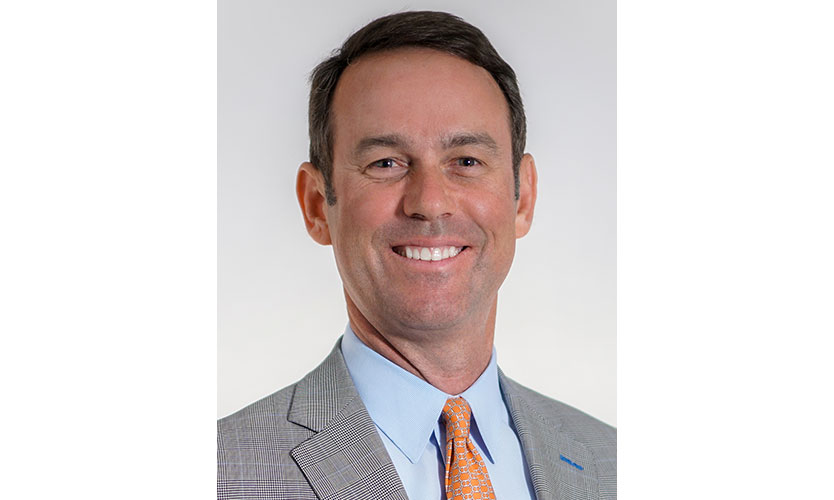
Brown & Brown reports higher first-quarter revenue, profit


Brown & Brown Inc. reported first-quarter revenue rose 12.7% to $1.258 billion as the broker saw 8.6% organic growth during the period.

Net income rose 20.2% to $327 million as investment income more than doubled to $18 million, from $7 million in the year-earlier period, according to the broker’s earnings report, released after markets closed Monday.

Retail segment revenue rose 10% to $806 million, with 7.2% organic growth. Programs segment revenue increased 16.9% to $298 million, with 11.8% organic growth.

Wholesale brokerage revenue rose 15.4% to $142 million, with 10.8% organic growth.

The broker completed six acquisitions in the first quarter, with estimated annual revenue of $16 million, J. Powell Brown, chairman, president and CEO of the Daytona Beach, Florida-based brokerage, told analysts on an earnings call Tuesday morning.

Mr. Brown said that “overall changes in rates for most lines were relatively consistent with the fourth quarter of last year.”

Primary and excess casualty markets are both beginning to see upward rate pressure that could accelerate “due to ongoing levels of inflation” in legal judgments, he said.

Catastrophe-exposed property rates are seeing downward pressure and were off as much as 10% in the first quarter, Mr. Brown said, while pricing for workers compensation in most states was down 5% to 10%.


Source link

Mississippi governor signs first responder death benefits bill


Mississippi Gov. Tate Reeves on Saturday signed into law a bill that authorizes local governments to provide 60 days of pay to the beneficiaries of certain first responders who die in the line of duty.

The governor signed House Bill 1697, which enables counties, municipalities, public universities and others to pay the full compensation of any law enforcement officer, firefighter or emergency medical technician who is killed on the job.

The benefits would not be paid out in the event the on-duty death was a suicide. 

Death compensation benefits would be paid to designated beneficiaries, and if there is none the compensation would be given to either surviving spouses, children or parents in equal portions.

The law says that the compensation would be in addition to any workers compensation or pension benefits or other payments to which the deceased worker was entitled.

The law was set to take effect immediately.


Source link

Quarry manager pleads guilty in worker’s crane death


A New York limestone quarry manager pleaded guilty Friday to second-degree manslaughter, a Class C felony, in connection with a mine worker’s death in October 2022, the U.S. Department of Labor said Friday.

Anthony Valente, who managed the RJ Valente Grafton Quarry in Grafton, admitted causing the death of Darren Miller, who was struck by a crane, according to the DOL.

Mr. Valente was given a six-month jail sentence and five years of probation.

The DOL’s Mine Safety and Health Administration found that Mr. Valente overrode a crane’s safety features when he used it to lower a replacement engine into a haul truck.

Mr. Miller was helping to guide the engine into place when the crane’s overhaul hook ball detached and fell on him, causing his death, the DOL said.

The mine safety agency cited RJ Valente Gravel for failing to remove the damaged crane from service and for failing to ensure Mr. Miller stayed clear of suspended loads.

It said the crane that was involved in the incident was tagged “out of service” during previous inspections, but that it remained in use and was never repaired.

The Rensselaer County District Attorney’s Office handled the criminal case against Mr. Valente.


Source link

Cannabis-related firing suit improperly dismissed: Appeals court


A Pennsylvania appellate court on Friday reversed the dismissal of a lawsuit by a former refuse worker who claimed his cannabis-related firing was improper because he possessed a valid medical marijuana card.

The state Superior Court said a trial judge erred in dismissing the lawsuit by the former employee against Waste Management and Processors Inc. over the June 2021 termination.

The man, who worked as a loader since November 2015, began using state-legal medical marijuana in January 2021 to treat his back injuries and carpel tunnel syndrome.

He claims he was fired six months later after being randomly selected for a drug screening, which tested positive for marijuana.

Waste Management argued that under state law, workers could be disciplined or fired if they’re found to be under the influence of marijuana at work even if the substance is medicinally legal in Pennsylvania.

The former employee claimed he didn’t disclose his medical marijuana patient status until after the positive drug test, and the fact that the company had the opportunity to terminate him immediately after the test results but waited until he disclosed his patient status proved discrimination.

A trial judge dismissed the suit in August 2023.

The appeals court, in remanding the case, said the suit was prematurely dismissed because questions remained over whether the firing was strictly related to medical marijuana patient status. 


Source link

Comp claimants attorney improperly awarded legal fee ‘multiplier’: Court


A trial judge improperly applied a contingency fee multiplier that resulted in increased attorneys fees awarded to a claimant’s lawyer in a workers compensation case, a Florida appellate court ruled Friday.

The District Court of Appeal of Florida reversed a lower court decision that had awarded $14,310 in claimants legal fees in a lawsuit brought by Carlos Vargas IV against Foot & Ankle Center of Florida LLC.

Mr. Vargas, a workers comp claimant, sued over claims that the center placed an illegitimate lien on his workers comp settlement proceeds after a center physician treated him for a work related injury. Mr. Vargas was later granted summary judgment on his claims.

In subsequent proceedings, Mr. Vargas argued that he was entitled to enhanced attorneys fees, and the trial judge agreed, finding that the contingency risk multiplier incentivizes “effective counsel to undertake the representation of plaintiffs in these cases,” since comp claimants may otherwise be unable to afford legal representation, the appellate ruling states.

The appeals judges said the imposition of the contingency fee multiplier was improper because the trial judge failed to look at the “relevant market or whether any local lawyers would have agreed to take Vargas’s case without a multiplier.”

In reversing, the appellate court remanded the case to the trial judge to enter a judgment that does not include the application of a contingency fee multiplier in calculating claimants lawyer fees.


Source link

Zurich ordered to pay $80 million in suit over employee incentives


Three former managers in a workers compensation department in Zurich North America’s Rancho Cordova, California, branch have been awarded a total of $80,252,412 in compensatory and punitive damages by a jury that found the company had wrongfully terminated them for taking unofficial paid time off, according to the firm that represented them.

According to a statement issued Thursday by The Bohm Law Group Inc., which represented Melinda Brantley, Nicholas Lardie and Daniel Koos, who were fired over accusations they stole from their employers for taking “off the record” paid time off that was not entered into the company’s official system for tracking such days, which the plaintiffs argued in separate lawsuits had been given to them as incentives by a supervisor who was rewarding their “hard work and dedication.”

The verdicts were filed Thursday in the Superior Court of California, County of Sacramento.

A Zurich spokeswoman wrote that the company is “disappointed” in the outcomes over litigation stemming from the 2017 terminations and that it is “committed to maintaining a culture of fairness, equity and integrity in all our business practices and interactions with employees. We will pursue all available legal options, including appeal.”


Source link

Cal/OSHA cites construction company over fatal trench collapse


The California Occupational Safety and Health Administration said Thursday it fined a construction company $371,100 following a worker’s death in a trench collapse at a San Francisco job site in September 2023.

Cal/OSHA cited San Francisco-based D’Arcy & Harty Construction Inc. for eight “willful” and “serious” safety violations. It said the company failed to provide a protective system for employees working in the trench and failed to provide a means of escape in the event of a collapse.

During an earlier work site inspection, an investigator informed D’Arcy & Harty that the trench excavation didn’t have adequate shoring and means for employee escape in the event of a collapse, but the company didn’t abate the hazards, Cal/OSHA said.

The worker, who was replacing sewer parts inside the eight-foot-deep trench, was buried in the collapse.


Source link

AI not a ‘substitute,’ but can benefit insurance industry: Experts


PHILADELPHIA – The insurance industry is poised to benefit from the use of artificial intelligence, but adopters of the technology must stay vigilant against misuse and keep up to date on regulatory developments, experts said during a roundtable discussion on Thursday.

“Every industry’s being changed,” Bill Taylor, president and CEO of the Pennsylvania Compensation Rating Bureau and the Delaware Compensation Rating Bureau, said in Philadelphia. “It’s going to impact work comp. It’s going to help with risk management.”

Mr. Taylor, speaking during the joint rating bureaus’ inaugural Workers Compensation Symposium, led a panel of industry experts who offered predictions and insight on how the workers comp sector is evolving through the use of AI.

“If anything, it makes our jobs more efficient,” said Ramona Tanabe, president and CEO of the Cambridge, Massachusetts-based Workers Compensation Research Institute.

Still, the industry is cautioned against the “overreliance” on AI, since it’s “not a substitute,” but an additional tool that can be leveraged by insurance professionals, Ms. Tanabe said.

“The efficacy of AI wholly relies on your ability to support it with good data,” said Russell Sommers, a New York-based partner with consulting and accounting firm Baker Tilly who has expertise in insurance risk and compliance.

The insurance industry must stay vigilant with AI, since the platform, if used wrongly, can negatively affect claims management, Mr. Sommers said.

Human error can likely lead to problems with around 30 to 40 claims per day, while errors made with AI can potentially affect “thousands” of claims per day, he said.

Workers comp has seen positive advances with AI, with its use benefiting fraud detection, underwriting and pricing models and claims management, said Dave Bellusci, a Brentwood, California-based principal with Bellusci Workers’ Comp Consulting, and former executive vice president and chief actuary with the California Workers’ Compensation Insurance Rating Bureau.

Rating bureaus can also be “very well positioned” to take advantage of AI, Mr. Bellusci said.


Source link

Exit mobile version