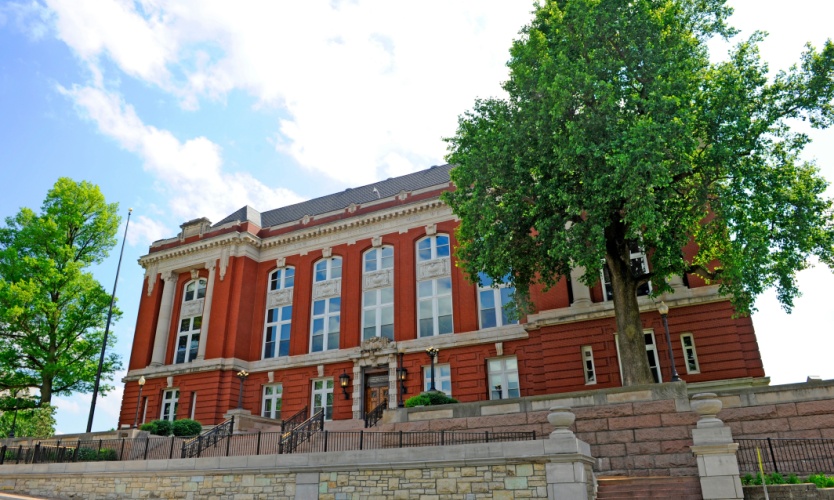
Commission erroneously relied on report in denying claim


The South Carolina Supreme Court on Wednesday ruled the state’s Workers’ Compensation Commission wrongly determined a worker didn’t suffer a repetitive trauma injury and that it erred in strictly relying on an employer-commissioned ergonomics report.

In Dale Brooks v. Benore Logistics System Inc., the high court wrote that while the workers comp commission has the “authority and responsibility” in repetitive trauma cases to determine whether an employee’s job is repetitive, it still must rely on the facts of individual cases and not use a “statistical probability to determine if an individual worker sustained a work-related injury.”

Mr. Brooks claimed he sustained repetitive back trauma as a “switcher” truck operator. His employer declined to use its doctors to treat Mr. Brooks, instead commissioning an ergonomics report looking at general risks to which Mr. Brooks was exposed.  

The report found Mr. Brooks’ job, which involved moving semitruck trailers and ocean freight containers, was unlikely to cause repetitive trauma.

The comp commission affirmed the claim’s denial, but an appellate court reversed that decision. The employer and its insurer, Great American Alliance Insurance Co., appealed to the Supreme Court.

The high court found the comp commission’s claim denial “not remotely supported by any evidence in the record.”

“We find the ergonomics report had little relevance on the issue of the repetitive nature of the work and no relevance on the issue of causation,” wrote the court, which remanded the case to the comp commission for benefits calculation.   


Source link

Washington contractor facing fines over asbestos removal


A contractor in Pierce County, Washington, is facing $134,500 in fines for violating more than two dozen workplace safety rules while removing a home’s popcorn ceiling, which contained asbestos, and using untrained and unprotected workers to perform the job, the Washington Department of Labor and Industries reported Wednesday.

Spurred by a homeowner’s complaint to the department, inspectors found that Great North West Painting LLC performed the removal without any of the work practices, engineering controls, or protective equipment required.

Company owner Bogdan Karcha told L&I inspectors he could not provide workers’ full names or any evidence they’d been trained or even notified that the work they were hired to do involved asbestos.

The workers, who were photographed by inspectors, weren’t wearing sufficient respirators for asbestos work so they were exposed to the hazardous material, according to the department, which cited the company for four willful serious, 19 serious, and five general violations.


Source link

Shipbuilder cited over welder’s confined space death


The U.S. Occupational Safety and Health Administration said Wednesday that it had cited a ship-building contractor after a welder suffocated while working inside a ship’s hull last year.

OSHA cited Palatka, Florida-based St. John’s Ship Building Inc. for four “serious violations” for exposing workers to oxygen deficiency by sending employees into a confined space without testing the oxygen content of the air inside the workspace.

The agency proposed $55,539 in fines. OSHA said the company has already contested the citation and proposed fines before the Occupational Safety and Health Review Commission.

The welder who died in August 2023 had been doing fabrication work in an eight feet by four feet space in a ship’s hull. Less than two hours after entering the space, a supervisor found the worker unconscious, according to OSHA.

The supervisor also became unconscious, and a third employee contacted emergency services. The welder died after being transferred to a nearby hospital, OSHA said. The other two employees recovered after receiving medical treatment. 

In addition to the confined space violation, OSHA found St. John’s Ship Building exposed workers to struck-by and crushing hazards by failing to conduct annual inspections of six cranes on the premises.


Source link

Trader Joe’s cited for forklift safety violations


The U.S. Occupational Safety and Health Administration said Wednesday that it cited national grocery chain Trader Joe’s Co. after a December 2023 workplace inspection uncovered numerous safety violations related to forklift operations.

OSHA said it cited the company for lack of adequate safety training for forklift operators and failing to inspect forklifts at a location in Greenwood Village, Colorado.

The agency said Trader Joe’s had been cited for violating similar workplace safety standards in three previous inspections in Maine, Massachusetts and Pennsylvania.

OSHA proposed $216,902 in penalties in the Colorado case.

Trader Joe’s, headquartered in Monrovia, California, has 15 business days to contest the latest citation and proposed penalties.


Source link

Municipal worker was ‘traveling employee’ during fall down stairs: Court


An Illinois appeals court ruled Friday that a municipal worker was entitled to workers compensation benefits after a work-related fall, finding the award proper because the man was a “traveling employee” at the time of the July 2018 incident.

The Appellate Court of Illinois dismissed an appeal by the Town of Cicero, which fought a claim by blight inspector Michael Iniquez, who said he was injured after falling down the stairs at town hall.

The municipality denied his workers comp benefits, a decision upheld by an arbitrator. The state Workers’ Compensation Commission later reversed that decision, finding the accident compensable.

The commission said that Mr. Iniquez was a traveling employee at the time of the incident, a status he wouldn’t lose “merely because his accident occurred on stairs located in Cicero’s facility,” the appellate ruling states.

A traveling employee is defined as a worker who is required to travel away from an employer’s premises to perform job duties.

On appeal, the town argued the injuries didn’t arise out of employment because Mr. Iniquez was “not exposed to a risk to a greater degree than the general public.”

The appeals court said the commission properly found that Mr. Iniquez’s descending the stairs at town hall on the way to his work vehicle was a job-related activity.

The court upheld the commission’s decision awarding benefits.  


Source link

Judge erred in finding COVID compensable occupational disease


A Louisiana appellate court has ruled that an oil field surveyor was not entitled to workers compensation benefits on his COVID-19 occupational disease claim.

The Louisiana Third Circuit Court of Appeal, on April 3, reversed a workers comp judge’s decision awarding benefits to Jacob Kibodeaux, determining that the employer, Jan’s Construction Co. Inc., should have been granted summary judgment.

Mr. Kibodeaux, who had to travel as part of his employment, said he contracted COVID-19 during his job when he was sent to work in Kilgore, Texas, in September 2021.

He went through a “lengthy treatment,” which included a stay in a hospital’s critical care unit for more than two months, the ruling states.

Mr. Kibodeaux claimed he had not been able to return to work since that time.

Jan’s Construction challenged the workers comp claim, contending that COVID-19 isn’t a compensable occupational disease under Louisiana’s workers comp law.

The appeals court found the workers comp judge erred in finding the illness compensable, writing that while Mr. Kibodeaux said he was on call for his job 24 hours a day, “this assertion, alone, is not sufficient to prove any event(s) occurring at the workplace, hotel, restaurant or other occurrence which may have led to his contracting COVID-19.”

While the court reversed the benefits award, it acknowledged that there are no Louisiana appellate cases specifically addressing COVID-19 as an occupational disease. 


Source link

N.Y. lawmakers see second COVID death bill


New York lawmakers on Tuesday introduced a bill that would allow survivors of those whose COVID-19 deaths were alleged to have been connected to work to refile workers compensation death benefits claims that were previously denied due to timing.

A.B. 9804, which was sent to the Assembly Labor Committee, is the second such bill introduced by state lawmakers: the identical S.B. 7792 was introduced in December 2023 and died in committee.

The latest bill, which pertains to workers deemed essential during the pandemic, would allow the reopening of claims that were denied because they did not meet the provisions in current law that claims be filed within two years of the death and/or within 30 days of the injury.

If signed into law, the bill would immediately give families up to one year to refile claims.


Source link

South Carolina proposal condemns revised OSHA walkaround rule


Stating that the Occupational Safety and Health Administration’s newly revised walkaround rule infringes on private property rights of employers, South Carolina lawmakers are considering a bill that would “condemn and oppose” the changes to federal workplace safety rules.

H.R. 5361, introduced Tuesday, is a response to changes to OSHA’s walkaround rule that go into effect on May 31 and allow for nonemployee representatives to participate in OSHA in inspections.

Proponents of the new walkaround rule say this would allow more input and insight into OSHA inspections by qualified experts. Opponents say the changes would allow for more unscrupulous involvement in the inspection process, such as inviting plaintiffs’ attorneys on site or disgruntled former employees access to employer sites.

The resolution, which alleges that OSHA’s changes violate federal constitutional rights, was referred to the Committee on Labor, Commerce and Industry.


Source link

Pregnant worker’s death shines light on comp exclusivity


A Missouri Supreme Court case involving a pregnant state employee who was struck and killed in a work zone is drawing attention to the intersection between “personhood” laws – which say life begins at conception – and workers compensation exclusivity.  

The state’s highest court is weighing whether to permit a wrongful death lawsuit on behalf of a deceased fetus to proceed or if the death of both the Department of Transportation employee and the fetus she was carrying should be covered exclusively by workers comp, as the employer in Tonya Musskopf and Austin Jarvis v. Missouri Highways and Transportation Commission et al., is arguing.

Six months pregnant at the time, DOT maintenance worker Kaitlyn Anderson was struck and killed by an incapacitated motorist whose vehicle veered into an active work zone in November 2021. The driver later died unrelated to the accident.

Tonya Musskopf, Ms. Anderson’s mother, and Austin Jarvis, Ms. Anderson’s partner, sued the Missouri Highways and Transportation Commission, along with some of Ms. Anderson’s supervisors.    

If the fetus died because of the workplace accident he “was, by definition, an ‘employee’ of the Missouri Department of Transportation,” triggering workers comp exclusivity, “for the same reasons as those claims are barred as to the death of Kaitlyn Anderson,” lawyers for the transportation commission wrote in court papers responding to the suit.

The filing was in response to a suit filed against the agency by the deceased driver’s estate. DOT lawyers argue the driver’s estate is barred from suing the state, as is Ms. Anderson’s family. The driver’s estate had filed a cross-claim against the DOT for its contribution in the two deaths, claiming the DOT created a dangerous condition that led to the vehicle accident.

One attorney not involved with the case said it’s “absurd” to make the argument that a fetus can be considered an employee for purposes of workers comp exclusivity.

“The fetus was never paid. The fetus never performed any work. And there was no employment contract,” said Brad Young, a partner with Chesterfield, Missouri-based Harris Dowell Fisher & Young L.C.

The case has spurred House Bill 2483, which would clarify that an “unborn child” killed during work-related accidents wouldn’t be subject to workers comp exclusivity.

A DOT spokeswoman said the agency will not comment on pending litigation but did provide a letter from its counsel to a state representative who sought clarification on whether the state was arguing the unborn baby was an “employee.”

In the letter, attorney Theresa Otto of Baty Otto Scheer P.C., who represents the transportation commission, states that the defendants are not claiming that the fetus was an employee.

“The Commission argued that because the unborn child is a dependent of Ms. Anderson, the language of the statute precluded additional recovery,” Ms. Otto wrote, noting that statutory language classifies dependents similarly to employees.  

While DOT lawyers appear to be raising comp exclusivity for the fetus, another attorney involved in the case is focusing on a different legal argument.

Matt Noce, a defense attorney with St. Louis-based Reichardt Noce & Young LLC who represents Kristina Jordan, one of the work supervisors named as a co-defendant in the suit against the DOT, said the only way a civil claim could proceed against a coworker – in this case, a work supervisor — is if the individual engaged in a negligent act that “purposefully and dangerously caused or increased the risk of injury.”

Ms. Jordan and the other supervisors were not at the work site on the day of the accident, he said.

Mr. Noce sought to have the case against his client dismissed because the supervisors are entitled to immunity under the state’s public employer doctrine.

Meanwhile, the plaintiff’s lawyer says the transportation commission isn’t entitled to immunity from suit because it created a dangerous condition by not placing a protective vehicle in the area where Ms. Anderson was working, and that the wrongful death claim on behalf of the unborn baby should be permitted.

The case had been scheduled for trial in early March, but the high court stayed the proceedings in February, according to court papers. It recently held oral arguments and is weighing the matter.


Source link

Comp board improperly modified claimants attorneys fees: Appeals court


A Pennsylvania appellate court on Tuesday said the state’s Workers’ Compensation Appeals Board erred in modifying a workers comp judge’s order granting an injured worker’s request for attorneys fees in his workers comp case.

The Pennsylvania Commonwealth Court, in Glenny Torres vs. Amazon.com Services LLC (Workers’ Compensation Appeal Board), ruled that a workers comp judge was correct to award $8,850 in plaintiffs attorney fees and that the comp board was wrong to find the award improper.

The board, hearing an appeal by Amazon, had determined that the claimant was not entitled to full attorneys fees because Amazon had submitted “conflicting evidence concerning the extent of Claimant’s disability, and [Employer’s] contest became reasonable,” the appeals ruling states.

The board then modified the attorneys fees to a lesser amount.

In reinstating the full attorneys fee award, the Commonwealth Court said that even when an employer’s contest is “reasonable,” a workers comp judge still has the authority to award a claimant attorneys fees.

The court remanded the case to the workers comp judge with instructions to issue a new attorneys fee award.

The court noted that the comp judge may or may not reach the same conclusion as before concerning fee calculation, but that he has discretion on the amount after reviewing the appellate decision.


Source link

Exit mobile version