Lack of reporting makes measuring agricultural injuries difficult: Study


Understanding the nature and causes of agricultural injuries can be difficult because, unlike other employment sectors, the farming industry is often exempt from certain reporting requirements to the U.S. Occupational Safety and Health Administration, according to a pair of studies by the University of Illinois Urbana-Champaign.

Researchers conducted a systemic review of academic literature addressing agricultural worker injuries in the U.S. and abroad, looking at incidents between 1985 and 2022.

The studies looked at newspaper clippings, death certificates, hospital records, emergency medical services data, government records, workers compensation insurance claims and other sources.

The authors of the studies found that injuries linked to overall agricultural machinery “significantly contribute” to fatalities and non-fatal accidents.

“One of our most important findings is that the way you conduct injury surveillance will have an impact on your results,” Salah Issa, an assistant professor in the Department of Agricultural and Biological Engineering, said in a statement.

Researchers said agriculture is a dangerous occupation globally, but that assessing injuries in the U.S. is especially difficult due to a lack of a central reporting system.

Farm work is often exempt from reporting requirements since many farms are family-run, with 10 or fewer full-time employees, researchers stated. 



Source link

Rhode Island lawmakers propose worker heat protections


Lawmakers on Friday read through a proposed bill that would require employers to protect workers exposed to extreme hot and cold temperatures.

S.B. 2900, sent to the Senate Labor Committee, would apply to employers in industries where employees are regularly exposed to extreme hot or cold working environments in indoor and outdoor settings, “including, but not limited to, agriculture, construction, landscaping, warehouse, manufacturing, mail and package delivery, utilities, oil and gas operations, airport service workers, and food service workers.”

The proposal calls for employers to create and adhere to a written plan addressing such issues as acclimatization, rest periods, hydration, medical monitoring, engineering controls, personal protective equipment, and emergency response.

The measure also includes training requirements and anti-retaliation rules for employees who report unsafe working conditions related to heat or cold. 


Source link

State high court says bariatric surgery not compensable


The North Carolina Supreme Court ruled Friday that a lower appellate court erred in determining that a preschool and its insurer were responsible for paying for weight-loss surgery for an injured employee.

The state high court reversed a North Carolina Court of Appeals decision that had affirmed an Industrial Commission finding that bariatric surgery was compensable in a workers compensation claim initiated by Robin Kluttz-Ellison, who worked for Noah’s Playloft Preschool.

Ms. Kluttz-Ellison filed two workers compensation claims against the preschool for injuries she suffered in falling off a ladder and in tripping over a sleeping cot.

Prior to the workplace incidents, Ms. Kluttz-Ellison had unrelated knee surgery and struggled with body weight issues for years, the high court ruling states.

After the filing of the workers comp claims, Ms. Kluttz-Ellison’s physicians determined she needed additional knee surgery and a gastric bypass, a form of bariatric weight loss surgery.

The appeals court found that while the weight loss issue was not directly related to the workplace injuries, the need for bariatric surgery was directly related to the case because Ms. Kluttz-Ellison couldn’t undergo compensable knee surgery before losing weight.

In overturning and remanding the case, the state supreme court said the appeals court erred because it was improper to force an employer to pay for treatment of a preexisting general health condition that was unrelated to a work incident.  


Source link

Court rules ketamine treatments properly compensated


The Delaware Supreme Court Thursday found that the state properly paid for an injured employee’s ketamine infusion treatments despite the worker’s claim that the payments were insufficient under the state’s workers compensation medical fee schedule.

Melissa Taylor was injured while working for the state in 2016 and subsequently received 23 state-compensated ketamine infusions for pain management. Ketamine’s use for pain management is being closely watched by the workers comp industry.

The court, in affirming a decision by the Industrial Accident Board and the Superior Court, said Ms. Taylor failed to show that the billing codes used by the ketamine treatment provider were insufficient or inaccurate. 


Source link

Roofer drops contest of egregious willful citation from employee death


A New York roofing company that was cited for egregious willful and other violations and issued a $687,536 penalty over a workplace death has dropped its contest of the citation, the U.S. Occupational Safety and Health Administration said Thursday.

Nanuet-based ALJ Home Improvement filed a notice of withdraw with the Occupational Safety and Health Review Commission a week before it was scheduled for trial in a case that began when a worker fatally fell during a roofing job in Ho-Ho-Kus, New Jersey, in August 2022.  

The review commission affirmed OSHA’s three per-instance egregious willful fall protection violations, four serious violations and a willful unsafe ladder violation, as well as the full proposed penalties.

The company’s founder, Jose Lema, pleaded guilty in February to criminal charges stemming from the workplace death and is scheduled to be sentenced in May in the U.S. District Court for the Southern District of New York, according to OSHA.

OSHA inspected ALJ Home Improvement 10 times since 2019 and issued multiple past citations relating to fatal falls, the agency said.   


Source link

San Fran not playing around with disgraced HR manager


The recently fired human resources manager for the City of San Francisco just added another arrest to his scorecard: in addition to stealing city funds to buy virtual reality headsets to sell on eBay for profit, a scheme that got him arrested and fired, Stanley John Ellicott was handcuffed Thursday for his involvement in workers compensation fraud.

According to media reports, Mr. Ellicott, who dipped into the earthquake-prone city’s earthquake fund to buy the electronic gaming equipment, is now accused of helping to steal $627,000 of the city’s workers comp funds in a kickback scheme that involved bogus claim audits.

Held on $50,000 bail, he faces five dozen charges related to his tangible involvement in the ordeal in which he allegedly added a phony auditing firm to the city’s list of workers comp vendors.


Source link

Alabama foundry cited over worker’s machine death


The U.S. Occupational Safety and Health Administration said Thursday it cited an Alabama forklift parts manufacturer over the death of a worker who was caught inside a molding machine in August 2023.

OSHA cited Cullman-based Cullman Casting Corp. for six serious violations and proposed $95,981 in penalties, an amount the agency said is set by federal law.

Cullman Casting, an iron foundry, repeatedly exposed workers to safety hazards by failing to de-energize and lock out its automated molding machine while workers performed maintenance and cleaning work, OSHA said.

The workplace fatality occurred as the employee was attempting to adjust a plastic film on the molding machine when the device cycled, pinning the individual between the moving components inside, according to OSHA.

Cullman Casting has 15 business days to contest the citation and proposed penalties. 


Source link

Restaurant worker startled by opossum deemed permanently disabled


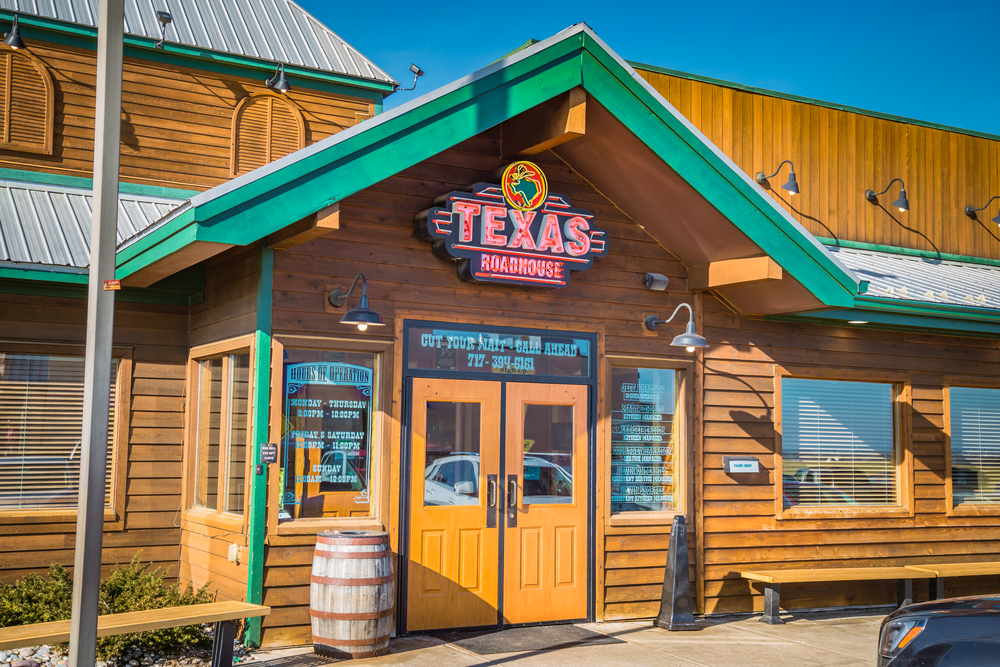
A Texas Roadhouse worker in Tennessee was permanently disabled by a work-related fall he suffered when he was startled by an opossum after his shift, the Tennessee Workers’ Compensation Appeals Board ruled Thursday.

Raymond Pridgen was in a designated break area outside the restaurant waiting for his ride home after 11 p.m. on July 22, 2019, when the opossum ran from behind a dumpster and startled him, causing him to fall and sustain injuries to his shoulder and back, according to Raymond Pridgen v. Texas Roadhouse Holdings LLC, et al.

The employer moved for summary judgment, asserting that the employee’s injury did not arise “primarily out of or in the course and scope of his employment.” A trial court disagreed, concluding that the injury was compensable “based on the totality of the evidence and relevant precedent.” The court also concluded, based in part on expert vocational testimony, that the employee was permanently and totally disabled following the fall.

Texas Roadhouse, which has initially accepted the workers compensation claim, which included a “massive” rotator cuff tear that required surgery, appealed, arguing that the “employee’s alleged injury” was not compensable and that the trial court erred.

The appeals court disagreed, citing medical evidence that the man’s condition had not improved despite treatment, and testimony from one vocational expert who said Mr. Pridgen “had attempted to return to work post-injury on at least two occasions but was unable to perform his job” despite preexisting conditions that had never kept him from going to work.

The court used case law from the Tennessee Supreme Court that ruled “‘course of employment’ includes not only the time for which the employee is actually paid but also a reasonable time during which the employee is necessarily on the employer’s premises while passing to or from the place where the work is actually done.”

On the disability argument, the court wrote that “it is undisputed that (Mr. Pridgen) made attempts to return to work, though unsuccessful, and his testimony regarding his own physical limitations is competent and relevant.” 


Source link

DOL sues chemical manufacturer over alleged retaliatory firing


The U.S. Department of Labor is suing a Georgia pesticide and agricultural chemical manufacturer over allegations that the company illegally fired a worker who filed a workplace safety complaint with federal regulators.

The DOL said Monday that it filed suit in the U.S. District Court for the Northern District of Georgia against Gainesville-based Avenger Products LLC and parent company Kittrich Corp. over claims that the worker was terminated in retaliation for raising safety concerns associated with chemical exposures in the workplace.

The lawsuit follows a federal whistleblower investigation by the Occupational Safety and Health Administration.

“Retaliation by employers like Avenger Products against employees who exercise their protected rights under the law creates a chilling effect on the willingness of other employees to cooperate with federal safety investigators,” Lily Colón, OSHA assistant regional administrator in Atlanta, said in a statement.

The lawsuit seeks to have Avenger Products pay the former customer service manager back pay, compensatory and punitive damages, and damages for emotional distress.

The DOL said the company has a history of workplace safety violations over a 20-year period, with $254,189 in proposed penalties between June 2018 and December 2019. 


Source link

Exit mobile version