Construction worker’s amputation claim improperly denied: Appeals court


The Appellate Division of the Supreme Court of New York ruled Thursday that the state’s Workers’ Compensation Board improperly denied a claim filed by a construction worker whose toe had to be amputated following a workplace injury.

The board had affirmed a workers comp judge’s decision to disallow the claim of Eddy Irizarry, who was injured in February 2021 when he stepped on a nail at a construction site. Mr. Irizarry, an employee of Lopez Matos Construction Inc., had a history of diabetes.

Following hearings and an independent medical evaluation, the workers comp judge found the claim non-compensable and the board subsequently agreed.

The appeals court ruled the board erred by focusing on a procedural issue and not the merits of the claim. It remanded the case, Matter of Irizarry v. Lopez Matos Constr. Inc., to the board with instructions to address the substance of the claim.


Source link

Violent incidents range from bullying to shootings


There’s no simple definition of workplace violence.

OSHA describes workplace violence as “any act or threat of physical violence, harassment, intimidation, or other threatening disruptive behavior that occurs at the work site,” adding that “such acts range from threats and verbal abuse to physical assaults and homicide.” The latter is on the rise, according to the Bureau of Labor Statistics, which last year reported that workplace fatalities due to violence increased 11.6% in 2022. 

The National Institute for Occupational Safety and Health divides workplace violence by category — criminal intent, customer/client, worker-on-worker, or personal relationship — and describes the nuances of each, which can range from harassment to assault. 

“Workplace violence has a large spectrum to it,” said Patrick Rogers, London-based head of risk advisory and crisis management for Alert:24, a unit of Willis Towers Watson PLC. “It’s everything from bullying … up to physical violence, right up to these extreme events like an active shooter.” 

Overall, workplaces are the most common setting for shootings, according to a study by the nonprofit Violence Prevention Project through Hamline University in St. Paul, Minnesota, which found that 31% of shootings take place at the current or former workplaces of perpetrators.

Mass shooting incidents are statistically rare, according to several studies, and it’s the smaller incidents that catch employers off guard, experts say. 

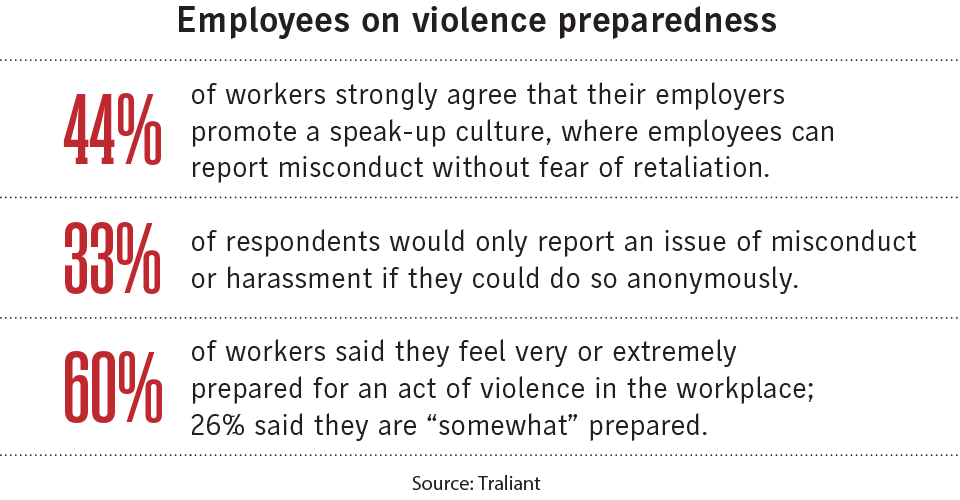
Applying a broad definition of workplace violence, one in four employees in the United States has witnessed such acts over the past five years, and 12% have been the target of violence, according to survey results released in January by Traliant Holdings LLC, a compliance company that collected responses from 1,080 employees at large companies.

“One of the most common types of workplace violence is actually domestic violence that spills into the workplace,” said Michael Johnson, Washington-based chief strategy officer at Traliant. “This is an employee whose husband is violent, and he comes into the workplace and tries to attack his spouse, who’s a victim of domestic violence, and maybe hurts others as well. …That’s one of the things that kind of surprises employers.”

Kathleen Bonczyk, Winter Garden, Florida-based attorney and founder and executive director of the nonprofit Workplace Violence Prevention Institute, said employers should pay close attention to “verbal behavior” that often escalates to something more. 

“That’s the assault, the threat, ‘Hey, if you don’t get away from me, I’m going to punch you in the face,’ and the next week, it becomes a punch in the face,” she said. 

Kenna Carlsen, a research associate with the Itasca, Illinois-based National Safety Council, said, “A lot of our attention goes to those overt physical forms of violence because they’re easier to measure,” while smaller incidents — including those that are only verbal — often fly under the radar, she said.

Larger events such as shootings are more unpredictable, further complicating the picture for employers grappling with awareness, she said. 

“One of the hardest things about workplace violence is that the larger events are so rare. … But when they do happen, the consequences can be severe,” Ms. Carlsen said.


Source link

Calif. enforces safety plans to cut attacks


Generic workplace safety templates won’t work as workplace violence policies for employers in California, who must comply with a new state law that requires them to have an anti-violence plan in place by July 1. 

California’s S.B. 553, signed into law on Sept. 20, 2023, requires most employers to “establish, implement, and maintain, at all times in all of the employer’s facilities, a workplace violence prevention plan for purposes of protecting employees and other personnel from aggressive and violent behavior at the workplace.” 

The law defines workplace violence as “any act of violence or threat of violence that occurs in a place of employment” and includes, but is not limited to, the “threat or use of physical force against an employee that results in, or has a high likelihood of resulting in, injury, psychological trauma, or stress, regardless of whether the employee sustains an injury.” The law also applies to an “incident involving a threat or use of a firearm or other dangerous weapon, including the use of common objects as weapons, regardless of whether the employee sustains an injury.” 

Employers are grappling with the expansive definition and the requirements, which call for measures that are site-specific, said Rachel Conn, San Francisco-based head of the Cal/OSHA practice for Conn Maciel Carey LLP. 

Under the law, violence “includes stress, things that lead to psychological trauma, incidents that occur on social media, the internet. … It’s really broad,” she said. 

“The one thing that I don’t think that a lot of employers are grasping at this point is that this is not going to be just a slapped-together program and you’re ready to go,” she said. “This has to be specific to the workplace, to different operations, in the different areas” of the workplace. 

Under the law, the plan must be comprehensive, addressing everything from threat reporting protocols to escape routes. The law requires that employers provide annual training to recognize the potential for violence in specific settings and devise strategies to avoid physical harm, as well as prepare for and respond to such events as an active shooter.

The law also states that employers must “record information in a violent incident log for every workplace violence incident” and that such a record “shall be based on information solicited from the employees who experienced the workplace violence, on witness statements, and on investigation findings.”


Source link

Cost rises linked to health care consolidation


The acquisition of physician practices by large hospital systems is having an adverse effect on states’ workers compensation systems, experts say. 

While proponents of so-called “vertical integration” in health care say the practice benefits consumers by delivering care more efficiently, workers comp researchers say consolidation drives up pricing due to decreased competition and can have a negative effect on return-to-work outcomes. And the efficiency argument, they say, relates to administrative efficiency, not patient care efficiency. 

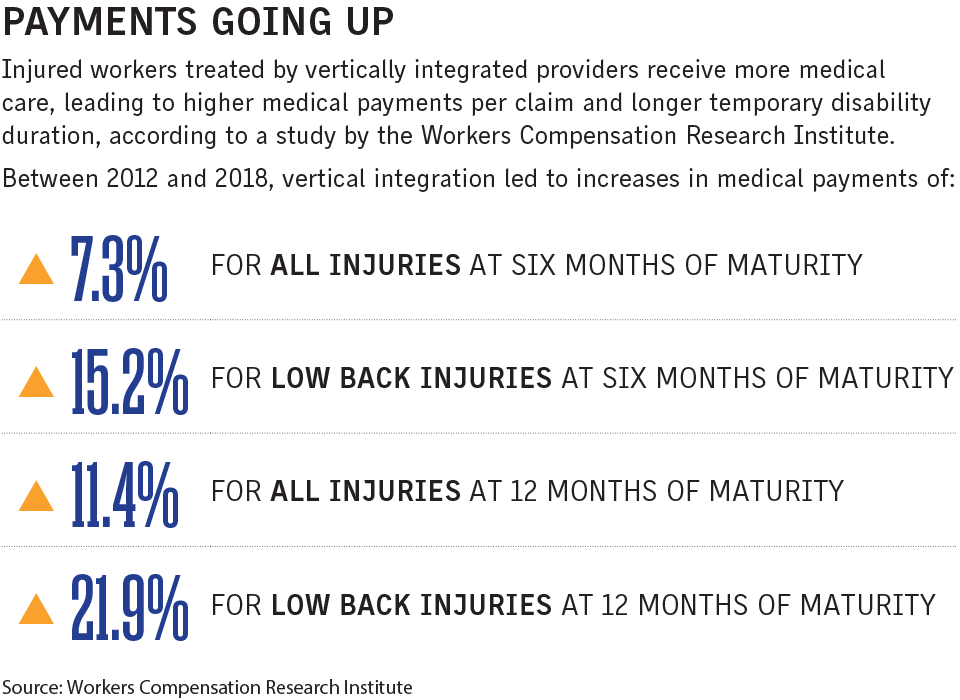
The Cambridge, Massachusetts-based Workers Compensation Research Institute in December published a study showing that between 2012 and 2018, vertical integration of care in consolidated medical systems resulted in an 11.4% increase in workers comp claim costs. 

“I would say that, overall, vertical integration does lead to general and higher payments for medical care,” said Kate Farley-Agee, Plainfield, Illinois-based vice president, product management, for Coventry Workers’ Comp Networks, a subsidiary of Enlyte LLC. 

Earlier in 2023, the WCRI found that vertical integration increased payments per visit by 10%, and in December researchers determined the practice also affected payments per claim, the number of medical visits per claim, and the amount of care provided per visit. 

When physician practices are consolidated into larger health care systems, “way more providers actually see the patient,” and more services are billed per visit, said Joe Paduda, Plainfield, New Hampshire-based principal with Health Strategy Associates, a workers comp consultancy. 

Workers comp medical fee schedules, which usually act as a check on costs, aren’t much of a mitigating factor under vertical integration because increased services still translate to increased costs, Mr. Paduda said. 

“There’s been this payer consolidation and then there’s provider consolidation, and the providers will say that we have to get bigger so that we can negotiate effectively against these bigger payers,” he said. “So, it’s sort of like an arms race.”

When systems are vertically integrated, injured workers also tend to undergo more intensive and costly imaging testing, said Steve Bennett, Washington-based vice president of workers compensation programs and counsel for the American Property Casualty Insurance Association. If this results in improved outcomes, vertical integration could be viewed in a more positive light, but “evidence so far is that return to work is worsened,” he said.

“People stay out of work longer, get more temporary disability benefits when they’re being treated by physicians” working under larger hospital systems, Mr. Bennett said. WCRI researchers found that return to work is negatively affected by the consolidations. 

Insurers have felt the brunt of vertical integration, according to Jason Beans, CEO of Chicago-based Rising Medical Solutions Inc., which provides workers comp services. 

“It’s limiting access to care, and it does drive up pricing when they do these mergers,” he said. 

Blaming rising workers compensation claims costs on vertical integration is too simplistic, said Richard Gundling, vice president of Downers Grove, Illinois-based Healthcare Financial Management Association, whose members include hospitals and health care systems.

“Attributing it to mergers and acquisitions is limiting because the overall cost increases for labor, drug costs, supplies, has exponentially risen in the last several years,” he said.

Horizontal integration, or the process of one hospital system acquiring another, poses a similar set of problems for workers comp, including increased costs and delayed return to work, experts say (see related story below).

The move toward consolidation, whether vertically or horizontally, can be traced back more than a decade to the passage of the federal Affordable Care Act, which provided health insurance options for millions of uninsured people, said Ms. Farley-Agee of Coventry Workers’ Comp Networks.

“When that first happened, I think there was a lot of uncertainty on the provider side and certainly on our side as well because we all knew it was broad sweeping, it was a wide impact in general to the health care system,” she said. 

The consolidations have affected patient populations differently, since general health patients have shared payment responsibility whereas workers comp claimants have no out-of-pocket expenses, Ms. Farley-Agee said. 

Workers comp insurers are more affected “because they’re the ones that are paying for the care, and so, whatever the fees are, whatever they’re having to pay, is their responsibility primarily, not the patient’s,” she said.

According to the December WCRI report, the number of physicians in 34 states researchers analyzed who were integrated with health care systems between 2012 and 2018 jumped from to 49% from 32%. 

On the orthopedic side, practitioners went from 18% hospital system affiliated to 35%, which could have a large effect on workers compensation as orthopedic physicians are the providers who most often render care to injured workers, according to experts. 

Another possible downside to vertical integration, they say, is access to care. Patients and workers comp claimants in more rural areas, for example, might be underserved if providers consolidate with hospital systems that are located in urban centers. 


While vertical integration has negatively affected workers compensation by leading to higher medical spending and delayed return-to-work outcomes, horizontal integration in health care has also influenced injured worker care, experts say. 

Horizontal mergers and acquisitions in health care involve consolidation of individual hospitals into larger health care systems or hospital systems joining other hospital systems, while vertical integration is the acquisition of a physician practice by a health system.  

Jason Beans, CEO of Chicago-based Rising Medical Solutions Inc., said a self-insured municipality in Florida, a client, noticed medical costs rose “dramatically” when one hospital system in the region was acquired by a national health care system. 

“So, literally in the same facility with the same doctors, the prices have gone up maybe 25%,” said Mr. Beans, who did not name the client. “That’s anecdotal, but it’s logical, especially now that venture capitalists and the bankers are getting involved. It’s become much more of a business.”

The trend toward increasing hospital consolidation is expected to have a continuing effect on workers comp by producing upward pressures on utilization and pricing, according to the Boca Raton, Florida-based National Council on Compensation Insurance. 

NCCI researchers found that hospital mergers often increase the likelihood of intensive surgery and the total number of surgeries for workers comp claimants, while failing to improve outcomes. Mergers have also been found to reduce hospital costs per risk-adjusted discharge while failing to reduce the price of hospital care to insurers, according to the NCCI. 


Source link

Medical advances make for mega comp claims


Positive trends in workplace safety and medical treatment are helping more employees survive catastrophic injuries at work but the increase in survival rates has knock-on effects for employers and workers compensation insurers that require careful management. 

Self-insured employers and insurers can face significant long-term costs in providing medical care and other resources to severely injured workers. 

While preventing the injuries from happening in the first place is seen as the primary means of reducing catastrophic workers comp claims, various financial tools can be used to manage the costs when big claims occur, experts say.

Employees are injured and disabled less frequently due to workplace safety improvements, creating somewhat of a paradox, because, from a cost perspective, injury claims are “larger than they’ve ever been before,” said Matt Zender, Las Vegas-based senior vice president of workers compensation strategy at Amtrust Financial Services Inc. 

“There’s definitely been an uptick in (catastrophic) claims in workers comp and across the board,” said Dennis Tierney, Norwalk, Connecticut-based national director of workers compensation claims for Marsh LLC.

Comorbidities also play a role in driving up costs, as more workers comp claims include mental injury components than in years past, he said. (see related story below).

Many insurers consider anything above $1 million to be a catastrophic claim, said Dave Boyle, senior vice president of casualty claims for Schaumburg, Illinois-based Zurich North America. 

“I don’t think there’s necessarily a consistent definition of catastrophic injury in workers comp,” Mr. Boyle said. “I do think it’s mostly driven by type of law or type of injury.”

During the past few years, the workers comp system has seen a rise in claims with incurred values of between $5 million and $10 million, Mr. Tierney said. 

And while catastrophic claims themselves make up only a tiny share of overall workers comp cases, they can represent as much as 20% of total workers comp costs, he said. 

“The fact that we’re seeing a 30% increase in claims and incurred values over $10 million, that goes to show you it’s definitely something that’s a concern in the industry and something that’s been on the increase now for the last little while,” he said. 

If catastrophic claims are defined strictly by dollar figures, not all insurers are experiencing the same increases. 

“We define anything that has a total incurred value of $100,000 or higher as a catastrophic claim,” said Kapil Mohan, a senior vice president with Chicago-based Gallagher Bassett Services Inc. On that measure, severity has not changed significantly, he said.

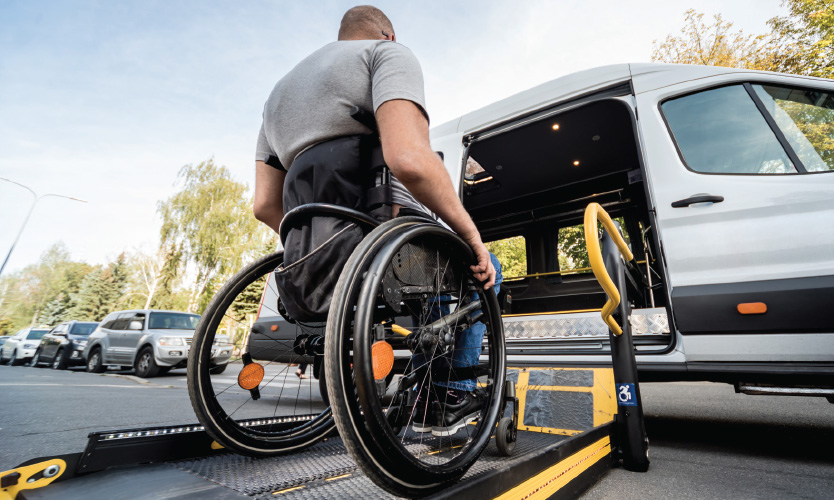
Benefits paid or supplied to injured workers that set catastrophic claims apart include retrofitting a residence to accommodate a disability, installing hand controls on a vehicle, or providing a disabled worker with a service animal, according to experts. 

Insurers must provide benefits according to state law, but many go “above that guidance to make sure that the individual is taken care of,” said Mr. Zender of Amtrust. 

Catastrophic injuries often involve damage to the spinal cord, cognition or brain function and amputations. Severe burns and loss of eyesight can also be catastrophic. 

Medical treatment advancement is a significant driver behind better survival rates from workplace injuries, Mr. Boyle said.

Workers who were burned over 80% to 90% of their bodies in years past, for example, would likely die from their injuries, whereas the advent of treatments such as artificial skin has helped more survive. 

“Of course, that’s fantastic news for those that are exposed to that,” Mr. Boyle said. “But, because of that, that has driven up the cost for claims associated with (those types of injuries).”

As medical care becomes more specialized, insurers can expect to pay more for workers who are severely injured, Mr. Boyle said. And medical inflation is another main area of cost increase, in both catastrophic injury cases and workers comp in general. 

Catastrophic injuries also correlate with certain industries, Mr. Boyle said, with construction seeing some of the highest numbers of catastrophic claims. Many high-dollar claims involve manual laborers who are catastrophically injured from falls or in incidents tied to heavy machinery. 

Two typical markers of a catastrophic claim are medical and indemnity benefits that could potentially go on for life, said John Geaney, a workers comp defense attorney and shareholder with Mount Laurel, New Jersey-based Capehart Scatchard PA.

Depending on jurisdiction, wage replacement benefits may only last until retirement age, but can still be circumstance-specific, while medical benefits typically go on for the injured worker’s lifetime, experts say.

Unlike other workers comp cases, where the process can be more adversarial, catastrophic claims often require a team approach involving employers, insurance adjusters, attorneys, rehab nurses, life planning professionals and family members of injured workers, Mr. Geaney said.

Workers comp insurers responsible for administering catastrophic claims can tap into mitigation strategies to help offset the cost of the claims, said Mr. Mohan of Gallagher Bassett.

For example, they can hire a third-party medical management organization to better control medical costs for a portion of a claim’s life cycle, he said. 

“It’s almost like a structured settlement where they’re guaranteeing you a certain medical cost, so your exposure as the insurer is capped,” he said.

Insurers can also structure a one-time settlement factoring in the lifetime costs of the claim.

“It allows you to have capped exposure versus this unknown exposure that could go on as long as the claimant lives,” Mr. Mohan said, noting the strategy is like a reverse annuity where the insurer pays the claimant a lump sum of money to cover their catastrophic injuries. 


While catastrophic workers compensation claims rarely result from mental injuries, big claims increasingly contain a psychological component, according to experts. 

Mental health is getting greater attention in workers comp amid the introduction of mental injury presumptions for various classes of workers. Such claims are more difficult to tie to employment, though, than those for physical injuries and are unlikely to be catastrophic, said Kapil Mohan, a senior vice president with Chicago-based Gallagher Bassett Services Inc.

But mental health is still affecting workers comp claims, including those deemed catastrophic, experts say. 

“Just from observing, I think there is a higher incidence of psychological treatment necessary for those involved in catastrophic injuries. You do see a higher rate of that,” said Dave Boyle, senior vice president of casualty claims for Schaumburg, Illinois-based Zurich North America. 

Mental injuries can also contribute to the overall cost of catastrophic claims, Mr. Boyle said. 

The Boca Raton, Florida-based National Council on Compensation Insurance said it could not corroborate whether mental injury components of catastrophic claims have increased across the board, but it said psychological injuries related to severe burns have increased.


Source link

Workplace violence concerns broaden | Business Insurance


An employee at a Wally’s Foods convenience store in Minneapolis was stabbed while trying to stop a shoplifter. Following an argument, a man was accused of shooting his coworker in the torso at packaging supply company Pak Source in Rock Island, Illinois. The husband of a manager-in-training at a McDonald’s restaurant in High Point, North Carolina, angry over how employees there were treating his wife, allegedly came into the restaurant and brutally assaulted a cook.

That handful of publicized incidents all took place since Dec. 1, 2023. Likely, there were more, according to experts who say most workplace violence goes unreported. 

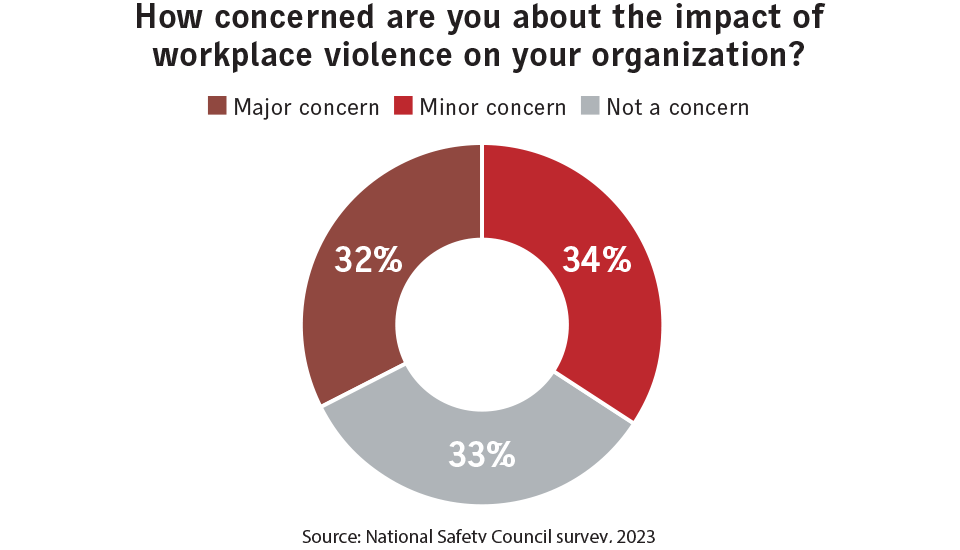
The lack of incident reporting adds to an awareness problem among employers that may only see high-profile and rare events as those that can affect their business. But workplace violence runs the gamut, can trigger a multitude of insurance claims and lawsuits, and highlights emerging workplace safety requirements many companies may not be aware of, experts say. 

“The mass shootings have a tendency to garner attention; but, daily, when you talk about a restaurant where somebody’s accosted by an employee, or there’s somebody who’s seeking to have a dating relationship with an employee who doesn’t want it…all of these are acts that occur in the workplace,” said Debra Kirby, Chicago-based global service line lead for security risk consulting at Jensen Hughes, a consultancy that provides workplace violence training. 

And employers are largely unprepared, and some don’t understand what counts as violence, according to experts (See related story).

“‘It’ll never happen to us or here.’ We hear that over and over again,” said Kathleen Bonczyk, Winter Garden, Florida-based attorney and founder and executive director of the nonprofit Workplace Violence Prevention Institute, which provides training for companies. 

Insurance questions

Companies on the hook for workplace incidents can turn to several insurance policies: workers compensation, general liability and umbrella, management liability, directors and officers liability, even terrorism, if the government classifies an incident as such. 

“Workers compensation is the one that is thought of first,” said Paul Primavera, Kansas City, Missouri-based national practice leader for Lockton Cos. LLC. “Then it could hit a large number of other policies,” he said, adding that the cost to cover incidents could be in the “millions.” 

Workers comp has gaps, because many states do not require employers to cover mental injuries that often are associated with violence. Connecticut changed its law in 2023 to extend its workers comp post-traumatic stress disorder presumption previously reserved for first responders to “all employees” who witness a harrowing event. 

Overall, workers comp insurers have seen a four-fold increase in injuries related to violence over the past 25 years, said Jeff Cole, assistant vice president of national accounts for Stevens Point, Wisconsin-based workers comp insurer Sentry Insurance.

“We’ve also seen a doubling of the average cost per claim,” he said, adding that workers comp claims from violence are complicated and most are driven by individual assaults. 

Companies should be most worried about smaller incidents, such as an isolated attack that occurs after an individual has been fired, said Christopher Arehart, Chicago-based senior vice president, first party product manager for North America financial lines, with Chubb Ltd. 

“That type of event does play out more and more and more,” he said. “As the stress of our society continues to press on individuals, exacerbated by the pandemic and then reengaged through returning to work and returning into offices, we’re seeing more clashes between individuals, oftentimes employee to employer.” 

With workplace violence increasingly a topic at insurance renewals, individual workplace violence policies and related coverages can fill gaps where other policies fall short, giving businesses cash to cover such immediate needs as counseling for employees, job relocation assistance and even building renovations following a larger act of violence where workers are wary of returning to the same job site. Experts say a company’s response to violence can help mitigate later losses, such as claims or lawsuits. 

Most employers are unaware of the liability implications until an incident happens, Mr. Arehart said. 

Company leaders may become interested in the topic if they see news coverage of an attack at another company, experts say. 

“We’re seeing a lot of this being triggered by board-level interest,” said Patrick Rogers, London-based head of risk advisory and crisis management for Alert:24, a unit of Willis Towers Watson PLC.

“We’re working with a few Fortune 500s now on these exact issues where a board member, in most cases the CEO, has just said to the security team or risk management team, ‘What are we doing about this?’ and a lot of the answers are coming back unsatisfactory to them because these are complex issues to manage,” he said. 

Renata Elias, Dallas-based senior vice president of consulting solutions for Marsh Risk Advisory, a division of Marsh LLC, said, “Tragically with every incident that occurs there’s an increase in my inbox or on my phone of people reaching out wondering, No. 1, do they have what they need in place, and then, No. 2, can we help them get to that place?” 

“We have plans for fires and hurricanes and tornadoes and civil unrest, but a lot of organizations have not thought about a plan for a workplace violence incident,” she said. 

Coverage for intentional acts such as workplace violence is also expensive, which is why those managing insurance portfolios and risk are urged to focus on risk management and prevention, experts say.

Change on the horizon

California is leading the charge for improved mitigation of workplace violence risks. This year, businesses in the state will face sweeping changes mandated by S.B. 553, signed into law last year, which requires most employers in the state to implement by July 1 written workplace violence prevention plans that include annual workplace violence prevention training, violent incident logs and other record-keeping measures. It’s the first law of its kind in the country (see related story).

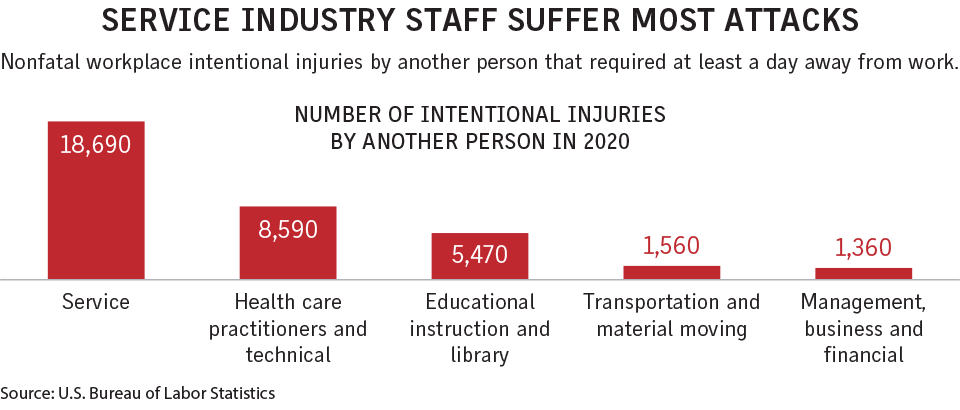
The U.S. Occupational Safety and Health Administration, under pressure to create a workplace violence standard for health care, has zeroed in on that industry, where the agency says most nonfatal workplace assaults take place.

Andrew C. Brought, a Kansas City, Missouri-based partner with Spencer Fane LLP, said the national focus on health care makes more sense than California’s broader approach. California’s new law is not industry-specific and takes a one-size-fits-all approach, “which doesn’t really make sense because there are certain businesses and there are certain industries where violence is just more prevalent,” he said. 

OSHA’s enforcement measures in health care resulted in several publicized citations in 2023 against hospital systems where patients assaulted nurses and other health care professionals, using the catch-all general duty clause as the basis to cite.

Louisiana and Texas, in 2022 and 2023, respectively, passed laws requiring workplace safety mitigation efforts for health care workers. In Texas, a health care violence law goes into effect this year. 

Given the implications, “workplace violence is on everyone’s minds these days,” said Eric Conn, Washington-based founding partner of Conn Maciel Carey LLP. “Our phone won’t stop ringing about the new California law.” 

Beyond the requirements

Craig Van Asten, safety services manager for Sentry, said companies on the forefront “are starting to recognize and accept that they need to have some formal safety management practices in place.” 

But the change has been slow when it comes to preparing for smaller incidents that are more frequent, he said.

Organizations that have active shooter training or “run-hide-fight” training can be complacent about other workplace violence risks, Mr. Van Asten said.

“We talk with our clients about how workplace violence really starts with zero tolerance policies, making sure that we don’t have harassment, bullying in the workplace; ensuring that you have a written program and that you’ve got responsibilities delegated throughout the organization, and that you’ve got the structure and the systems in place, so that we can quickly respond and address these scenarios,” he said. 

Companies should have regular discussions about what constitutes violence and have policies in place, said Julie Bolton, Houston-based head of middle market risk engineering for Zurich Insurance Group’s resilience solutions unit. “It’s getting out and talking, making it a regular talking point at meetings,” she said. 

Ms. Bonczyk of WVPI said companies can start with their sexual harassment policies. 

“My recommendation is to take a sexual harassment policy and modify it so that it becomes a workplace violence prevention policy,” she said. For example, an existing grievance procedure, which tells an employee how to report an event or issue, would work in an anti-violence policy, she said.

“Apply those procedures to workplace violence,” she said. “You’ve already got the policy in place. Then there’s some training, such as situational awareness.”

Ms. Kirby of Jensen Hughes said each organization faces different challenges, and those that know their business and risks — whether it be the type of clients or that workers are more isolated and prone to violence — will fare better.

“In the end, it’s really about people and looking at how to develop a good assessment program to manage employees in terms of what the potential threats are,” she said. 


Source link

Employer improperly dismissed from vehicle accident suit: Court


A trial court wrongly determined that an employer had zero liability in an auto accident involving one of its employees, a Florida appellate court ruled Friday.

The Florida Fifth District Court of Appeal reversed a trial judge’s ruling that Sarah Marie Way was not within the course and scope of her employment when she crashed into a vehicle driven by Carol Ann Kulzer in Ormond Beach. The incident date was not provided in the ruling.

Ms. Kulzer, who said she was injured in the crash, sued Ms. Way and her employer, Greenleaf Trust, a Michigan-based company specializing in wealth management and trust administration services.

Ms. Way was out running errands for the employer as well as stopping for lunch at the time of the accident, according to court documents.

The trial court absolved Greenleaf of any liability, citing a “coming and going rule,” because Ms. Way’s errands included a lunch break.

The appeals court said the trial judge erred because only a small amount of the time she was out was spent getting lunch.

The case was remanded for further proceedings.


Source link

Pennsylvania approves 7.88% loss cost reduction for comp


Pennsylvania Insurance Commissioner Michael Humphreys approved a 7.88% reduction in loss costs for policies incepting on or after April 1.

The Pennsylvania Compensation Rating Bureau said in a statement the reduction in loss costs, which is used to calculate comp premiums, is a result of a 6.1% decrease in claim frequency as well as fewer large claims.

The bureau said claim frequency is down a cumulative 42% since 2013 and loss costs have fallen 54% over the same period.

The average payment per claim was $1,100 in 2022, compared with $1,500 in 2015. Prescription costs per claim are down 60% since 2015.

WorkCompCentral is a sister publication of Business Insurance. More stories here.


Source link

Exit mobile version