Long COVID presumption proposed for essential government workers


Essential government workers in Maryland diagnosed with long COVID would be presumed to have a compensable occupational disease, under a bill introduced in the state Senate on Friday.

S.B. 431, which was referred to the Senate Finance Committee, would create a presumption for essential workers who were diagnosed with COVID-19 between March 5, 2020, and July 15, 2021, and who subsequently were diagnosed with long COVID.

The bill defines long COVID to mean lingering symptoms or conditions that continue or develop at least four weeks after an initial infection and may be multisystemic, present with a relapsing-remitting pattern and may “represent many potentially overlapping entities, likely with different biological causes and different sets of risk factors and outcomes.”

The presumption would apply to government workers who couldn’t work remotely during the pandemic.

State governmental employers could rebut the presumption with substantial evidence demonstrating that a worker did not contract COVID-19 or develop long COVID in the course of employment, according to the bill.

WorkCompCentral is a sister publication of Business Insurance. More stories here.


Source link

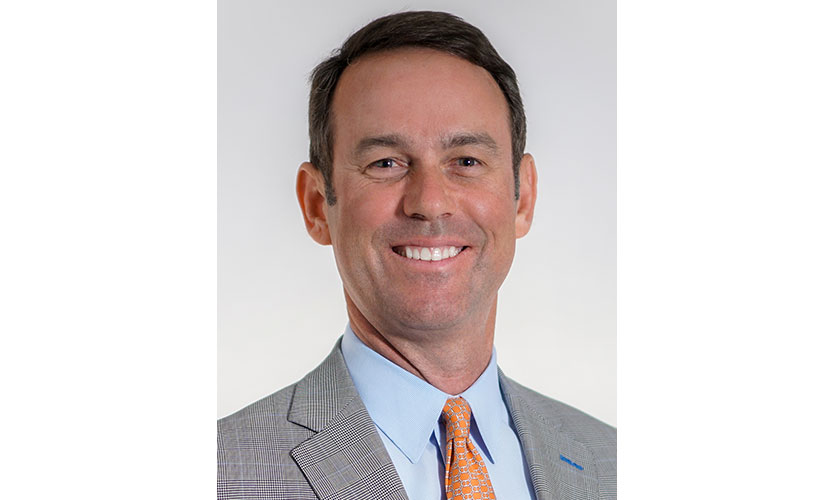
Brown & Brown posts strong Q4, full-year results


Brown & Brown Inc. reported fourth-quarter revenue of $1.03 billion, a 13.8% increase compared with the year-earlier period, while net income soared 85% to $268.6 million.

Commissions and fees increased by 12.4%, and investment income more than tripled to $18.5 million. Organic revenue growth was 7.7% for the quarter.

For the full year, Brown & Brown reported record revenue of $4.26 billion, up 19.1% from 2022. Organic growth for 2023 was 10.2%, while commissions and fees increased 17.9%.

Brown & Brown had “an outstanding quarter, capping an incredible year,” J. Powell Brown, chairman, president and CEO of the Daytona Beach, Florida-based brokerage, said on an earnings call with analysts Tuesday. The brokerage posted its quarterly results late Monday after markets closed.

After crossing its intermediate annual revenue goal of $4 billion, the company is targeting its next goal of $8 billion, Mr. Brown said.

Results were boosted by meaningful new business, strong retention and rate increases, Mr. Brown said.

Brown & Brown continued to grow through acquisitions, completing 13 deals in the fourth quarter, adding total annual revenue of $109 million, Mr. Brown said.

Brown & Brown said it has reorganized its business to operate under three main segments of retail, national programs and wholesale going forward.

Retail grew organically by 8.2% in the fourth quarter, national programs by 5.4% and wholesale by 14.5%.

The brokerage recorded a one-time $19 million charge in the quarter related to a changing reinsurance policy for one of its captives, which decreased its organic growth by approximately nine percentage points in programs, Mr. Brown said.

The change is expected to drive incremental organic growth in 2024, Chief Financial Officer Andrew Watts said during the call.

The services segment saw organic revenue decline by 5.9% and will no longer operate as a standalone business following the sale of various companies in the quarter.

The brokerage completed the sale of four third-party administrator companies to London-based claims management company Davies Group Ltd. in the quarter. It recorded a gain on disposal of approximately $135 million related to the sale, Mr. Watts said.

Rate increases in the insurance market were similar to the third quarter, with mid-market rates up 5% to 10% for most lines and rate decreases in workers compensation in most states, Mr. Brown said.

“Placement for cat property and excess liability continue to be difficult with rates for property up 10% to 30% and liability flat to up 10%,” Mr. Brown said, adding that there was “some moderation” in the rate of increase in cat property, mainly in London markets.

In addition to rate increases, it’s also challenging to find desired limits, Mr. Brown said.

“Buyers are exhausted with the level of premium increases. Customers continued to either reduce limits or participate in certain layers in order to manage their premium increases in December,” Mr. Brown said.

Professional liability and cyber coverage continue to soften compared with last year, with rates for professional liability up 5% to down 20%, he said.

The overall economic sentiment of customers is “cautiously optimistic,” Mr. Brown said. “Our customers continue to invest in their businesses and hire employees, although the level of investment is not as high as a year ago,” he said.

For the full year the retail segment grew 7.9% organically; national programs 17.2% and wholesale brokerage 12.2%.

Brown & Brown completed 33 acquisitions in 2023, representing combined annual revenue of $162 million, expanding its footprint in North America and Europe. The acquisition of London-based brokerage and managing general agent Kentro Capital Ltd. was the largest, Mr. Brown said.



Source link

Rate hikes accelerate in most lines in Q4: Ivans


Insurance rates for most major lines of commercial coverage increased at a faster pace in the fourth quarter, compared with the prior quarter, according to Ivans Insurance Services, a unit of Applied Systems Inc.

Commercial property insurance again saw the largest increases, with rates increasing 10.3%, compared with 10.1% in the third quarter.

In other lines, business owners policy rates rose 9.1%, compared with 7.7% in the prior quarter; commercial auto rates increased 8.8%, compared with 7%; umbrella rates were up 6.4%, compared with 5.3%; and general liability rates rose 5.8%, compared with 5.4%.

Workers compensation rates fell again, but the pace of decline slowed to -0.6% from -1%.

“Notably, BOP, general liability, commercial property and umbrella ended the year with their highest average premium renewal rate change,” Ivans said in a statement.


Source link

Bill proposes exception to exclusive remedy for abusive workplaces


Workers compensation would not be the exclusive remedy for Wisconsin workers claiming injuries from abusive work environments, under legislation introduced in the state Senate on Friday.

S.B. 934, referred to the Senate Committee on Labor, Regulatory Reform, Veterans and Military Affairs, proposes an exception to work comp exclusivity for those who claim injuries from an abusive work environment, including retaliation or threat of retaliation for opposing an abusive work environment or for participating in an investigation into an abusive work environment.

Workers would be allowed within one year to bring an action in circuit court against the employer or employee who allegedly engaged in the unlawful practice, according to the bill.

A legislative analysis explained that “(i)f the circuit court finds that an employer or employee has engaged in an unlawful employment practice, the court may enjoin the employer or employee from engaging in that practice and may grant other relief the court considers appropriate, including reinstatement of the aggrieved employee, removal of the person who engaged in the abusive conduct from the aggrieved employee’s work area, medical expenses, back pay, front pay, compensation for pain and suffering, compensation for emotional distress, punitive damages, and reasonable costs and attorney fees.”

WorkCompCentral is a sister publication of Business Insurance. More stories here.


Source link

Comp tech company launches financial review transparency platform


Prodigy Care Services LLC, an Austin, Texas-based workers compensation technology company, announced Monday that it has launched its PACparency financial reporting platform.

The platform reports financial metrics, including client savings, health care provider total billed charges, final reimbursements, and jurisdictional fee schedule determinations.

PACparency, which provides nationwide services through network and out-of-network provider agreements, helps clients realize more savings by offering greater financial and bill review transparency, the company stated. 


Source link

Comp court denies benefits for ex-firefighter diagnosed with cancer


A former city firefighter who developed colorectal cancer is unlikely to prove his illness was tied to his work duties, the Tennessee Court of Workers’ Compensation Claims ruled Friday.

In an expedited hearing order, the workers comp court determined that former Cookeville firefighter Jeff Emerson has not sufficiently proved that his cancer diagnosis was connected to firefighting activities.

Mr. Emerson had testified that while on the job, he was exposed to toxins from structure and brush fires, and that he regularly breathed in fumes from vehicle diesel exhaust. Other toxic exposure, he said, was connected to soot that had accumulated on his clothing.  

Numerous medical experts gave conflicting opinions on the nature of the injury, the court wrote, and although firefighting activities likely increased Mr. Emerson’s risk of getting colorectal cancer, the evidence in the case does not specifically point to Mr. Emerson’s job as the primary cause of the illness.

The court denied Mr. Emerson’s petition for workers comp benefits, and it ordered the parties to attend a March status hearing for an update on the case. 


Source link

Study looks at first-responder substance use during pandemic


While frontline workers experienced increased burnout and mental health issues during the early years of the pandemic, many reported no significant concerns about substance use, according to a study by Florida Atlantic University.

Findings released Thursday, and cross-published in the International Journal of Drug Policy, showed that nearly 61% of 2,801 first responders surveyed nationwide said substance use was not a concern in 2020 and 2021, while 40% of respondents said they turned to drugs to relieve emotional discomfort.

Twenty-two percent of those surveyed said they were unable to cut down on substance use and an additional 7.2% reported neglecting job responsibilities due to increased substance use, according to the study.

“First responders represent a unique population as they have increased exposure to trauma and stress, which can be exacerbated by public health epidemics,” Kaila Witkowski, a senior author and assistant professor at FAU’s School of Public Administration, said in a statement.

Researchers said findings suggest that employers should implement strategies aimed at reducing work-related stress and burnout to improve personal resiliency, including “decompression spaces” intended to help workers reduce problematic substance use. 


Source link

Sedgwick appoints Kimberly George global chief brand officer


Sedgwick Claims Management Services Inc. on Monday announced it has appointed Kimberly George as its first global chief brand officer.

Ms. George, who was among the Business Insurance Women to Watch in 2011, will serve as a member of the Memphis, Tennessee-based company’s marketing and communications leadership team.

In her 22 years at Sedgwick, Ms. George has held numerous roles in operational, innovation and product development and most recently served as global head, innovation and product development. She will continue to be based in Chicago.


Source link

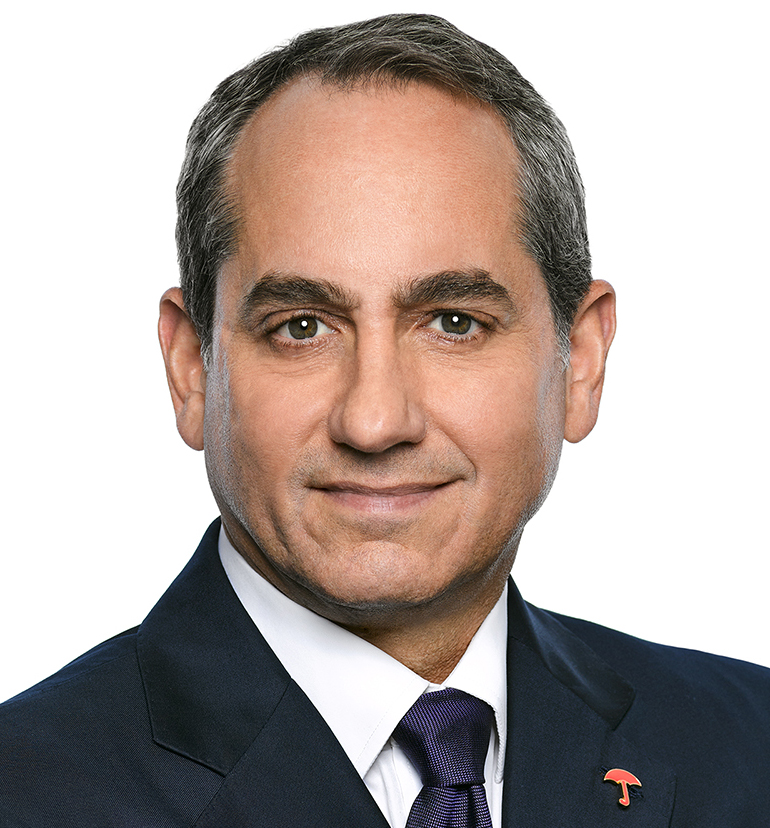
Travelers profit nearly doubles on strong pricing, lower cat losses


Travelers Cos. Inc. Friday reported fourth-quarter net income soared 98% to $1.63 billion, as lower catastrophe losses, price increases and higher investment income boosted its performance.

Speaking on an earnings call with analysts, Travelers Chairman and CEO Alan Schnitzer said the pricing environment remains strong and broad-based.

“Even with another quarter of very strong pricing, retention remains at historical highs,” he said.

Net written premium increased 13% to $9.99 billion in the quarter, and net investment income rose 24% to $778 million, largely driven by strong returns from its growing fixed-income portfolio, Travelers said in its earnings statement.

Pre-tax catastrophe losses for the quarter were $125 million, largely from wind and hailstorms in multiple states and a winter storm. That was down from $459 million in the year-earlier period.

The insurer’s combined ratio improved to 85.8%, from 94.5% in the same quarter of 2022.

All three of the insurer’s segments – business insurance, bond and specialty insurance, and personal insurance – contributed to underwriting gains, Mr. Schnitzer said.

Business insurance, Traveler’s main commercial lines business, reported net written premiums of $5.02 billion, up 14% compared with the same period in 2022. Renewal premium change in the segment remained high at 11.8%, while retention also remained high at 87%, Mr. Schnitzer said.

“The combination of strong pricing and retention reflects deliberate execution on our part and a disciplined marketplace,” Mr. Schnitzer said.

Business insurance generated $672 million of new business in the quarter, which was $180 million, or about 20%, higher than the prior-year quarter, he said.

During the quarter “meaningful” renewal rate increases were achieved on all lines other than workers compensation, Greg Toczydlowski, president of business insurance, said on the call. Property, umbrella and auto lines led the way, he said.

In bond and specialty insurance net written premiums increased by 7% to $989 million, while personal insurance was up 13% at $3.99 billion.

For the full year, Travelers reported net income of $2.99 billion, up 5% from 2022; net written premium of $40.2 billion, up 14%; and a combined ratio of 97%, a deterioration from 95.6% due to higher catastrophe losses. Net investment income of $2.92 billion pre-tax was up 14%.

On the analysts call, Travelers said it has increased the total amount of coverage on its catastrophe excess of loss reinsurance treaty for this year, placing coverage for $3.5 billion of the $4.5 billion layer excess of a $3.5 billion attachment point.

Travelers said it closed its previously announced acquisition of cyber managing general underwriter Corvus Insurance Holdings Inc. earlier this month, which will be reflected in its new business and production results over the course of the year.

In light of continued strong pricing and terms in the excess and surplus lines and reinsurance markets, Travelers said it has also renewed its 20% quota share agreement with Fidelis Insurance Holdings Ltd., a Bermuda-based specialty insurer and reinsurer in which it took a minority stake in 2021.

“The written premium volume, which will be included as part of international within the business insurance segments, is not expected to be material, but should have a modestly favorable impact on the underlying combined ratio for 2024,” Travelers Chief Financial Officer Dan Frey said on the call.


Source link

Hawaii to consider adding female cancers to presumption


Hawaii lawmakers will consider expanding workers compensation medical benefits for firefighters to include coverage for breast cancer and cancer of the female reproductive organs.

H.B. 1889, which was filed on Thursday, provides details on an April 2023 National Library for Medicine study that highlighted the occurrence of cancer in female firefighters, finding “that female firefighters may develop a wide variety of cancers and may develop them at an earlier age than most other women.” 

“These findings illustrate the need to provide broad and presumptive medical coverage for female firefighters who have become ill,” the bill states.


Source link

Exit mobile version