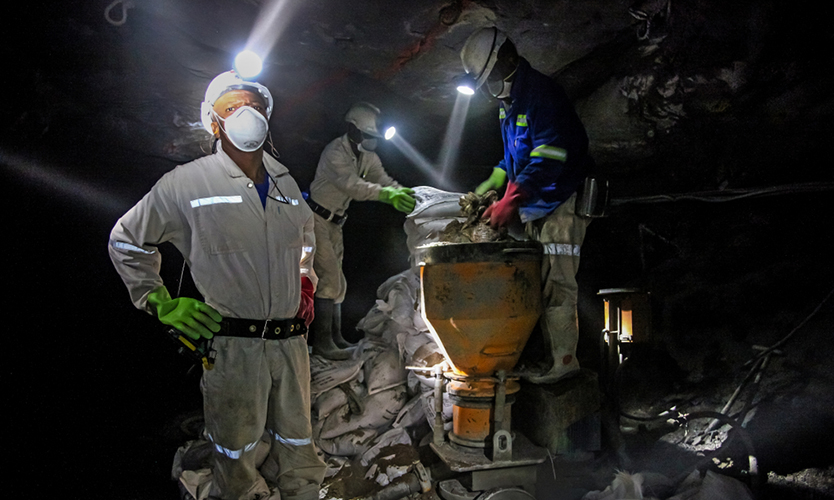
Guard injured in inmate attack not entitled to additional comp benefits


A corrections officer isn’t entitled to an increase in workers compensation benefits received for injuries suffered in a 2002 preplanned prison attack, the California Court of Appeals ruled Monday.

The court determined a comp judge correctly found the California Department of Corrections and Rehabilitation didn’t engage in “serious and willful misconduct” at the time of the coordinated inmate attack.

Lancaster State Prison guard Michael Ayala, who was injured in the attack, had contended his employer’s serious and willful misconduct entitled him to a 50% benefit increase under state law.

The Workers’ Compensation Appeal Board overturned the comp judge’s decision, finding prison officials didn’t act on a credible threat of inmate violence at the time of the incident. That decision enabled Mr. Ayala to seek the benefits increase.  

Mr. Ayala said that before he became permanently disabled, his base compensation was his full salary, which he received while on industrial disability and enhanced industrial disability leave, alternatives to temporary disability.

The Department of Corrections argued that industrial disability benefits were not considered “compensation.” The distinction was important because the 50% benefit increase Mr. Ayala sought was based on “compensation.”  

The appeals court said industrial disability leave is not considered compensation for the purpose of the additional benefits available when an employer engages in willful misconduct.

The court reversed the comp appeal board’s decision and sent the case back to the board for further action. 


Source link

Feds call on banks to help track comp fraud in construction


The Financial Crimes Enforcement Network on Tuesday issued a notice to financial institutions to help federal law enforcement identify construction firms engaged in payroll tax evasion and workers compensation insurance fraud, crimes the U.S. Department of Treasury says are on the rise in residential and commercial real estate construction industries.

Federal law enforcement said in its notice that in addition to paying workers without issuing tax documents construction, companies are increasingly using “shell” companies to buy small workers compensation policies and then “renting” such policy documentation to companies with a much larger workforce than the shell company was insured for.

The notice says banks can help report such fraud by looking at the “company’s recently acquired workers compensation insurance policy, which may be verifiable through an official state website” to see whether it was issued within the last year and covers only a small number of employees. From there, banks can see whether a “high volume of transactions is observed in the company’s bank accounts” that does “not commensurate with a construction company of that size.”


Source link

Former NY contractor settles trench death case


The U.S. Department of Labor said Tuesday that it reached a settlement with a former New York contractor cited after a worker died in a trench collapse in Brooklyn in September 2018.  

WSC Group LLC agreed to pay $50,000 in penalties and will no longer perform construction work, according to the Occupational Safety and Health Administration.

Luis Almonte Sanchez was killed when a portion of a masonry wall fell on him as he was performing foundation work.

OSHA cited WSC in March 2019 for willfully failing to provide adequate protective systems for employees working in trenches and for exposing workers to serious excavation hazards.

WSC contested the citations before the Occupational Safety and Health Review Commission, but the case was put on hold pending the resolution of a criminal case against the company’s owner, Jiaxi Liu, in connection with Mr. Sanchez’s death.

Mr. Liu was convicted of criminally negligent homicide in March of this year, according to the Brooklyn District Attorney’s Office. He was also convicted of defrauding the New York State Insurance Fund by making false statements about whom the company employed, the district attorney’s office said.


Source link

Automatic gratuities to affect workers comp premiums


The controversial trend of tacking on automatic tips, or “service charges,” to customer bills will likely have a trickle-down effect on workers compensation premiums, which are likely to increase for some employers, according to experts.

Automatic gratuities have grown in recent years. For example, a new spreadsheet on the Reddit social media platform tracks restaurants in Los Angeles that are adding extra fees onto bills under such explanations as “wellness fees,” “kitchen love” and “administration.”

The practice is legal and can help employers cover increasing wage and benefits costs, yet there’s an often-overlooked ramification for employers: higher workers compensation premiums.

The National Council on Compensation Insurance in June filed changes to its manual on calculating premium based on payroll to include any nondiscretionary costs charged to consumers. The change would affect 32 states and the District of Columbia.

Traditional tips, which are provided to servers at the will of the consumer, would not be included in the change, which would go into effect in January 2024.

Jeff Eddinger, Boca Raton, Florida-based senior division executive with NCCI, said the change came as a result of confusion from states and insurers over what constitutes payroll.

“We felt it was necessary to clarify that in those instances where there’s a service charge or some sort of automatic thing that the customer has no control over, that would be counted towards payroll,” he said.

Steve Bennett, Washington-based assistant vice president for workers compensation programs and counsel for the American Property Casualty Insurance Association, said the change is also in line with how other entities are viewing payroll as the mandatory fees become more common.

For example, “the (Internal Revenue Service) is saying that these service charges are supposed to be included (in payroll) and taxed as wage payments,” he said. “NCCI is being consistent with this practice.”

In one of the states affected, the Texas Department of Insurance filed paperwork in July on the issue, stating that “an employer may see an increase in premium.” It said the “statewide premium impact is not quantifiable but is expected to be negligible.”

As the trend of mandatory tipping continues, some say the effects will be more noticeable than expected — especially since traditional tips are not considered payroll when calculating premium. The IRS could be a driving force for change, according to one expert.  

Kelly Erb, a Philadelphia-based tax attorney with White and Williams LLP, said she suspects some establishments are moving toward nondiscretionary tipping to comply with the way the IRS is viewing gratuities.

The IRS this year issued a proposal, which is still being debated following a public comment period that ended in May, that would call for employers – and not employees, as is the current requirement — to provide documentation on paid tips. The move would not be a requirement for employers, but compliance would result in a lesser chance of being audited, according to Ms. Erb.

These reporting changes shift the burden to employers on reporting tips, and automatic tips are easier to track, she said.



Source link

New York fund returns $585M in comp premiums to policyholders


The New York State Insurance Fund has returned $585 million in workers compensation premiums to businesses across the state, New York Gov. Kathy Hochul announced Monday.

The allocation goes to many small and mid-sized businesses, which constitute a majority of the insurance fund’s policyholders.

The businesses with comp insurance policies through the fund can either insure directly with the fund or as part of a safety group made up of employers in the same industry who can pool together in order to reduce comp expenses, according to the governor’s office.

Businesses in New York are mandated to carry workers comp insurance, obtained either through the state fund, a private insurer or by self-insuring.

The governor’s office said the fund has returned more than $1 billion to businesses across the state through the program during the past two years.

The governor said businesses receiving the funds are those that prioritize workplace safety protocols and have strong safety records. 


Source link

Heat stress a growing workplace safety concern for miners: NIOSH


The National Institute for Occupational Safety and Health is offering new training to help miners better handle incidents of heat stress, a growing workplace safety concern in mining and across other industries.

The program, Keeping Cool: Training to Reduce Heat Stress Incidents, is being made available for free online and includes activities designed to promote better understanding of the risk factors and signs and symptoms relating to heat illness for those working in underground mines.

Workers in industries such as mining who face increasing exposure to occupational heat stress are at a greater risk for developing heat-related illnesses and injuries, researchers wrote on the NIOSH blog Tuesday.

“All miners should be trained on heat stress, a growing issue as underground mines extend to hotter, deeper areas and surface mines experience more frequent and intense heat waves,” researchers wrote.

Heat-related illnesses include heat stroke, heat exhaustion, heat cramps and heat rashes.

The new NIOSH module allows those at mining sites to undergo training on heat stress without having to have a heat expert on hand.

NIOSH researchers say heat can affect workers differently and miners must be aware of the dangers that could place them at risk of developing a serious heat illness.   


Source link

OSHRC affirms fines for casino contractor in painter fatality


The U.S. Occupational Safety and Health Review Commission has affirmed two workplace safety citations issued to a general contractor after the December 2020 death of a painter working on a casino construction project.

The commission, in an order dated July 3 but published Thursday, affirmed more than $27,000 in fines against The Penta Building Group LLC, a Las Vegas-based contractor who oversaw a project to build the Agua Caliente Casino in Cathedral City, California.

A worker was crushed by a felled gate at a loading dock area of the casino, which is operated by the Agua Caliente Band of Cahuilla Indians, a federally recognized Native American tribe.

Citations previously issued to a subcontractor on the project were vacated in April.

Penta was considered the controlling employer who oversaw the project.   

In its decision, the commission said OSHA met its burden in establishing that Penta failed to exercise reasonable care in its efforts to identify a recognizable hazard or unsafe work condition that ultimately led to the painter’s death.

While it affirmed two citations and $27,306 in fines, the commission vacated the third citation against Penta having to do with an inadequate inspection process.

The commission said OSHA failed to prove the company didn’t have an inspection program, or that inspections were infrequent or inadequate.

The contractor was initially facing more than $40,000 in fines.  


Source link

Musculoskeletal ‘overexertion’ costliest comp injury: report


Overexertion topped the list of the costliest workplace injuries, according to a report released Thursday by Liberty Mutual Insurance Co.

The insurer’s Workplace Safety Index ranks the top injuries by cost, with overexertion accounting for 12.8 billion annually —the largest chunk of the overall $48.2 spent on the top 10 injuries in workers compensation.

Other accidents at the top of the list included falls on the same level, $9 billion; falls to the lower level, $6 billion; struck by object or equipment, $5.1 billion; other exertions, such as awkward postures, $3.7 billion; exposure to harmful substances, $3.4 billion; vehicle accidents, $2.6 billion; caught in or compression by machinery, $2 billion; slip trips or falls, $1.9 billion; and pedestrian-vehicle accidents, $1.6 billion. 


Source link

OSHA cites Ohio foundry following fatal steam explosion


The U.S. Occupational Safety and Health Administration announced Monday it cited a Bedford, Ohio, foundry following a fatal steam explosion this year.

A maintenance supervisor died and 15 other employees were injured in the February steam explosion at Cleveland-based I. Schumann & Co. LLC.

The citations were issued Aug. 4, but they were not publicly announced until Monday.

OSHA cited the company for six serious violations and proposed $62,500 in penalties. The foundry has remained closed since the explosion.

The explosion occurred when workers were inspecting a water leak on a furnace used to smelt solid metals. The explosion was caused by water that had leaked onto the molten metal inside the furnace, according to OSHA.

The foundry recycles materials into metal alloys, ingots and pellets.

The company has 15 business days to contest the citations and fines. 


Source link

Exit mobile version