Gradient AI unveils tech for workers comp underwriting


Boston-based software company Gradient AI on Tuesday announced the launch of WriteSpeed, a program that enables workers compensation insurers to use artificial intelligence in underwriting.

WriteSpeed will use Gradient AI’s industry data to deliver a “pre-trained” AI model that workers comp underwriters can put to work immediately using a web portal, assessing the risk of policy submissions without requiring internal resources or customization.

The company said in a statement that the program intends to price policies more accurately and efficiently, and quote policies insurers might have declined. 


Source link

Chubb ups use of artificial intelligence, posts lower profit


Chubb Ltd.’s use of artificial intelligence technology is growing, and it will start rolling out AI tools at scale, the insurer’s top executive said Wednesday while discussing the company’s first-quarter results.

“We have a variety of use cases that have proven themselves out and we continue to iterate with it,” Evan G. Greenberg, Chubb’s chairman and CEO, said Wednesday morning on an earnings call with analysts.

Chubb has been experimenting with deep-learning and math-based AI tools for five years across different business areas, including underwriting, claims, analytics, marketing and customer service, Mr. Greenberg said.

“It’s not going to replace our highest-skilled knowledge workers. It won’t do that for quite a while, but it certainly enhances their capabilities. We’re in the dawn of a period where we use these tools at scale,” he said.

Chubb reported Tuesday after markets closed first-quarter net income of $1.89 billion, down 3.2% from $1.95 billion in the year-earlier period, as premium growth was offset by higher catastrophe losses.

First-quarter pre-tax catastrophe losses totaled $458 million, compared with $333 million in the year-earlier period.

Winter storms and other severe weather events in the U.S. accounted for 76% of catastrophe losses, with storms in New Zealand and Australia accounting for much of the remainder, the insurer’s top executives said during the earnings call.

Chubb’s property/casualty combined ratio was 86.3%, compared with 84.3% in the year-earlier period.

Consolidated net premiums written were $10.71 billion, up 16.6% from the first quarter of 2022. Property/casualty net premiums written increased 9.3% to $9.42 billion, with commercial lines up 11.5%.

North America net premiums written increased 11.3%, with growth of 11.7% in commercial lines.

Pre-tax net investment income was a record $1.11 billion, up 34.7%.

Growth was balanced and broad-based with double-digit increases in North America, Europe and Asia, Mr. Greenberg said.

In North America, both property/casualty rate and price increases accelerated again in the quarter with commercial property/casualty pricing increasing 11.2%, Chubb said.

Pricing for commercial property and casualty excluding financial lines and workers comp rose 16.9%, Mr. Greenberg said. Property pricing was up 27%, while casualty pricing increased 9.9%, he said.

For professional lines and workers comp, including risk management, “the competitive environment is aggressive, and rates have continued to decline in recognition of favorable experience,” he said.

Rates and pricing for North America financial lines in aggregate were down about 2% in the quarter, while workers comp pricing was up 6.4%, he said.

In Chubb’s retail international operations, pricing was up about 8%.

“We had an excellent quarter, a strong start to the year with a lot of momentum heading into the second quarter. Looking forward, we are confident in our ability to continue growing revenue and operating earnings,” Mr. Greenberg said.


Source link

COVID claims slow to a trickle as pandemic emergency ends


An end to the pandemic national emergency does not mean an end to COVID-19 workers compensation claims, but claim activity has decreased dramatically, experts say.

On April 10, President Joe Biden signed a resolution ending the national emergency related to the pandemic, which ended some temporary federal programming and waivers but left intact the public health emergency over the virus.

The reaction from the workers comp community on the declaration is mixed.

“That declaration should have no impact on whether or not work-related COVID claims are covered under workers comp,” said Jeff Eddinger, senior division executive with the Boca Raton, Florida-based National Council on Compensation Insurance.

When the pandemic began, many states passed laws creating temporary COVID-19 workers comp presumptions of compensability, but most of those measures have since expired.

California and Texas are the two remaining states with such presumptions. California extended its presumption through January 2024. The Texas presumption expires Sept. 1.

At the height of the pandemic, 20 states had COVID-19 or “infectious disease” presumptions for workers who were presumably exposed to the virus at work. Most of the claims came from health care workers and first responders, although claim activity was higher than expected among retail workers deemed “essential workers” in many states.

Jeff Adelson, an attorney with the Newport Beach, California-based law firm Adelson McClean, who represents employers and insurers, said claims are no longer a concern as they’ve decreased significantly.

“From my firm, we’re just not seeing them,” he said.

Last week, the California Workers’ Compensation Institute released figures showing a surge in COVID-19 claims between October and December of last year, but the count dropped sharply in January.

Illinois, which also had a presumption in place, has also seen a winding down in claim activity and litigation, according to attorney Rich Lenkov, of the Chicago firm Downey & Lenkov.

“I don’t think a lot of attorneys are taking these cases anymore, and certainly the ones who are taking these cases, they don’t appear to be taking it very far to the trial stage,” said Mr. Lenkov, a comp defense lawyer.

Mr. Eddinger said $400 million was paid out for COVID-19 claims in NCCI states in 2020 and $114 million in 2021.

The NCCI is now delving through 2022 numbers. “From what I’ve seen so far, it looks like a pretty large drop from 2021 to 2022,” Mr. Eddinger said, adding the total for this year is predicted to be even smaller.

Max Koonce, chief claims officer for Sedgwick Claims Management Services Inc., said that after a spike in January 2022, COVID-19 claims stabilized last year and the volume continued to diminish in the first quarter of this year.


Source link

N.Y. lawmakers to consider allowing medical assistants to treat injured workers


New York lawmakers are considering a measure that would allow occupational and physical therapy assistants to provide care for injured workers.

S.B. 6501, introduced Monday, stipulates that the assistant must work “(u)nder the direct supervision” of an authorized occupational therapist or authorized physical therapist.

The bill states such “supervision shall be evidenced by signed records of instructions for treatment and signed records of the patient’s condition and progress” and that such documentation must be provided when requested.

The bill was referred to the Senate Labor Committee. 


Source link

Brown & Brown posts sharply higher revenue


Brown & Brown Inc. reported its first-quarter revenue rose 23.4% to $1.116 billion, driven in part by continued rate increases.

Organic growth was 12.6%, as commissions and fees increased 22.5% to $1.108 billion, the Daytona Beach, Florida-based broker said in its earnings statement released Monday after markets closed.

Net income grew 6.9% to $235.5 million, as employee compensation and benefits rose 24.4% to $571.1 million.

The retail segment had 8.8% organic growth, as organic revenue rose to $618.2 million, Brown & Brown President and CEO J. Powell Brown said Tuesday on an earnings call with analysts. Organic revenue figures exclude the effect of foreign currency fluctuations and acquisitions.

The national programs segment had organic revenue growth of 33.8% to $200.5 million, while in the wholesale brokerage segment, organic growth was 7.0% to $104.3 million.

The segment growth was driven by new business, strong retention and continued rate increases, Mr. Brown said on the call.

“The insurance marketplace was very challenging for customers in the first quarter across most lines of business,” Mr. Brown said. Rate increases were similar to prior quarters, with admitted markets up 5% to 7% and the excess and surplus market up 10% to 20%, he said.

There were some exceptions to the trend, such as workers compensation, which continued to decline.

In many cases, customers are purchasing increased deductibles and decreasing overall limits, Mr. Brown said.

The areas that remain most challenging are excess and surplus property and excess liability, due to losses and increased insured values, Mr. Brown said. “Carriers continue to evaluate their coastal property portfolios,” he said.

 The broker completed seven acquisitions during the first quarter, with estimated combined annual revenue of $11 million, according to Mr. Brown. He said the pace of M&A deals, especially those involving financial backers, had slowed.

The macroeconomic environment continues to pressure businesses, Mr. Brown said.

”Overall, business leaders are generally cautious about the future while managing the impacts of inflation and higher interest rates,” he said. “There has not been a material change in what we heard from our customers in the fourth quarter of 2022.”


Source link

Washington pre-employment cannabis test bill heads to governor


A bill that would prohibit employers in Washington state from discriminating against potential job applicants based on the lawful use of marijuana is now in the hands of Gov. Jay Inslee for his consideration.

Washington lawmakers sent Senate Bill 5123 to Mr. Inslee’s desk Monday, although it was not clear whether the governor would sign or veto the legislation.

The bill would make it illegal for employers to discriminate against job applicants by banning pre-employment drug screenings that look for evidence of cannabis use.

Washington is one of 22 states that have legalized recreational marijuana. Delaware recently became the latest state to legalize, albeit without the signature of its governor.

While the Washington measure would prohibit employers from basing initial hiring decisions on past cannabis use, it still allows employers to have policies in place allowing for a drug-free workplace.

The bill would not apply to applicants seeking federal government jobs, law enforcement and other first responder positions, and other “safety-sensitive positions for which impairment while working presents a substantial risk of death.”

It would also not apply to the airline and aerospace industries. 


Source link

High court OKs heart disease presumption claim despite history


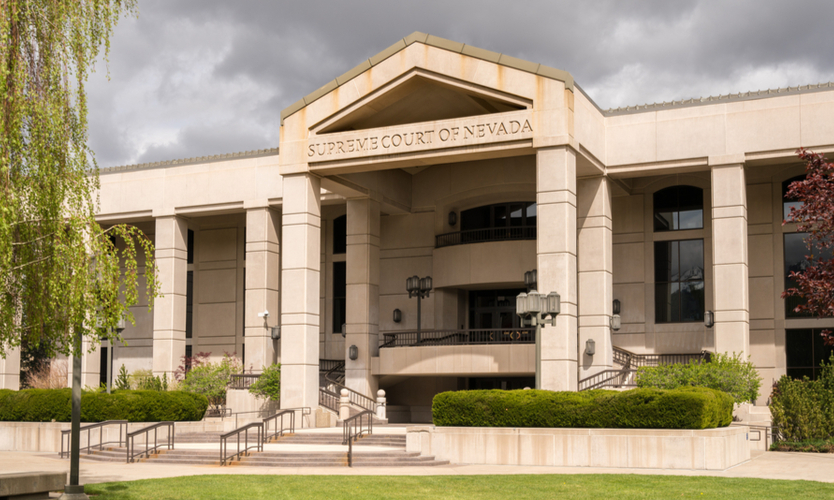
The Nevada Supreme Court ruled a city attempting to bar a police officer from relying on a presumption that his heart disease arose out of employment must show the officer failed to address correctable predisposing conditions.

Robert Holland served as a police officer for the Las Vegas Metropolitan Police Department for 25 years before retiring in 2012. During annual physical exams, he was notified that he had high triglycerides, a predisposing condition for heart disease and was informed about corrective actions to take, according to Las Vegas Metropolitan Police Department v. Holland, published Thursday.

In 2015, Mr. Holland was diagnosed with high blood pressure and started taking medication for the condition. He later suffered two heart attacks.

The department denied Mr. Holland’s workers compensation claim, contending he had earlier failed to correct his predisposing condition of high triglycerides. A hearing officer affirmed the denial, but a district court judge reversed.

The Nevada Supreme Court affirmed, explaining that a police officer who has served for two years before contracting a disabling heart disease is entitled to a statutory presumption of industrial causation for his condition.

The court noted the record did not include any testimony whether correcting the predisposing condition was within Mr. Holland’s ability, nor was there evidence to support the argument that he failed to take corrective action.

WorkCompCentral is a sister publication of Business Insurance. More stories here.


Source link

Florida city settles fired whistleblower case for $818K


The city of Delray Beach, Florida, has agreed to settle a federal whistleblower investigation by the U.S. Occupational Safety and Health Administration involving a city inspector fired for raising concerns about contamination in the public drinking water supply.

OSHA announced Thursday that the city agreed to pay the former inspector $818,500 for harassing and terminating the worker after he identified and reported faults in the municipal system that allowed reclaimed sewer water to cross-contaminate the city’s drinking water supply.

The Water Utilities Department inspector raised concerns about discovering discolored, sandy and smelly drinking water, after which he was removed from doing inspections and subsequently fired, with the city claiming the termination was due to the worker’s position being eliminated in a reorganization that only involved their job.  

Before being fired, the inspector had participated in investigations into the matter by the Florida Department of Health and the Palm Beach County Office of Inspector General, according to OSHA.

The worker was fired on Feb. 24, 2022, and the settlement was reached Tuesday.  

In a statement, OSHA’s assistant regional administrator in Atlanta, Lily Colon, called the case “deeply troubling,” and said that no worker should be punished for reporting legitimate safety and health concerns. 


Source link

Dismissal of suit by injured ironworker improper: Appeals court


The California Court of Appeals Thursday reversed a trial court’s granting of summary judgment to a general contractor being sued by an injured ironworker who was hurt while working on a construction project at Stanford University.

The court ruled a lower judge wrongly dismissed a suit against Devcon Construction Inc. initiated by Jose Hernandez, who was injured in February 2018 when a dirt bench next to an excavation pit gave out.

Mr. Hernandez, an employee of subcontractor Pacific Steel Group, sued Devcon, but the company argued it could not be held liable for injuries to subcontractor employees.

A trial judge agreed with Devcon.

Mr. Hernandez argued Devcon should be liable since Devcon had control over work not delegated to Pacific Steel.

The appeals judges ruled summary judgment was premature since there are factual issues in the dispute that should be allowed to play out in court. 

The appeals court said if a general contractor does not delegate the task of providing safe equipment for workers, it could be liable in a civil suit to a subcontractor’s employee.

The appeals court remanded the case to the trial court for the reversal of summary judgment. 


Source link

Exit mobile version