
Litigation figures prominently in this week’s Top 10. Also of note: First-quarter earnings reports have started rolling in.
Source link
Tag: Workers Comp

Home Depot dog bite case should have been comp exclusive: State high court
The Pennsylvania Supreme Court reversed a lower appeals court ruling that denied a bid by The Home Depot Inc. to dismiss a lawsuit initiated by an employee bitten by a customer’s dog on the basis that the matter should fall under the exclusive jurisdiction of workers compensation.
The plaintiff, Lindsay Franczyk, filed for comp benefits after she was injured by the dog bite, but she claims that her supervisors allowed the dog owner and witnesses to leave the store before she was able to gather identifying information to pursue a third-party claim.
Ms. Franczyk, who required surgery, asserted claims of negligence against Home Depot.
Home Depot sought summary judgment on the assertion that it was immune from suit under the workers comp law, but a trial court denied the motion and on appeal the Pennsylvania Superior Court agreed, allowing the lawsuit to move forward.
The Superior Court agreed with the plaintiff’s view that she was not seeking to recover from the defendant for the dog bite itself, but rather for the economic harm she suffered when she lost the opportunity to file a third-party claim against the dog owner.
In its decision Wednesday overturning the lower courts, the state Supreme Court ruled summary judgment should have been granted to the employer on the basis that the exclusivity provision in the state’s comp law specifically references employer immunity against “any sort of responsibility to the third party in a third-party action.”
The high court determined the case did not breach the threshold required to trigger the very few exceptions to the comp exclusivity rule.

Dismissal of suit by injured ironworker improper: Appeals court
The California Court of Appeals Thursday reversed a trial court’s granting of summary judgment to a general contractor being sued by an injured ironworker who was hurt while working on a construction project at Stanford University.
The court ruled a lower judge wrongly dismissed a suit against Devcon Construction Inc. initiated by Jose Hernandez, who was injured in February 2018 when a dirt bench next to an excavation pit gave out.
Mr. Hernandez, an employee of subcontractor Pacific Steel Group, sued Devcon, but the company argued it could not be held liable for injuries to subcontractor employees.
A trial judge agreed with Devcon.
Mr. Hernandez argued Devcon should be liable since Devcon had control over work not delegated to Pacific Steel.
The appeals judges ruled summary judgment was premature since there are factual issues in the dispute that should be allowed to play out in court.
The appeals court said if a general contractor does not delegate the task of providing safe equipment for workers, it could be liable in a civil suit to a subcontractor’s employee.
The appeals court remanded the case to the trial court for the reversal of summary judgment.

Property, auto rate hikes accelerate in first quarter
Commercial insurance rates increased again in nearly all lines in the first quarter, with property renewals seeing the biggest hikes, according to Ivans Insurance Services.
Average commercial property insurance renewal rates increased 8.9%, accelerating from 8% in the fourth quarter of 2022, the Tampa, Florida-based insurance exchange reported.
Commercial auto rates also accelerated, increasing to 5.9% in the first quarter from 5.6% in the prior quarter.
Several other lines also recorded increases: business owners policy, or BOP, rates increased 7.1%; general liability rates rose 5.2%; and umbrella liability rates increased 5.1%.
Workers compensation was the only line that saw a decrease, with rates falling 1.4%.

Mississippi farm cited in teen worker’s grain bin suffocation
The U.S. Occupational Safety and Health Administration has proposed $90,182 in fines against a Mississippi farm following the October 2022 death of a South African teenage worker who suffocated inside a grain bin.
OSHA on Tuesday announced it cited Greenwood-based Bare Bones Farms for willfully violating federal law by failing to ensure workers wore full body harnesses connected to lifelines while working inside soybean bins.
The teenager was among three South African citizens brought to work at the farm under a federal agriculture workers visa program.
The 19-year-old had climbed into the grain bin to unclog it when the soybeans shifted, causing the worker to be trapped and ultimately suffocate.
OSHA said the company failed to train employees on general safety precautions, including preventive measures for entering grain bins and protocol to de-energize equipment before entering machinery.
The farm was also cited for serious violations for not having a proper respiratory protection program for workers and for failing to provide medical evaluations, fit tests or training for workers who are required to wear respirators.
The company has 15 days to contest the citations.

Cal/OSHA targets companies after workers die in confined spaces
The California Division of Occupational Safety and Health on Thursday announced that it was fining an equipment company and referring a construction company for criminal charges following two separate cases of worker deaths related to confined spaces.
Meeder Equipment Co. of Rancho Cucamonga, California, and its successors were cited a combined $272,250 for serious safety violations following a confined space death of a worker who suffocated in a 10,000-gallon propane gas tank in 2022.
In a separate case, D&D Construction Specialties Inc. of Sun Valley, California, is facing criminal prosecution for the 2016 death of a worker who lost consciousness and fell 15 feet while cleaning a 50-foot-deep, 48-inch-wide drainage sump. Cal/OSHA’s Enforcement had previously fined the company $100,000 for a serious accident-related citation for failure to conduct a hazard inspection before work was performed.

California COVID-19 comp claims surged in late 2022
California COVID-19 workers compensation claims more than doubled in the latter part of 2022, but the surge paled in comparison with the prior two years, according to new data released Tuesday by the California Workers’ Compensation Institute.
The findings show that after falling to 1,553 COVID-19 claims in October, the second lowest total for all of 2022, claims increased to 3,354 in November and later peaked at 4,680 in December. Claim counts dropped again in January to 2,859 reported cases.
When broken down by industry, the largest number of claims were filed first by health care workers, second by those working in public safety and government, and third by retail workers.
The CWCI said education was the only major employment sector that experienced an increase in COVID-19 claims in the first quarter of 2023, as the claim count rose from 240 to 442, or 84.2%.
The sector experiencing the largest decline in COVID-19 claims was food services, which saw a 68.2% claims decrease, from 214 in the fourth quarter of 2022 to 68 in the first quarter of 2023.

Citations vacated in fatal concrete wall collapse
The Occupational Safety and Health Review Commission vacated two citations against a Florida demolition contractor that were issued following the September 2020 death of a worker crushed by a concrete wall.
In a March decision publicized Tuesday, the commission ruled the Occupational Safety and Health Administration failed to prove Wildcat Renovation LLC was noncompliant with workplace safety regulations at the time of the fatal wall collapse.
The worker was crushed by a concrete wall he was demolishing at the Sun ’n Fun Waterpark in Naples, Florida.
OSHA issued citations to Wildcat for failing to perform an engineering survey to determine the condition of the concrete wall and the possibility of unplanned collapse and for failing to carry out continued inspections of the site.
OSHA proposed $13,653 in fines.
In vacating the citations and fines, the commission ruled the company took proper steps to conduct an engineering survey during the course of the demolition work to ensure the work site would remain safe.
OSHA also asserted the company failed to continuously inspect the site during the progression of the work, contending Wildcat violated workplace safety standards in having the site foreman located 40 to 50 yards away from the worker prior to the wall collapse, and therefore unable to continuously monitor the situation.
The commission said the fact that the foreman had observed the worker for a few months prior to the incident and found him to be knowledgeable in concrete cutting was sufficient to prove the employer acted with reasonable diligence in attempting to provide a safe workplace.

Lawmakers introduce workplace violence bill
Lawmakers are considering a bill that would prompt the U.S. Occupational Safety and Health Administration to create a workplace safety standard addressing violence experienced by those working in health care and social services.
H.R. 1195, dubbed the Workplace Violence Prevention for Health Care and Social Service Workers Act and introduced Tuesday, would require employers within the health care and social service sectors to develop and implement a plan to protect their employees from workplace violence under the guidance of OSHA. The bill outlines specific requirements on risk identification and mitigation.
The regulations would cover hospitals, treatment facilities for physical and mental health, social service settings in correctional or detention facilities, substance abuse disorder centers, and community care settings such as group homes. The bill would not cover offices of individual physician offices or other medical providers located outside of covered facilities or covered services.
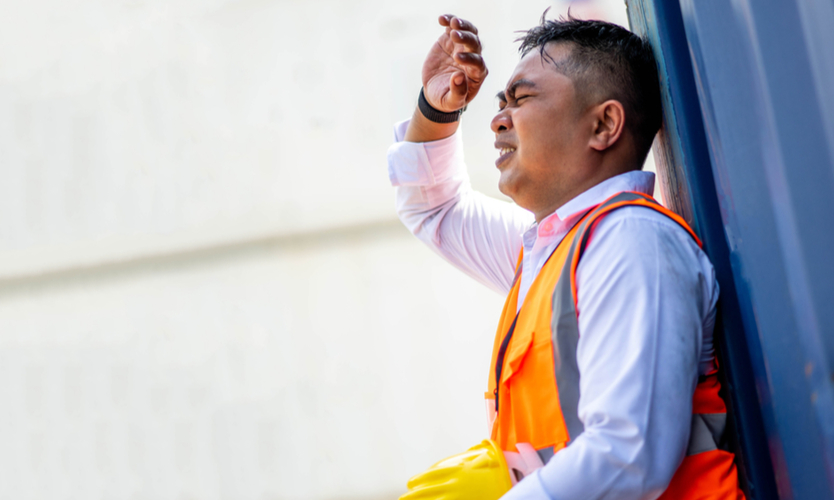
Regulators, lawmakers push workplace heat standards
As summer approaches, workplace safety agencies and state lawmakers are seeking to formulate standards to protect workers from heat-related dangers on the job.
Rising global temperatures, longer and more frequent heatwaves and increased heat-related workers compensation claims are driving advocates to push for more detailed and uniform standards addressing heat illness and injury in the workplace.
The issue is playing out among states although there is momentum to establish better heat standards on the federal level.
Among states acting to establish or revise heat standards for workers, the California Occupational Safety and Health Standards Board will hold a public hearing in May on a proposed indoor heat illness prevention standard for the state.
The standard was born out of a 2016 state law that directed the California Division of Occupational Safety and Health to develop heat standards for those working inside. The state already has an outdoor heat standard.
Washington’s Department of Labor & Industries is looking to update heat rules to increase protections for agricultural, construction and other workers exposed to outdoor heat. In March Nevada lawmakers filed legislation that would create both indoor and outdoor heat standards. The Oregon Occupational Safety and Health Administration introduced its indoor and outdoor heat illness prevention standard in 2022.
At the federal level, the Occupational Safety and Health Administration announced in 2021 that it would begin the rulemaking process to develop workplace rules on heat stress, but nothing has yet been formally adopted.
The heat safety push is tied to rising temperatures, increased heatwaves and a rise in heat-related workers compensation claims, but the issue has been a concern for a while, according to experts.
“We have really bad statistical records on heat stress, heat illness at work,” said Juley Fulcher, worker health and safety advocate for Public Citizen, a Washington, D.C.-based advocacy organization. Developing a standard is “a slow process,” she said. “We’ve done whatever we can on the advocacy side to try to speed that along as much as we can.”
According to statistics compiled by Public Citizen, environmental heat is likely responsible for at least 170,000 work-related injuries each year.
U.S. Bureau of Labor Statistics show 344 heat-related worker deaths between 2011 and 2019, though workplace safety experts say the fatality rate is likely much higher due to underreporting or misreporting deaths as the result of another cause, such as heart attacks.
Ms. Fulcher said it’s often easier to implement change at the state level.
Kevin O’Sadnick, senior risk control manager for St. Louis-based Safety National Casualty Corp., said a federal standard would encourage more states to move.
With federal rules, “at least you got something there where everybody’s playing by the same rules,” he said, adding that heatwaves in the U.S. are increasing in frequency and duration and should spur action.
According to the U.S. Environmental Protection Agency, heatwave frequency has increased steadily, from an average of two heatwaves per year during the 1960s to six per year during the 2010s and 2020s.
“Heat stress is a really tough situation to address,” said Thomas Bobick, who chairs the A10.50 committee addressing heat stress management in the construction industry, a joint effort of the American National Standards Institute and the American Society of Safety Professionals.
Part of the difficulty is that the ability of individual workers to handle heat varies, said Mr. Bobick, who retired last year after 33 years with the National Institute for Occupational Safety and Health.
Workers new to working in hotter conditions, for instance, may have a more severe reaction to the heat than acclimatized workers, he said.
David May, the committee’s co-chair, said that when looking to develop heat standards, regulators and legislators need to study heat-related causes of morbidity and mortality in the workplace.
Both Mr. Bobick and Mr. May said that while acclimatization may help with workplace heat exposure, a general trend in workers experiencing adverse reactions to the heat is likely leading the drive to develop more uniform workplace heat standards.