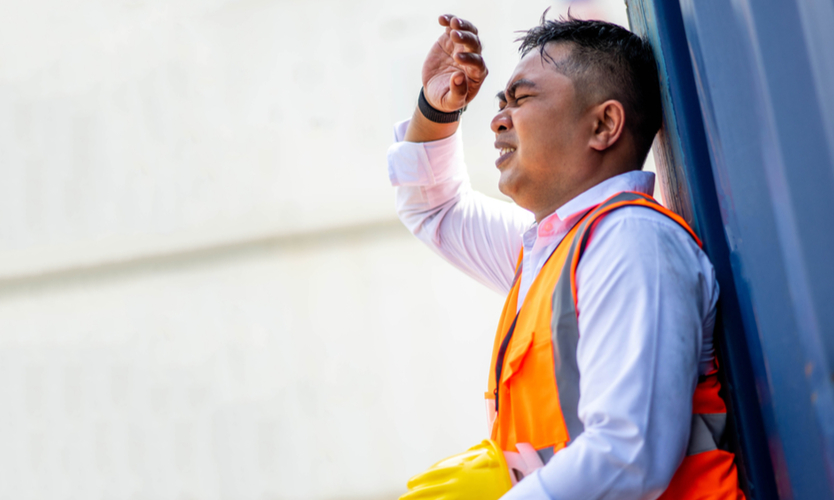
Experts say OSHA’s pending heat standard faces obstacles


Workplace safety experts say the Occupational Safety and Health Administration’s proposed standard to manage indoor and outdoor heat dangers is broad and unclear — applying to virtually every industry — and is likely to hit a few road bumps as a result.

The agency on July 2 announced plans to issue a Notice of Proposed Rulemaking for a Heat Injury and Illness Prevention in Outdoor and Indoor Work Settings standard, a document that as of Tuesday — two weeks post-announcement — had yet to find its way into the Federal Register, a step that would launch a 120-day public comment period. That period now is likely to end after the presidential election, according to experts.

OSHA said the standard would require employers to create a plan to evaluate and control heat hazards that is site-specific and would “clarify employer obligations and the steps necessary to effectively protect employees from hazardous heat.”

Much of the proposed rule addresses requirements on training, heat monitoring, protective gear, work breaks and rest areas, air conditioning, acclimatization for workers, and recordkeeping when injuries or fatalities occur.

Pam Walaski, Templeton, Pennsylvania-based president of the American Society of Safety Professionals, said the proposal is “pretty standard” and what employers should have expected OSHA to create for them to manage heat-associated risks for workers. She said her organization is “still digging through” the document and that objections are expected.

The proposal is a long-awaited move in the agency’s efforts to keep workers safe in soaring temperatures. The draft of the document was hailed by worker advocacy groups that say federal OSHA has lagged behind states such as Arizona and California in creating guidelines for employers whose workers face such risks as heat stroke. The National Council for Occupational Safety and Health issued a statement on July 2 calling OSHA’s announcement “a critical step in protecting millions of workers from heat-related illnesses and injuries.”

According to a draft of the standard, the regulations would apply to all employers conducting outdoor and indoor work in all industries. Several legal experts said such a scope is likely to cause ripples among business groups, especially in light of recent U.S. Supreme Court rulings that could limit the federal government’s ability to set regulations.

Andrew C. Brought, a Kansas City, Missouri-based partner with Spencer Fane LLP, said the proposal states that employers must engage in heat safety protocols — including training and recordkeeping — when temperatures reach a certain level.

“The way that they’ve set up this rule, I think the only way it will survive a legal challenge is that they will have to narrow it and only have the rule apply to very specific industries at very specific times,” Mr. Brought said.

Eric Conn, Washington-based founding partner of Conn Maciel Carey LLP, said the proposal is unclear when it comes to the required timing and frequency of rest requirements.

Paperwork is another concern, said Mr. Conn, whose firm has worked with OSHA on creating the standard. He said the agency incorporated some recordkeeping provisions “that we’ve been pushing against since they started this rulemaking.” 

For example, the proposal would require employers to document on-site temperature to evaluate whether certain provisions are triggered. “It’s just creating a paperwork burden that seems unnecessary here,” he said.

The proposal also calls for employers that experience a heat-related health incident on site to reexamine their plans and document the process, he said.

“You’ll be required to evaluate the effectiveness of your heat illness prevention plan annually, and if you have incidents, such as someone complaining of symptoms, even mild heat symptoms, you’re required to do another review of the effectiveness of your plan more frequently than annually,” Mr. Conn said, noting that such a review would include input from both supervisors and frontline workers. “That’s an onerous provision.”



Source link

California business owners to be sentenced for comp fraud


The owners of a California commercial cleaning company were scheduled to be sentenced this week in connection with a $4 million workers compensation fraud scheme, prosecutors announced Monday.

Edgardo Cabrales Sr. and Edgar Cabrales Jr. will be sentenced to 10 years’ probation after completing 18 months in a county jail alternative program and after paying more than $1 million in restitution, according to the Santa Clara County District Attorney’s Office.

The father and son, who pleaded guilty in the case, operate San Jose-based Pine Building Maintenance and Network Facility Management.

The California Department of Insurance began investigating the two in 2019 after the State Compensation Insurance Fund suspected fraud. Investigators determined the Cabraleses only insured their PBM employees but never secured a workers compensation policy for the NFM employees.

Failing to report wages to the state fund resulted in $4.2 million in lost premiums, the prosecutors said.

County prosecutors also said Monday that a child therapist will be sentenced in August to three years in prison after pleading guilty earlier this year to insurance fraud.

Mark Anthony Ramos, owner of Stars Bay Area Therapy Group and Stars Bay Area Inc., defrauded workers comp insurers by underreporting payroll between 2015 and 2022.

Investigators were tipped off when a Stars employee inadvertently sent a correct payroll number of about $3 million to an insurer; the figure reported by Mr. Ramos was $132,000.

The fraud resulted in insurer losses exceeding $288,000. 


Source link

Mental injury presumptions improving, but barriers still exist for first responders


While more states than ever are accepting first responder standalone mental injury claims, the number of states that have workers compensation presumptions for job-related physical diseases continue to far outweigh mental injury presumptions, according to research publicized on Monday by Drexel University.

The findings, published in the Journal of Public Health Policy and compiled by faculty members from Drexel’s Dornsife School of Public Health and its Center for Firefighter Injury Research & Safety Trends, found that all 50 states supported physical-to-mental injury claims for first responders, while 44 supported mental-to-physical claims and 40 supported mental-to-mental claims.

The study highlighted several barriers experienced by first responders seeking workers comp benefits for various injuries, including latency periods, time limits and preexisting health conditions.

Researchers said states can ease these barriers through policy changes such as implementing presumptive coverage for first-responder mental illness as a statute with a built-in sunset clause or termination date, a model that was used for COVID-19 presumptions during the height of the pandemic.

The study said first responders such as firefighters and emergency medical services workers face a “considerable amount of stress on the job and witness traumatic events on a regular basis,” which could lead to the development of conditions such as anxiety, depression and post-traumatic stress disorder, and cause low morale and burnout. 


Source link

OSHA cites commercial flooring company over safety, health hazards


The U.S. Occupational Safety and Health Administration said Monday that it cited a national commercial flooring company after an investigation earlier this year identified more than a dozen health and safety violations.

OSHA cited Lancaster, Pennsylvania-based Ecore International Inc. for one “willful” violation and 15 “serious” violations and proposed $299,591 in penalties following a January inspection of the company’s plant in Mexia, Texas.

The agency said Ecore International, which is one of the largest manufacturers of commercial flooring in the U.S., endangered employees by making them stand on a forklift’s elevated tines to reach work areas, and exposed workers to various slip and fall hazards.

The company also failed to ensure machines had required safety guards, failed to prevent small fires due to an improper buildup of combustible dust, and permitted potentially explosive atmospheres to exist, OSHA said.

OSHA said it found similar machine guard hazards and potential electrocution and amputation dangers in a separate investigation in May at the company’s Ozark, Alabama, facility.


Source link

Novatae buys specialty brokerage | Business Insurance


Novatae Risk Group, the wholesale unit of World Insurance Associates LLC, said Monday it has acquired St. Louis-based specialty intermediary Denali Specialty Group LLC.

Terms were not disclosed.

Denali, founded in 2019, specializes in insurance coverage for investment properties, the cannabis industry, excess workers compensation and student housing, a Novatae statement said. 

The brokerage is headed by Michal Eichhorn, who was previously president of Keating Underwriting and before that president of Breckenridge Insurance Services LLC. It has 11 employees.


Source link

Feds expand beryllium exposure provisions


A provision for the federal workers compensation program for nuclear workers, expanding the scope for toxic beryllium exposure, is set to be published in the federal register on Tuesday, the U.S. Department of Labor announced.

The final rule is based on provisions in the National Defense Authorization Act for 2024, which changed eligibility requirements for those filing claims for beryllium sensitivity to allow previously ineligible claimants to obtain benefits, according to the department.

Before the update, a claimant could only establish beryllium sensitivity by presenting one abnormal beryllium lymphocyte proliferation test performed on blood or lung lavage cells. Under the new regulations, beryllium sensitivity can now also be established by submitting three borderline beryllium lymphocyte proliferation tests of blood cells in the three-year period. 

If the Division of Energy Employees Occupational Illness Compensation, which runs the comp program, determines the new criteria are met, it will reopen and accept old cases and award benefits retroactively to the original filing date, according to the DOL.


Source link

Swiss Re says profitable comp market reversal may be on horizon


A top reinsurer is saying that despite a decade of extended profitability, the workers compensation reinsurance market in the United States could see a reversal due to a number of factors, according to an analysis released Saturday by Swiss Re Ltd.

The reinsurer’s analysis of market conditions calls for a “heightened level of diligence” as a “variety of potential headwinds and risks have surfaced, or in some instances, re-surfaced, meriting caution and scrutiny.”

Swiss Re said market reserve releases in recent years have masked “underlying deterioration of Accident Year combined ratios” and insurer competition in states such as California has led to “significant premium rate reductions and a softer market, raising pricing concerns and increasing loss ratios.”

Also contributing are medical inflation in the hospital space and a tight job market with low unemployment, which “often results in hiring less experienced workers, potentially resulting in more first-year injuries in select industries,” Swiss Re said.

The report also said that safer workplaces have “buoyed the market in recent decades by reducing frequency of workplace injuries” but that issue “may be moderating, potentially limiting future upside in this area.” 


Source link

Employer entitled to comp reimbursement in third-party settlement


A Florida appellate court ruled Friday that an employer should have been entitled to fully collect on its workers compensation lien because an injured worker failed to prove she didn’t receive full value from her injuries in a third-party settlement.

The Florida Sixth District Court of Appeal reversed a trial judge’s decision that denied a bid by Captain D’s LLC to recover money it paid out to Regina Atkins in workers comp benefits. 

The trial court had reduced Captain D’s workers comp lien because it determined that Ms. Akins never received full value for her injuries in her settlement with an unnamed third party.

Terms of the settlement were confidential.

During an apportionment hearing, Ms. Akins’ attorney stated that a fair value of the case was $1 million, but the appeals court said the attorney never explained how he arrived at that figure, and no evidence was provided to support that calculation.

Ms. Akins had the burden of providing “competent evidence” demonstrating that she didn’t recover the full value of her damages in the settlement, which was not done in this case, the appeals court wrote.

“That evidentiary failure here requires that we reverse and remand for recalculation of the lien apportionment amounts,” the court wrote.


Source link

Contractor cited for exposing framing workers to fall hazards


The U.S. Occupational Safety and Health Administration said Friday that it cited an Illinois construction contractor for a continued pattern of exposing workers to deadly fall hazards.

OSHA cited Arcola-based Miller Building Systems LLC for four “willful” violations for intentionally failing to provide adequate fall protection to employees working at high elevations.

The agency proposed $354,912 in penalties, noting it has cited Miller Building Systems 17 times since 2019 for fall-related violations.

The citation stems from four separate workplace safety investigations at subdivisions under construction in Mahomet and Savoy in January, March and May of this year.

Inspectors observed workers standing on, climbing and walking along trusses and top plates at high elevations without proper fall arrest systems.


Source link

Exit mobile version