‘Severe violator’ steel plant again cited for endangering workers


The U.S. Occupational Safety and Health Administration has again cited a Texas steel plant operator for safety violations, the latest citation coming two years after the company was added to OSHA’s Severe Violator Enforcement Program.

OSHA said it cited El Paso-based Kyoei Steel Ltd., which operates as Vinton Steel LLC, for five “repeat” and two “serious” violations and proposed $269,631 in penalties after investigators said the company continues to endanger workers.

The agency said there had been 10 workplace safety incidents in the past five years at the plant, five of which involved employee amputations, and that the company continues to expose workers to numerous hazards.

OSHA said Kyoei Steel failed to keep workers clear of loads lifted by slings, didn’t have proper machine guarding, failed to have fire extinguishers in good operating condition, failed to ensure workplace respiratory fitment testing, and failed to complete medical evaluations to determine workers’ ability to use respirators.

Kyoei Steel, which is based in Osaka, Japan, but operates the Vinton Steel plant in El Paso, has 15 business days to contest the citation and proposed penalties. 



Source link

Business Insurance conducts diversity survey


Business Insurance is seeking responses for its 8th annual diversity, equity and inclusion survey of the insurance sector.

Signet Research Inc., an independent media research company, is conducting the confidential survey of insurance industry employees to gain insights into DEI trends and practices. The anonymized results will be featured in a special report in the October issue of Business Insurance.

Responses are due by July 31.

To participate in this year’s survey, click here.

For additional information, contact Andy Toh, director of research, planning and insights at atoh@businessinsurance.com.


Source link

Feds see reduction in nonfatal injuries and illnesses resulting in job losses


The number of private nonfatal injuries and illnesses resulting in days away from work, job transfer, or restriction was 1.8 million in 2022, a 40% reduction of that reported in 30 years prior, according to data released Wednesday by the U.S. Bureau of Labor Statistics.

Among these injury and illness cases, cases managed with days of job transfer or work restriction — instead of days away from work — became more prevalent over the 30-year period. In 1992, job transfer or restriction cases made up 21.1% of the total cases of days away from work, job transfer, or restriction in private industry. By 2022, the share was 32.8%.

In 2021 and 2022, transportation and material moving occupations in the private sector experienced the highest number of nonfatal cases that resulted in a day away from work, job transfer, or restriction among major occupation groups at 835,040 cases, according to the data.

Among those cases, most were due to overexertion and bodily reaction at 329,150 cases. Half of these resulted in one or more days away from work, with a median of 21 days away. The other half involved at least one day of job transfer or restriction only, with a median of 20 days of restriction or transfer, according to the data.


Source link

Insurer entitled to trust fund reimbursement despite nixing comp policies: Court


An insurer should have been entitled to reimbursement from the Massachusetts Workers’ Compensation Trust Fund even though it had stopped issuing new workers comp insurance policies in the state in 2003, the Massachusetts Appeals Court ruled Thursday.

In Arrowood Indemnity Co. v. Workers’ Compensation Trust Fund, the court vacated a decision by a review board that had found Arrowood was not entitled to reimbursement from the fund, which reimburses insurers for workers comp benefits paid to previously injured workers who suffer further work-related injuries.

Trust fund revenues come from assessments on employers that are collected by their insurers, and they are calculated based on collected insurance premiums.  

In Arrowood, the court determined precedent on the issue is no longer relevant, since there is a difference between roles played by employers and those played by insurers with respect to trust fund reimbursement.

The court said when insurers enter a run-off period, and no longer issue new policies in the state but still collect premiums from existing policies, it is entitled to trust fund reimbursements.

The review board had come to the opposite conclusion.  

The only exception to reimbursement is cases involving self-insurance groups who have chosen not to participate in the trust fund, not insurers who have stopped issuing policies, the court wrote.  

The court said it rarely overturns precedent, but it found that past precedent afforded “too much deference” to the review boards decisions in similar cases.  


Source link

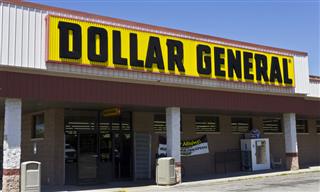
Dollar General to pay $12M to resolve ‘systemic’ safety violations


The U.S. Occupational Safety and Health Administration said Thursday that it entered into a corporatewide settlement agreement with Dollar General Corp. in which the retailer agreed to pay $12 million in penalties related to “systemic” safety problems.

OSHA said the settlement with Dollar General — which is headquartered in Goodlettsville, Tennessee, and operates more than 19,000 stores nationwide  — resolves all existing contested citations and open OSHA inspections involving various safety violations, such as blocked emergency exits and electrical panels, blocked fire extinguishers and unsafe storage.

“This agreement commits Dollar General to making worker safety a priority by implementing significant and systemic changes in its operations to improve accountability and compliance, and it gives Dollar General employees essential input on ensuring their own health and safety,” OSHA Assistant Secretary Doug Parker said in a statement.

In addition to the penalties, Dollar General agreed to implement corporatewide changes to improve workplace safety, including establishing and maintaining an expanded safety structure and a “robust” safety and health management system, reducing inventory and increasing stocking efficiency to prevent blocked exits and unsafe material storage, and providing safety and health training to leadership and nonmanagerial employees.

The agreement also requires Dollar General to ensure “prompt abatement” of any future violations related to blocked exits, access to fire extinguishers and electrical panels, and improper material storage at its stores. If the company fails to do so it can face a $100,000 per-day penalty up to a $500,000 maximum.

The company must also provide quarterly reports to OSHA as part of the settlement agreement.


Source link

Zenith Insurance announces leadership succession


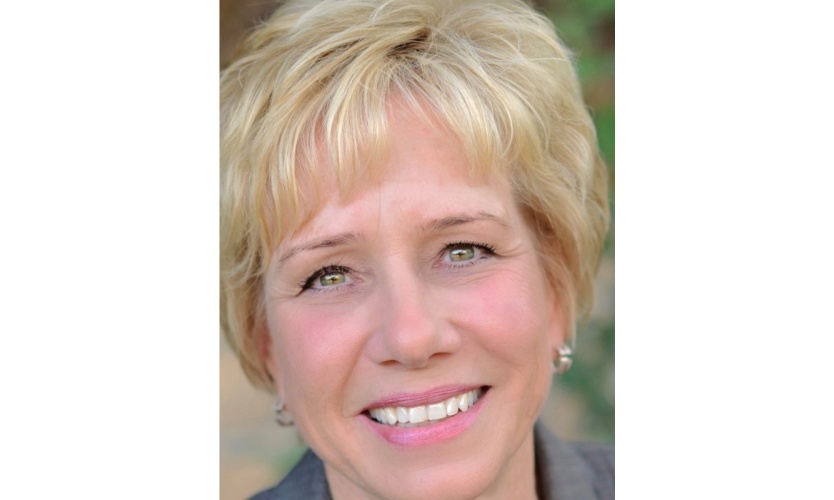
Zenith National Insurance Corp. announced Wednesday the appointment of Davidson Pattiz as president and CEO, and current CEO Kari Van Gundy as executive chairman, effective Jan. 1, 2025.

Mr. Pattiz currently serves as president and chief operating officer, according to LinkedIn.

In addition to a workers compensation claims servicing business, the Los Angeles-based insurer has a property/casualty insurance operation that focuses on the California agriculture industry.


Source link

Connecticut contractor cited over fatal trench collapse


The U.S. Occupational Safety and Health Administration said Thursday it cited a Connecticut construction contractor after a worker was killed in a December 2023 trench collapse.

OSHA cited Easton-based Sound Construction Inc. for two “willful” and five “serious” violations and proposed $394,083 in penalties.

The employee had been repairing an underground water line in New Canaan.

OSHA said Sound Construction failed to provide cave-in protection, failed to train employees on how to recognize and avoid trenching hazards, failed to ensure an excavator was kept more than two feet from the trench’s edge, and failed to verify the location of underground utilities prior to excavation.

Sound Construction, which had been cited for similar violations in 2016, has 15 business days to contest the citation and proposed penalties.  


Source link

South Carolina Supreme Court questions guiding comp precedent


The South Carolina Supreme Court Wednesday upheld workers compensation benefits for an injured worker but questioned whether judges in comp cases should continue citing precedent that the justices said is outdated.

In Isaac D. Brailey vs. Michelin North America Inc., the state high court ruled that a lower appeals court correctly overturned a South Carolina Workers’ Compensation Commission decision that found the employer proved a “fraud in the application” defense under Cooper v. McDevitt & Street Co., an often-cited 1973 ruling that dealt with workers comp fraud.

The lower appeals court determined Mr. Brailey was entitled to benefits despite the commission’s contention that he failed to prove his back injury was work-related.

While it upheld that lower appellate decision, the state Supreme Court said it was “concerned with the continued validity of Cooper,” saying Michelin could not satisfy elements of the Cooper test because the Americans with Disabilities Act made Cooper moot.

Under Cooper, Michelin was required to show that its reliance on any allegedly false representation made by a job applicant on an employment application constituted a “substantial factor in the hiring decision.” Under the ADA, however, Michelin wasn’t permitted to ask Mr. Brailey whether he had any back impairments until after it made a hiring decision, the ruling states.

“We cannot tell on the record before us whether this inconsistency between the ADA and Cooper will occur rarely or frequently, but as the Cooper test was written before the ADA was adopted, it simply does not work well anymore,” the justices wrote.


Source link

Construction contractor cited over trench hazards


The U.S. Occupational Safety and Health Administration said Wednesday that it cited a Boston construction contractor for exposing untrained day laborers to trench cave-ins and excavation hazards.

OSHA cited Boston Waterproofing & Construction Corp. for “willful” and “serious” violations and proposed $451,694 in penalties after investigators said the company exposed workers to “life-threatening” dangers at construction sites in Arlington, Massachusetts, and Warwick, Rhode Island, in September 2023 and December 2023, respectively.

The inspections were launched amid safety concerns raised by employees who asked for cave-in protections but were not given them, OSHA said. The excavations in both cases collapsed, resulting in workers being injured and buried.

OSHA said that during the Arlington incident, Boston Waterproofing made no attempt to rescue a trapped employee and “struck the trapped employee with objects to prevent the employee from seeking medical attention.”

In the Warwick incident, the company rebuffed an injured worker’s plea to call 911 and instead took the worker to the hospital in a personal vehicle, the agency said.

The company has 15 business days to contest the citation and proposed penalties.



Source link

Exit mobile version