
Gaurav Vasisht, executive director and CEO of the New York State Insurance Fund, discusses the findings of the workers comp insurer’s recent study on long COVID and the outlook for pricing in the comp sector.
Source link
Tag: Workers Comp

Providers offering injured worker care greatly differ by specialty: Study
Medical providers offering care to injured workers vary greatly by specialty, as doctors such as orthopedic surgeons and pain management specialists are more likely to have a roster of comp patients than those in primary care services, according to a study from the Workers Compensation Research Institute.
Tuesday’s study, Workers Compensation Providers: Describing the Marketplace, examined records from physicians and non-physicians who treat injured workers, according to WCRI researchers Bogdan Savych and Olesya Fomenko.
It analyzed the workers comp physician marketplace across 34 states between 2016 and 2018, assessing the types of physicians providing services and the types of injuries among workers.
“For some providers, work-related injuries represent a substantial part of their patient base, while other providers may see workers with injuries only occasionally,” the researchers wrote.
The study found providers handling traumatic injuries for working-age adults are more likely to encounter work-injured patients, and it determined orthopedic surgeons and emergency medicine physicians were more likely to be involved in the workers comp system than providers rendering end-of-life care or those who specialize in cancer treatment.
Doctors running primary care and family practices, on the other hand, don’t see many injured workers, the study states.
“Physicians who treat a substantial number of workers may be more familiar with the peculiarities of treating occupational injuries and may have better knowledge of factors that facilitate timely return to work,” the study states. “Facilitating quick access to appropriate providers who are familiar with how to treat occupational injuries is an important component of improving the system for workers.”
The researchers said their findings highlight lessons for comp stakeholders, as it’s necessary to examine the physician marketplace before crafting policy decisions based on “measures of access to medical care and providers.”

Montana bill would give injured workers 100% of pay in disability benefits
Montana lawmakers have filed legislation that would increase the amount of total disability benefits for injured employees in workers compensation claims.
House Bill 923, which was pre-filed for Wednesday, would increase weekly compensation benefits for workers out on both temporary total disability and permanent total disability from the current 66 2/3% to 100% of the wages received at the time of injury.
The weekly benefit amount would not be subject to cost-of-living adjustments.
The proposal would also increase from 66 2/3% to 100% the weekly comp benefits given to beneficiaries in cases where workers die from their injuries and have surviving family members.
A provision in existing law that says the maximum weekly compensation benefit cannot exceed the state’s average weekly wage at the time of injury would remain in effect under the bill.
Meanwhile, a similar bill making its way through the legislature in Kansas is scheduled for a hearing Wednesday before the Senate Commerce Committee.
Senate Bill 38, which was introduced back in January, proposes to increase the statutory limit for maximum liability in injured worker disability claims.
The measure would increase an employer’s maximum liability from $155,000 to $350,000 in cases of permanent total disability, temporary total disability, temporary partial disability and permanent partial disability.

Auto dealership to pay $15K to employee fired over COVID complaints
A luxury auto dealership in Austin, Texas, has been ordered to pay $15,000 to a worker who in 2020 voiced concerns about the spread of COVID-19 and was fired as a result, the Occupational Safety and Health Administration announced Monday.
Hi Tech Imports LLC, operating as Porsche Austin, has already reinstated the worker and paid $116,000 in back wages in an earlier agreement, according to a statement. The U.S. Department of Labor this month obtained a consent judgment in the U.S. District Court for the Western District of Texas, Austin Division, for the additional damages.
In December 2020, when the employee learned that a co-worker had tested positive for COVID-19, the employee alerted the company’s management and requested they notify other employees immediately of their exposure risk. After the dealership failed to act, the employee emailed all company employees about the potential hazards. Less than an hour later, the car dealer terminated the employee, according to the OSHA investigation.
Coal miners’ black lung disease on rise: Study
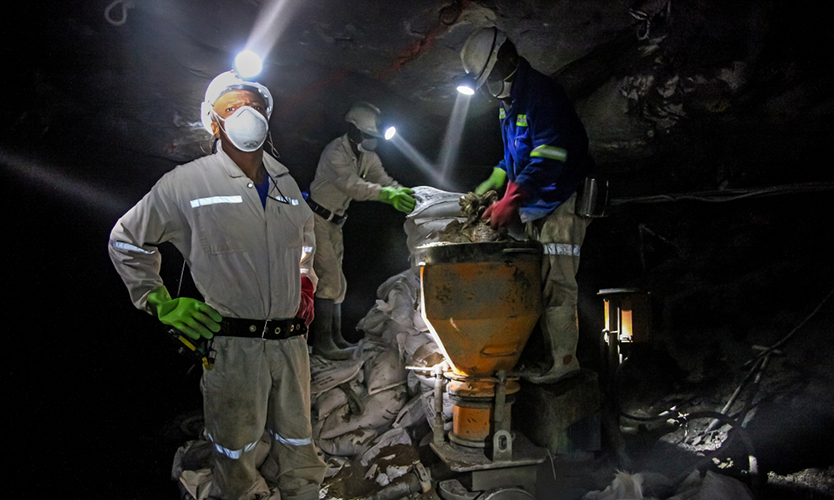
New research shows that black lung disease is on the rise among modern coal miners.
Coal miners, particularly those in central Appalachia, are more likely than their predecessors to die from pneumoconiosis, progressive massive fibrosis, chronic obstructive pulmonary disease and lung cancer, according to a recent study from the National Institute for Occupational Safety and Health and the University of Illinois Chicago.
Researchers used data from the U.S. Department of Labor’s Federal Black Lung Program and is described as “the largest existing study on causes of mortality in U.S. coal miners.”
Researchers cite a 2019 government report holding that while the prevalence of CWP declined for several decades in the latter half of the 20th century, PMF had recently been found “at rates not seen since the early 1970s.”
WorkCompCentral is a sister publication of Business Insurance. More stories here.

Auto parts maker must pay more than $1M in worker’s death
The U.S. Occupational Safety and Health Review Commission has affirmed more than $1 million in fines against an Alabama automotive parts manufacturer after the 2016 workplace death of a 20-year-old machine operator who had worked at the plant for only about three months.
In a decision posted Thursday, the commission affirmed penalties against Cusseta-based Joon LLC, doing business as Ajin USA, over the June 19, 2016, death, which occurred one day after the woman suffered serious injuries when a robotic arm struck her as she attempted to troubleshoot a piece of malfunctioned equipment.
The Occupational Safety and Health Administration fined the company over 51 separate serious, willful and other-than-serious violations with total proposed penalties of $2,515,737.
The commission upheld $1,072,498 in fines, while vacating a remaining citation and penalties.
At the time of her death, the worker entered an enclosure containing robots and machinery and tried to fix a sensor fault on a piece of equipment that stalled without adhering to proper lockout/tagout procedures designed to keep workers safe inside robotic cells, according to OSHA.
While inside, one of the robots energized and struck the woman, pinning her against another piece of machinery. She was taken to a hospital and subsequently died.
OSHA accused the company of knowing it was required to implement lockout/tagout procedures but failing to ensure supervisors and managers enforced such procedures.
The commission rejected an allegation by the company that it was targeted by OSHA because of “anti-Korean race bias.”
In a previous, separate criminal proceeding, the company pleaded guilty to willfully violating an OSHA standard that caused an employee death.
Maine bill would allow injured workers to sue
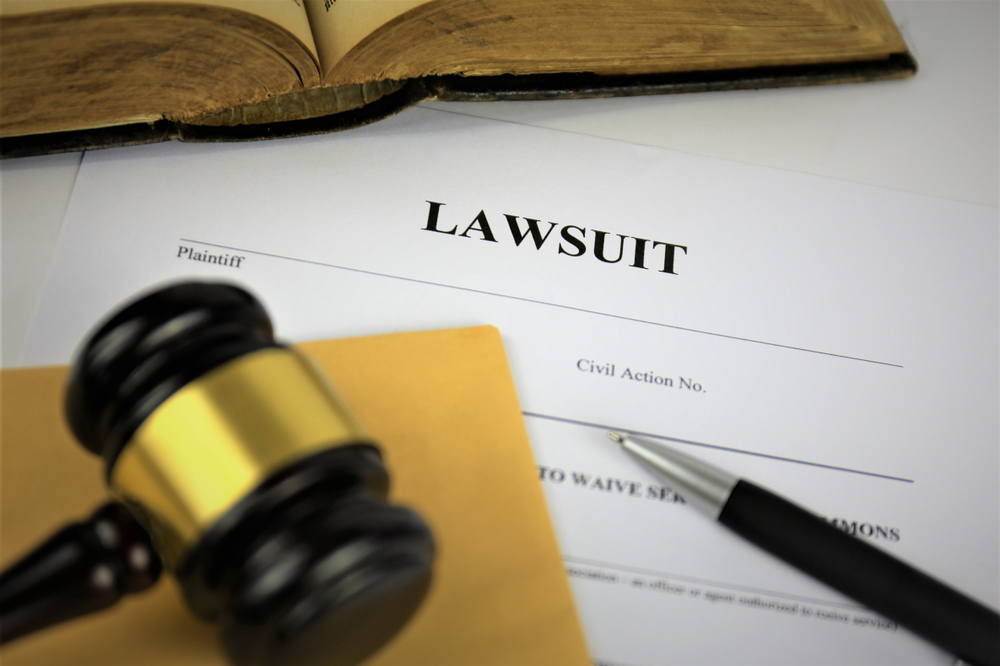
A bill that would permit injured workers and/or surviving family members to sue an employer following a workplace incident that is found to be the result of gross negligence or a crime is set to be considered by the Maine Senate on Tuesday.
L.D. 1385 would amend existing workers compensation law to provide “that an employee who intentionally or with gross negligence or while committing a criminal act causes another employee’s injury or death is not exempt from civil actions.”
The proposal states that if the injured employee or the employee’s beneficiary recovers damages any workers compensation benefits must be repaid to the employer, less the employer’s “proportionate share of cost of collection, including reasonable attorney’s fees.”

Calif. company accused of overexposing workers to toxic chemical
A California medical device manufacturing company is accused of willfully overexposing employees to dangerous levels of ethylene oxide, a toxic chemical associated with cancer development and reproductive health problems.
The California Division of Occupational Safety and Health announced Tuesday it issued $838,800 in penalties against Carson, California-based Parter Medical Products Inc. over claims it failed to protect workers against the dangerous chemical.
The company uses ethylene oxide gas to sterilize medical devices. Its odor is undetectable to humans until its concentration exceeds hazardous levels, according to Cal/OSHA.
The company was cited for failing to have an effective safety plan to evaluate and develop controls for hazards, failing to develop a respiratory protection plan, failing to monitor employee exposure and failing to notify workers of exposure of the chemical over permissible limits.
Cal/OSHA issued 18 citations to the company, including six for willful-serious violations.
The company shut down its Carson facility in early August 2022 after an investigation began into ethylene oxide emissions, and Cal/OSHA subsequently determined that the remediation efforts did not solve the overexposure issue, according to regulators.
During a subsequent inspection in December 2022, Cal/OSHA determined that one employee had been overexposed to the chemical during his entire shift.
Cal/OSHA accused the company of overexposing employees to the chemical above permissible limits from 2019 to 2022.

New York to consider eliminating remarriage stipulation on death benefits
New York lawmakers are considering a bill that would eliminate all language in the state’s workers compensation law that would stop surviving spouses who are receiving death benefits from losing such benefits upon remarriage.
A.B. 5788, introduced Thursday and sent to the labor committee, amends current law that states a surviving spouse would lose access to death benefits within two years of remarriage.
It would add language to the law that states “the remarriage of such spouse shall not affect his or her status as a widow or widower” when receiving benefits.
The changes would take effect 60 days after the bill becomes law.

McDonald’s franchisee penalized for child labor safety violations
The U.S. Occupational Safety and Health Administration announced on Thursday penalties against a McDonald’s franchise in Morristown, Tennessee, after a 15-year-old employee suffered hot oil burns while using a deep fryer.
While conducting a wage and hour investigation, OSHA discovered that Faris Enterprises of TN LLC, operator of the McDonald’s restaurant, illegally allowed the teenager to cook fries using a hot-oil deep fryer without an automatic basket used to lower and raise contents.
The teen was burned when attempting to manually remove fries from the device.
A date of the incident was not given.
The company was issued a $3,258 civil penalty for the child labor violation.
OSHA said that since 2018 it has seen an “alarming increase” in federal child labor violations, including allowing minors to operate equipment or undertake work that puts them in danger of becoming injured.
Meanwhile, a California lawn service company has been cited by OSHA over claims it allowed employees to operate industrial lawnmowers without proper safety features during work at a U.S. Army base.
OSHA on Friday announced proposed penalties of $198,667 against Roseville, California-based PRIDE Industries, which had been contracted to do lawn care work at Fort Campbell, Kentucky, in September 2022.
The company “willfully allowed” workers to operate zero-turn radius mowers without belt guards installed, and it put employees at risk of crushing injuries or death in potential rollover situations by allowing workers to operate the lawn mowers on steep slopes, OSHA stated.
OSHA said the company’s actions also exposed workers to potential eye injuries and lacerations.
The company has 15 days to contest the penalties.