New York considers bill to expand mental injury benefits to all workers


Workers compensation mental injury benefits would be expanded to all New York workers who suffer from extraordinary stress, under a bill introduced Thursday.  

A.B. 5745, which was referred to the labor committee, would strike out language in state law that restricts work-related stress benefits to certain professions — police officers or firefighters, emergency medical technicians, paramedics, dispatchers and other workers certified to provide medical care in emergencies. The measure would extend comp benefits to all workers in the state “premised upon extraordinary work-related stress at work.”  

The bill also prohibits the state’s Workers Compensation Board from disallowing the claim if facts reveal that the stressor was that which normally occurs at work.

The expansion would go into effect the following year after passage.   


Source link

Appeals court grants disability award to ailing firefighter who suffered stroke


An appeals court in Illinois on Wednesday granted a disability award to a firefighter who suffered a stroke but may have had pre-existing conditions.

A City of East Peoria for more than 20 years, Charles Melton in 2020 applied for an occupational disease disability pension, alleging a “work-related stroke brought on by exposure as a firefighter” and that he was “precluded from performing normal work activity by statute and medical recommendations,” according to City of East Peoria v. Melton, filed in Appellate Court of Illinois, Fourth District.

The city had three doctors examine Mr. Melton and provide testimony. Their records state that Mr. Melton had pre-existing conditions that may have contributed to his stroke. Court records document 17 comorbidities, some of which preclude his work as a firefighter. Yet some of his ailments were attributed to firefighting, which led the state Workers Compensation Board to rule in his favor in 2021. On appeal, a trial court affirmed.

The appeals court also affirmed, writing that the record contains “sufficient evidence” that a stroke may have been caused by his work as a firefighter. It also quoted one of the doctor’s opinions: “It is my medical opinion that one cannot discount the cumulative effects of active duty of firefighting in regards to his stroke. Though the firefighter did have other risk factors, the occupational stressors of active firefighting (are) well-documented and (their) effects on the cardiovascular system.” 


Source link

Virginia governor signs cancer presumption for arson, bomb investigators


Virginia Gov. Glenn Youngkin approved measures making arson and bomb investigators eligible for a presumption that certain cancers are compensable.

Mr. Youngkin on Tuesday signed H.B. 1410 and S.B. 1038, companion measures allowing presumptive cancer coverage for additional law enforcement workers with at least five years of experience. In addition to bomb and arson investigators, the bills also apply the cancer presumption to those who collect and analyze hazardous materials or drugs.

Both measures had unanimous support in both chambers of the General Assembly.

Two more presumption measures are awaiting the governor’s signature: H.B. 1408 would expand the cancer presumption to cover bladder and thyroid cancer and H.B. 1775 would require that first responder claims for anxiety and depressive disorders are covered on the same basis as post-traumatic stress disorder claims.

Mr. Youngkin has until Monday to act on those measures.

WorkCompCentral is a sister publication of Business Insurance. More stories here.


Source link

Mental health, other workplace issues plague employment


PHOENIX – The COVID-19 pandemic has caused a variety of workplace disruptions, from forcing employers to build an infrastructure supportive of remote work to figuring out how to deal with hybrid or remote workers experiencing mental health crises, a panel of experts said Wednesday.

One of the often-overlooked results of the pandemic in workers compensation has been the effect that COVID-19 has had on employee mental health, with the issue garnering more attention as many companies continue to offer either a hybrid or all-remote working environment.

And mental health problems not only have the ability to sideline workers in comp claims, but they can also affect job performance of those who remain working, the panelists said during the final day of the 2023 Workers Compensation Research Institute’s Issues & Research Conference.  

“It’s something that we don’t necessarily identify as a safety hazard,” Jenny M. Burke, vice president of impairment practice for the Itasca, Illinois-based National Safety Council, said of mental health. “What we aren’t trained to do is identify when people are struggling.”

Ms. Burke said employers and industry experts not only need to identify external safety hazards at job sites, but also need to be better at identifying the “safety risks that are happening inside employees.”

Donna Edwards, president of the Maryland state and D.C. AFL-CIO in Baltimore, said many of her members continue to grapple with the effects of COVID-19.

“People want to say that COVID’s over. Somehow, we’re supposed to say it’s over and it’s done with,” she said. “Nothing’s normal. It really needs to be discussed.”

Evelyn McGill, executive director of the Virginia Workers’ Compensation Commission in Richmond, said while the pandemic itself may be winding down, leadership presence “must not only continue but strengthen.”

“All of us have been impacted by this, whether you want to admit it or not,” she said.

The panelists spoke during a session titled “Changes in the Workplace,” which touched on COVID-19-related workplace issues and continued challenges.

Ms. McGill said more supervisors are being trained to recognize the signs of mental health among team members as mental health issues can negatively affect work performance.

Ms. Edwards spoke about the importance of first de-stigmatizing mental health before employers can tackle behavioral health issues at the workplace.

“We have got to move beyond that and as leaders that’s where we have to be,” she said.

Paul Kearney, chief claims officer for Lansing, Michigan-based insurer AF Group, recalls trying to alter workplace practices during the beginning of the pandemic, and how the company embarked on a series of listening sessions to solicit ideas from employees on how best to move forward.

A previous move to create a customer portal designed to work in the event of a widespread catastrophe benefitted the company when COVID-19 hit, he said, since it meant IT infrastructure had been shored up.

By the time employees started to return to the office in February 2022, a hybrid model that was already in place continued to enable a mix of at-home and onsite employment practices.

Ms. Burke, of the National Safety Council, said that many of her team members, after given the opportunity, chose to continue working remotely, enabling the company to convert real estate it owned for other use.

And the council heeded its own advice in helping other businesses when it crafted a workplace design for its own employees.

“The heart of our mission is really keeping workplaces safe,” she said.  


Source link

Washington state proposes stricter heat illness prevention rules


Washington State Department of Labor & Industries on Wednesday provided details on a proposal to update the state’s permanent heat rules to increase protections for agricultural, construction and other workers exposed to dangerous outdoor temperatures on the job.

Washington’s existing rules already require employers to have an outdoor heat exposure safety program with training, making sure each worker has ready access to at least one quart of suitable drinking water per hour, and providing an appropriate response to workers who are experiencing heat-related illness symptoms.

The proposed changes address the need for more preventive measures in the rules, according to the department, which is seeking public comment on the changes.

Some of the proposed updates to the rule include updates to the existing temperature action levels to 80° F for most outdoor work, applying to specific portions of the rule such as drinking water and shade; specifics on when and how much shade must be provided; access to preventive cool-down periods as needed to prevent overheating; an acclimatization section requiring close observation of employees during heat waves, new workers, and those returning from absences; and high-heat procedures requiring close observation of employees and mandatory cool-down rest periods of 10 minutes every two hours at 90° F, and 15 minutes every hour at 100° F.


Source link

PTSD eligibility expansions proposed in two states


Maryland lawmakers are considering legislation that would expand the state’s post-traumatic stress disorder workers compensation presumption to line workers.

A draft of H.B. 1302, made public Wednesday, would add “line worker for a consumer-owned transmission and distribution utility or an investor-owned transmission and distribution utility” to the state’s law on PTSD presumption, of which only first responders are eligible. 

A second state — Wisconsin — is also proposing to expand PTSD benefits by amending qualification standards. A.B. 115, introduced Tuesday and sent to a committee, would add “emergency medical responders, emergency medical services practitioners, volunteer firefighters, correctional officers, emergency dispatchers, coroners and coroner staff, and medical examiners and medical examiner staff” to the list of qualifying professions.


Source link

Climate change creates heightened workers comp exposures


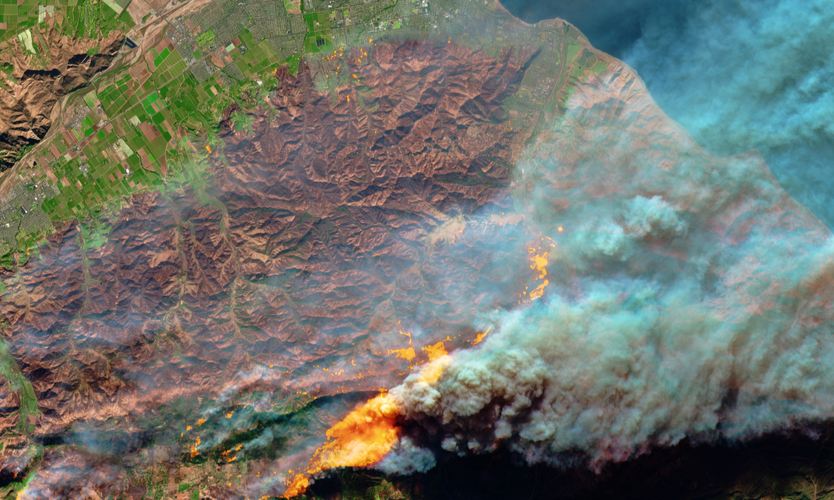
PHOENIX – Climate change has hit states’ workers compensation systems, as more severe weather patterns, wildfires and other incidents have resulted in lost worker hours and had detrimental effects on mental health, among other things, a panel of experts said.

After a disaster, employers must manage recovery efforts that are outside their usual operations, and employees can face more hazardous environments at work and home, they said.

Jeff Rush, workers compensation program manager for the California Joint Powers Insurance Authority California, a La Palma, California-based municipal risk pool that provides insurance services to public agencies, said he previously questioned climate change but had an “epiphany” after attending a conference addressing changes in weather patterns and their effect on the insurance market. 

“Regardless of what I thought, there was an impact out there,” he said Tuesday during a session at the 2023 Workers Compensation Research Institute’s Issues & Research Conference.  “Regardless of how I felt about climate change, our costs are going up. It took me a while to come to that realization.” 

For example, recent wildfires in California that caused extensive property damage, also affected workers caught up in the disasters, Mr. Rush said.

Heat-related illnesses, carbon monoxide poisoning, fatigue, respiratory issues, slip and fall potential, unstable structures and electrical issues can all result from wildfires, he said. 

Workers and employers face difficulties returning to work after climate-related disasters, said Jill Leonard, vice president of claims operations for the Louisiana Workers’ Compensation Corporation, a Baton Rouge, Louisiana-based mutual workers comp insurer.

“How do employers reopen when this occurs?” Ms. Leonard said, highlighting damaging storms like Hurricane Katrina, which devastated New Orleans and other areas of the Gulf Coast in 2005.  

After natural disasters, many workers must deal with issues such as flooding and property damage, loss of modes of transportation and limited access to fuel, while employers are tasked with figuring out how to clean up damaged businesses. 

“It’s a new definition of business as usual for them,” Ms. Leonard said of employers. “You cannot find enough employees post-hurricane to do the work that needs to be done.”

Workers who are solicited to help with cleanup efforts – many of whom are day laborers – may not be accustomed to outdoor work and are suddenly faced with working in extreme heat and humidity, exposure to chemicals and mold, and using heavy equipment, she said.   

In addition, workers who are not helping with cleanup may face their own hardships at home. 

“We’re going to be dealing with injured workers who may have damage to their property,” she said. 

Employers may have injured workers on the payroll who are collecting comp benefits and who are also now trying to deal with damage to their own houses and attempting to figure out how to pay the bills and buy food. 

“It’s important to understand that operations will change after a severe weather event,” Ms. Leonard said. 


Source link

Rulings in Pennsylvania clear red tape for pot reimbursement


Two recent appeals court decisions in Pennsylvania have cleared the way for medical marijuana reimbursements for injured workers who qualify for its use, and insurance and legal experts are mixed on whether the move is a good one.

Proponents say the rulings provide workers access to a legitimate therapeutic drug, while others say the ruling could create other liabilities for employers.

The Pennsylvania Commonwealth Court in Fegley v. Firestone Tire & Rubber ruled that the state’s Workers’ Compensation Appeal Board erred when it upheld a decision by Firestone Tire & Rubber to deny reimbursement for the cost of an injured worker’s medical marijuana. That same court in Appel v. GWC Warranty Corp., also handed down Friday, reversed a WCAB decision denying a reimbursement request for medical cannabis.

“This is a game-changer for those injured workers who have worked hard to get off dangerous and expensive opioids and are forced to pay the cost of medical marijuana treatment out of their fixed incomes,” said Jenifer Kaufman, the Abington, Pennsylvania-based attorney who represented the worker in Fegley.

Paul Armentano, Washington-based deputy director of the marijuana advocacy group National Organization for the Reform of Marijuana Laws, known as NORML, said such rulings are in line with where states are going with the issue of medical marijuana reimbursement, despite some setbacks for those seeking reimbursement.

Five states — Connecticut, New Hampshire, New Jersey, New Mexico, and New York – explicitly allow for employees to have their medical cannabis expenses reimbursed. By contrast, seven states expressly prohibit workers compensation insurance from reimbursing medical marijuana-related costs — Maine, Massachusetts, Minnesota, Florida, North Dakota, Ohio, and Washington, according to NORML.

Meanwhile, court rulings in several states, including New Jersey, Maine and New Mexico, have prompted insurers to pay for medical marijuana.

“For millions of patients, cannabis is a legitimate therapeutic option,” Mr. Armentano wrote in an email. “More and more, state laws and regulations — as well as the courts — are recognizing this fact and evolving their policies accordingly.”

Both rulings in Pennsylvania were split, with dissenters arguing that insurers should not pay for controlled substances, in line with federal law that holds marijuana is illegal.

Employers are still struggling with the issue.

The employer in the Fegley case argued it would violate federal law if it were forced to reimburse for medical marijuana; the court, however, ruled reimbursement is not a federal crime because insurers are not prescribing the drug.

In the Appel ruling, the majority wrote that while the state’s Medical Marijuana Act “does not require an insurer to provide coverage, it does not prohibit an insurer from covering it either.”

Bradley Andreen, Pittsburgh-based senior counsel for Rulis & Bochicchio LLC and editor of the Pennsylvania Bar Association Workers’ Compensation Law Section Newsletter, said rulings compelling insurers to cover unstudied medical marijuana raise more questions and issues regarding dosing and side effects — issues that put insurers on the hook if adverse events occur.

There’s no indication of levels of THC, for example, he said. THC is the hallucinogenic element in marijuana that causes impairment.

“If the claimant is getting treatment for the work injury and is involved in a car accident, driving to and from the treatment, that could potentially still be found to be in the course of employment,” Mr. Andreen said.

“What happens if a person says that they were in an accident because of drowsiness from being on medical marijuana, and we’ve had to reimburse the medical marijuana? Is that opening up the door now to liability for subsequent injuries?”

Christy Thiems, assistant vice president, workers compensation, for the American Property Casualty Insurance Association, wrote in an email that the organization is “more in agreement with the dissenting opinions which found that reimbursement of medical marijuana treatment does constitute dispensing a controlled substance and therefore should not be permitted under Pennsylvania law.”

William McDevitt, Philadelphia-based partner at Wilson Elser LLP, wrote in an email that insurer liability on providing access to the federally illegal drug is likely not an issue, based on the Fegley ruling.

“It can be assumed that workers comp carriers would like to avoid potential liability that could arise from prescribing or delivering medical treatments, be it from medical marijuana or opioids,” he wrote. “This ruling clarifies that under Pennsylvania’s (Medical Marijuana Act) the act of reimbursement is a distinct and, arguably, distant function from the direct provision of medical care.”

Source link

Alaska hospital system vacated of COVID mask-related violation


Ruling the Department of Labor failed to cite the correct standard and failed to prove a hospital system did not provide correct masks for its staff during the COVID-19 pandemic, the Occupational Safety and Health Review Commission on Friday vacated a $13,653 fine. 

The Occupational Safety and Health Administration on Nov. 20, 2020, opened an investigation into the Alaska Native Tribal Health Consortium Inc., a nonprofit that provides care for Native Americans in Anchorage, Alaska, following the COVID-19 hospitalization of one of its workers. Court records in Secretary of Labor v. Alaska Native Tribal Health Consortium cite conflicting guidance by OSHA and the U.S. Centers for Disease Control and Prevention six months into the pandemic over which masks employers were required to provide to employees.

OSHA, in its citation, wrote that the hospital system “did not provide NIOSH-certified respirators to employees who were required to care for suspected and confirmed positive Covid-19 patients. The employer provided and required employees to wear respirators labeled surgical masks. However, the surgical masks did not contain certification markings indicating they were certified under an equivalent international standard.”

In vacating, the commission wrote that the DOL “has failed to meet its burden of proof that Respondent’s selection of respirators were not NIOSH-certified respirators or that the use was not in compliance with the certification conditions.” 


Source link

Exit mobile version