
High court upholds denial of benefits to poultry worker with Covid


The Delaware Supreme Court Monday upheld a denial of benefits to a poultry plant worker for his occupational disease claim based on a COVID-19 infection.

Carl Fowler was working the night shift at Perdue Inc. in March 2020 when a coworker was sent home exhibiting COVID-19 symptoms, according to Fowler v. Perdue Inc.

Mr. Fowler later went to the emergency room, tested positive for COVID-19 and spent more than a month in the hospital.

His doctor testified in November 2020 that Mr. Fowler was substantially debilitated and unable to return to work. He further said it was likely Mr. Fowler contracted COVID-19 at work.

Another doctor examined Mr. Fowler on behalf of Perdue and said he could not function in a work environment. The doctor also concluded that Mr. Fowler acquired COVID-19 at work, most likely in a group environment such as the cafeteria.

The Delaware Industrial Accident Board denied his workers compensation claim, finding that he had not met his burden of showing he contracted COVID-19 at work.

A superior court judge reversed and remanded the case, finding that the IAB’s decision was not based on substantial evidence in the record.

The board held another hearing and took additional testimony. It then found that Mr. Fowler met his burden of proving it was likely he contracted COVID-19 in the cafeteria at Perdue, but he did not prove that it was a compensable occupational disease. A superior court judge affirmed that decision.

The Delaware Supreme Court said its precedent required Mr. Fowler to “establish by substantial competent evidence” that his COVID-19 infection “resulted from the peculiar nature of” his employment to establish a compensable occupational disease.

Mr. Purdue’s doctor testified that contracting COVID-19 in the lunchroom of Perdue was no different than contracting it at a nonwork environment such as a wedding, funeral, college cafeteria, restaurant or bar, the court said.

“A claimant cannot succeed merely by establishing that he contracted COVID-19 at his employment,” the court said. “Being an essential worker in Perdue’s plant (including its crowded cafeteria) during the pandemic is not enough to establish this link.”

WorkCompCentral is a sister publication of Business Insurance. More stories here.



Source link

Another workplace violence lawsuit escapes exclusive remedy


An Oklahoma Supreme Court ruling permitting civil litigation in the case of a financial adviser’s shooting of a coworker is helping to set a precedent on violence in the workplace, experts say.

In another example of an injured worker overcoming workers compensation exclusivity in a case of workplace violence —echoing similar lower court rulings in Virginia — Oklahoma’s highest court determined the shooter’s estate wasn’t shielded from legal liability. The defense had argued the matter should remain in workers comp because the victim received comp benefits, according to the ruling in Oklahoma Supreme Court Case No. 121897.

The case involves a financial adviser who was shot by a 90-year-old coworker suffering from psychological issues. The shooting  took place in June 2022 at a Morgan Stanley office in Oklahoma City. The victim sued the shooter’s estate for assault, battery and emotional distress and also sued the shooter’s wife for negligence.

The trial judge had granted summary judgment to the estate, but the state high court overturned that decision.

“The Oklahoma Supreme Court made the correct decision by holding that a co-employee must have been acting within the course and scope of their employment for workers compensation exclusivity to apply when they injured another employee,” said Clayton Hasbrook, a plaintiffs personal injury attorney with Hasbrook & Hasbrook PLLC in Oklahoma City.

The trial court had ruled the case was workers comp exclusive, holding that only an injured employee, not a perpetrator, must be acting within the course and scope of employment for the matter to remain in workers comp.

But the Oklahoma Supreme Court disagreed, saying the shooter would also have to have been acting within the course and scope of employment if seeking civil tort immunity, which wasn’t the case here.

Mr. Hasbrook said the lower court’s determination was an “overly broad reading that would extend workers comp protections to co-employees 24/7, regardless of the circumstances.”

“That appears to go beyond the intent and purpose of the exclusive remedy provision,” he said.

Other attorneys agreed.

“Having one employee pull a gun and shoot another employee is going to be an intentional wrong such that the employee who shot the other would most likely be able to be sued civilly,” said Brad Andreen, a workers comp defense attorney with Pittsburgh-based Rulis & Bochicchio LLC.

Mr. Andreen said that in Pennsylvania, where he practices, the only way to escape workers comp exclusivity is when a perpetrator commits an intentional act. In such a case, the worker who committed the violence could likely be sued but the employer would probably still be protected by civil immunity.

In the Oklahoma case, the fact that the shooter wasn’t working on the day of the incident “further strengthens the argument that he should have been able to be sued via a civil action,” Mr. Andreen said.

In California, which on July 1 will begin enforcing a new law requiring employers to have in place anti-violence plans to keep employees safer in the workplace, attorneys say similar cases to the Oklahoma shooting would likely escape workers comp exclusive remedy — but not always.

“One argument for exclusive jurisdiction is that whatever happens at the workplace is still the workplace,” said Alan Gurvey, a claimants attorney with Sherman Oaks, California-based Rowen, Gurvey & Win.

But Mr. Gurvey said all cases are unique and fact-specific, so it’s possible to escape workers comp exclusivity if an incident is egregious enough.  


Source link

Court overturns jury’s $10 million verdict in asbestos case


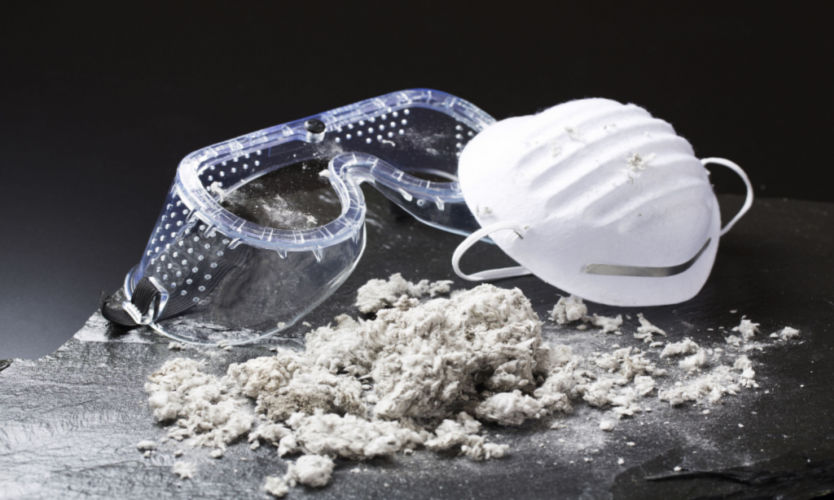
The Oregon Court of Appeals on Thursday overturned a jury’s $10 million verdict in favor of a worker’s widow for his asbestos exposures, ruling that the case lacked proof regarding the company’s workers compensation insurance coverage at the time.

Reberiano Gonzalez Ibarra fell ill due to his exposure to asbestos on the job in the 1970s and sued his former employer, C.H. Murphy/Clark-Ullman Inc., with his wife filing a claim for loss of consortium. Mr. Ibarra died while the case was pending and his widow took over his claims as the representative of his estate, according to Ibarra v. C.H. Murphy/Clark-Ullman Inc.

The employer raised the exclusive remedy provision of the California Labor Code as a defense, yet the widow argued that the employer failed to secure coverage because it had not complied with certain statutory requirements for self-insurance — specifically, the filing of annual reports and the maintenance of a security deposit for accrued liabilities — and that the employer had the burden of establishing the applicability of the exclusive remedy rule, which provides an affirmative defense.

A trial judge agreed with the widow and rejected the employer’s exclusivity defense. The case went to trial, and a jury awarded the widow $10 million in damages.

The Oregon Court of Appeal reversed and remanding the case, saying the widow had the burden of establishing that the exclusive remedy rule did not apply. Though a defendant generally has to plead and prove affirmative defenses, the court said there is an exception to this general rule in the situation where the complaint affirmatively alleges facts indicating coverage by the workers compensation system.

The court also said the evidence did not establish that the defendant failed to secure coverage for Mr. Ibarra, and that the absence of evidence regarding the employer’s conduct after it stopped being self-insured did not carry the widow’s burden of proof given that the employer alleged that it had been meeting its statutory obligations at the time of Mr. Ibarra’s injury, even if there was no direct evidence of this.

WorkCompCentral is a sister publication of Business Insurance. More stories here.


Source link

California one step closer to indoor heat rules for workers


California’s Occupational Safety and Health Standards Board approved an indoor heat standard to protect indoor workers from heat illness, the Department of Industrial Relations said Friday.

The new regulation, which requires approval by The Office of Administrative Law within 30 days, will require indoor workplaces to be cooled below 87 degrees F “if feasible when employees are present” and below 82 degrees F “if feasible in places where workers wear protective clothing that restricts heat removal or work in high radiant heat areas,” Cal/OSHA said.

The regulation applies to most indoor workplaces, such as restaurants, warehouses, and manufacturing facilities. Some of the requirements include providing water, rest, cool-down areas, methods for cooling down the work areas under certain conditions, and training.  

Local and state correctional facilities and emergency operations directly involved in the protection of life or property are exempted from the proposed regulation for indoor heat, according to a statement.

Cal/OSHA said it is now developing an industry-specific regulation for local and state correctional facilities to protect their workers from indoor heat hazards. “In the interim, for these exempted employers, Cal/OSHA will continue investigating potential indoor heat violations under existing regulations such as the Injury and Illness Prevention Program and Water Supply,” the agency said.


Source link

Calif. comp independent medical reviews up in 2023: Report


The California workers compensation system saw a 2.45% increase in independent medical reviews in 2023 from the prior year, and regulators overturned 8.2% more utilization review decisions last year than in 2022, the California Department of Industrial Relations said in a Thursday report.

The independent medical review program is the state’s process for resolving disputes over injured worker medical treatment. 

The report shows that pharmaceutical requests made up 31% of all treatment requests, which constitutes a higher proportion of total service requests than in previous years. Opioid prescriptions comprised a majority of those requests, at 26%, according to the report.

The slight increase in drug requests contrasts with prior years, which had seen a decreasing pharmaceutical trend.

Treatment request denials most often overturned related to services for mental and behavioral health, evaluation and management, the report states.


Source link

Liability rate hikes accelerate in May


Rates increases for a range of liability and small-business insurance coverages gathered speed in May, while property rate hikes remained stable, according to a report Friday from Ivans Insurance Services, a unit of Applied Systems Inc.

Business owners policy renewal rates rose the most in May, climbing 12.1%, compared with 7.9% in April.

In other lines, umbrella liability rose 11.1%, compared with 9.5%; commercial auto rates rose 10%, compared with 8.2%; general liability rates increased 5.8%, up from 4.8%; and property rate hikes edged down to 9.9% from 10%, according to Ivans.

Workers compensation rates continued to decline but at a slower pace, declining 0.2% in May, compared with a 2.2% fall in April.


Source link

First-responder PTSD comp bills take effect in Arizona, Rhode Island


Arizona Gov. Katie Hobbs this week signed into law legislation that would enable certain first responders diagnosed with job-related post-traumatic stress disorder to receive alternative treatments. 

The governor on Tuesday signed Senate Bill 1677, which would require employers to provide workers compensation coverage to firefighters and peace officers who have PTSD, with the mandated coverage including methylenedioxymethamphetamine, or MDMA-assisted, therapy.

The law would entitle the injured workers to one course of MDMA treatment protocol.

MDMA treatment would have to be approved by the U.S. Food and Drug Administration before it could be used in conjunction with Arizona’s workers compensation system, the bill states.

Meanwhile, a similar Rhode Island bill that creates a line-of-duty presumption of compensability for police officers and firefighters who seek supplemental benefits after being diagnosed with work-related PTSD went into effect Thursday without the governor’s signature.

The new law says the presumption would not apply if PTSD arises out of any work-related disciplinary actions or evaluations, job transfers, layoffs, demotion or termination.

The law entitles affected workers to receive accidental disability retirement benefits if they become unable to perform their job duties because of their PTSD.


Source link

Mobile home manufacturer cited over worker’s fatal fall


The U.S. Occupational Safety and Health Administration said Thursday that it cited an Alabama mobile home manufacturer after a worker’s fatal fall.

OSHA cited Boaz-based Kabco Builders Inc. for 10 “serious” violations and proposed $81,463 in penalties.

The employee was loading shingles and was straddling a two-foot-wide space between a platform and the roof of a mobile home under construction at the time of the incident. The worker slipped and fell about 10 feet, OSHA said.

The agency said Kabco Builders failed to provide proper fall protection to employees, failed to provide required training to employees working on roofs and those operating forklifts, and didn’t require workers using adhesives to wear personal protective equipment.

The company has already paid the proposed penalty and has provided abatement, which is when a cited company agrees to take action to comply with a safety standard or regulation.   


Source link

Exit mobile version