Plastics manufacturer cited in worker fatality


The U.S. Occupational Safety and Health Administration said Thursday that it cited a Georgia plastic and resin manufacturer after a worker was fatally crushed inside of a machine.

OSHA cited Woodbury-based Crown USA Inc. for eight “serious” violations and six “other-than-serious” violations and proposed $98,699 in penalties.

The worker who died was servicing an unlocked hooding palletizer. OSHA said the company failed to institute proper machine guarding and didn’t train employees on proper energy control procedures that are designed to prevent machines from starting up during maintenance.

OSHA said Crown USA also exposed workers to serious respiratory hazards, failed to provide personal protective equipment that protects eye and skin irritation, and failed to conduct inspections of energy control procedures.

The company has 15 business days to contest the citation and proposed penalties.  


Source link

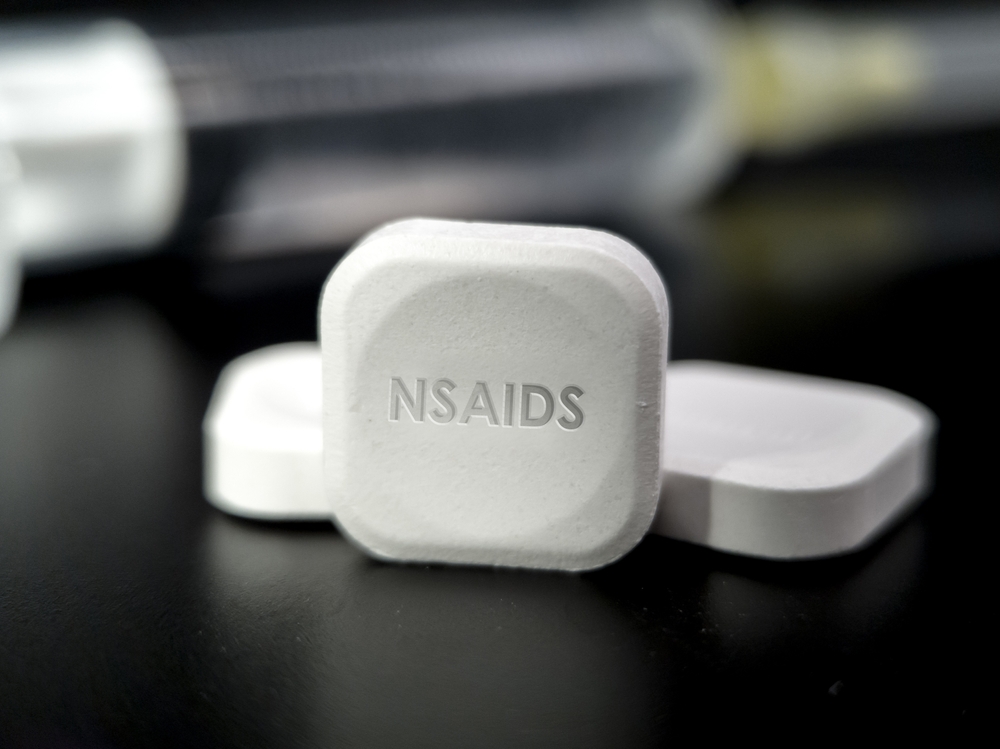
Topical drugs, NSAIDs continue to climb in comp: report


While overall prescription drug costs per claim in workers compensation continued to dip in 2023, topical medications and non-steroidal anti-inflammatory drugs are top cost-drivers, according to a study released Thursday by the Workers Compensation Research Institute.

In examining costs in 28 states, the Cambridge, Massachusetts-based institute found that as opioid alternatives, topical medications costs represented 22% and NSAIDs represented 18% of the drug spend for injured workers in the median states in the first quarter of 2023. The states make up about 75% of the comp drug spend in the country, WCRI has said.

Nearly half of the states studied saw increases in topical medications of 30% or more of the drug spend. Five states — Connecticut, Georgia, Louisiana, Pennsylvania, and Vermont — saw more than 45% of the drug spend allocated to such medications.   

The share of prescription drugs for migraine medications accounted for 7% to 15% of the spend across the 28 states; anticonvulsants and musculoskeletal agents accounted for 9%.

Opioids continued to drop to just under 5%, a downward trend that researchers have said has led to an increase in alternatives for pain management.


Source link

Washington fruit grower cited in trench collapse


The Washington State Department of Labor & Industries on Tuesday announced a citation and fines against a Wenatchee fruit grower over trench safety violations that led to a worker being buried.

The department said it cited Stemilt Ag Services LLC for five “willful serious” violations in connection with a March incident in which a worker became buried after a crew of 10 employees was repairing an irrigation pipe when a portion of the trench caved in.

Co-workers were able to uncover the man’s face after a couple of minutes so he could breathe while they dug for another 10 minutes to release him from the trench, the department said.

The victim was taken to a local hospital where he was treated for multiple crush injuries to his head, face and body.

“Willful serious” are among the most serious violations in Washington state. The department said Stemilt is appealing the citation.

The company was previously cited for confined space violations.

The department said Stemilt was also cited in 2021 for similar trenching hazard violations and fined nearly $17,000.

The company is now considered a “severe violator” and is subject to follow-up inspections, the department said. 


Source link

Pork processor cited after workers sickened by ammonia gas exposure


The U.S. Occupational Safety and Health Administration said Tuesday that it cited an Ohio pork processing company after two workers became sickened during an ammonia gas exposure incident at the facility.

OSHA cited Sandusky-based HK Cooperative Inc., operating as J.H. Routh Packing Co., for 40 “serious” violations, two “other-than-serious” violations and one “repeat” violation and proposed $528,441 in penalties after safety investigators, tipped off by a local government agency, found that workers were exposed to ammonia while servicing a refrigeration system in December 2023 and January of this year.

During the inspections, OSHA discovered other safety concerns, including inadequate permit-required confined space procedures, no hazard communication plans, electrical hazards and lack of personal protective equipment.

HK Cooperative has 15 business days to contest the citation and proposed penalties.

OSHA had cited the company in March for failing to protect employees from bloodborne pathogens. HK Cooperative is currently contesting that citation and a proposed $13,828 penalty. 


Source link

Calif. employers unprepared for workplace violence law face risks


The clock is ticking for employers in California that must have in place a customized and comprehensive anti-violence plan by July 1, and insurance experts say many are behind in their preparations, a shortcoming that could result in fines and lawsuits.

“What we’re seeing from our clients, especially in the run-up to 1st of July, is that the majority of them just aren’t prepared,” said Lucy Straker, Charleston, South Carolina-based focus group leader for political violence and deadly weapons protection at Beazley PLC.

S.B. 553, signed into law in late 2023, requires most employers to “establish, implement, and maintain, at all times in all of the employer’s facilities, a workplace violence prevention plan for purposes of protecting employees and other personnel from aggressive and violent behavior at the workplace.” 

The law defines workplace violence as that which includes, but is not limited to, the “threat or use of physical force against an employee that results in, or has a high likelihood of resulting in, injury, psychological trauma, or stress, regardless of whether the employee sustains an injury.” The law includes requirements on training, record-keeping, escape routes and investigations, and it calls on employers to create plans that are custom to unique risks.

“Employers in California are familiar with these kinds of practices yet (what is) making this one a little bit different is the way the statute talks about tailoring the plan,” said Greg McKenna, Rolling Meadows, Illinois-based national practice leader for the public sector at Gallagher Bassett Services Inc.

The measure calls for employers to work with their employees and other industry experts to gain insight into any risks for violence that are unique to their business and various worksites, which “is going to take time,” Mr. McKenna said. “The question is going to be how much did the employer adhere to the spirit of the law by tailoring the plans or conducting training that’s related to the various exposures that their own employees are supposed to be telling them about,” he said.

Renata Elias, Dallas-based senior vice president with Marsh Advisory, part of Marsh LLC, said a template provided by the California Department of Industrial Relations is just a launching point and that companies must “customize it so that it matches their operations and their processes.” She added that many companies will likely continue working on the plan past the deadline.

Employers that “think that what they might have in place is already robust enough” will likely fall short, Ms. Straker said. “When you speak to established companies that have existing plans in place, when you highlight what California is requiring, it’s almost like they’re shocked because it is so detail-oriented” and “overwhelming,” she said.

Experts say it’s unclear how stringent Cal/OSHA will be on enforcement. Under the law, fines start at $18,000 per violation and can rise to $25,000.

Jeff Adelson, a partner with Irvine, California-based Bober, Peterson & Koby LLP, said employers should look beyond the risk of fines. If an injured worker or surviving family member sues the employer after an incident it’s likely exclusive remedy would be challenged for noncompliant employers, he said.

And under California law an employer that is found to have caused an employee’s injury by its “serious and willful misconduct” must pay a penalty equal to half of all benefits paid under workers comp. An incident that results in multiple casualties at a worksite without an anti-violence plan in place under the new law “can bankrupt an employer,” Mr. Adelson said.

Ms. Straker said noncompliance makes for a “negligent” employer, and she is advising clients that are behind to take steps to prove they are working toward compliance and to keep records of such.

“If something happens you can demonstrate that you have been taking the necessary steps to make yourself compliant,” she said. “You want to be seen as doing the right thing.”



Source link

Amazon faces $5.9M fine for allegedly violating warehouse quotas law


Amazon.com Inc. is facing $5.9 million in fines after allegedly failing to meet parameters set by a two-year-old law that requires warehouses to provide employees notices regarding quotas, which regulators nationwide have linked to the company’s high injury rate.

Warehouses in two counties in California allegedly violated the state’s so-called “Warehouse Quotas law,” which requires warehouse employers to provide employees written notice of any quotas they must follow, including the number of tasks they need to perform per hour and any discipline that could come from not meeting the quota, according to a statement issued Tuesday by the state labor commissioner’s office. The investigation found there were 59,017 violations at two warehouses.

Labor Commissioner Lilia García-Brower said in a statement that “(u)ndisclosed quotas expose workers to increased pressure to work faster and can lead to higher injury rates and other violations by forcing workers to skip breaks.”

An Amazon spokeswoman said in an email the company has appealed the citations.

“The truth is, we don’t have fixed quotas. At Amazon, individual performance is evaluated over a long period of time, in relation to how the entire site’s team is performing. Employees can – and are encouraged to – review their performance whenever they wish. They can always talk to a manager if they’re having trouble finding the information,” she wrote.


Source link

New York roofer sentenced in workplace death cover-up


The owner of a New York roofing company was sentenced Monday to five years’ probation and ordered to pay fines of an undisclosed amount in connection with the coverup of a workplace death.

Jeremiah Wiedemann, owner of Wiedemann Sons Roofing, was sentenced by Fulton County New York Supreme Court Judge Chad W. Brown after he previously pled guilty to tampering with physical evidence, a Class E felony, and a misdemeanor count of failing to secure workers compensation insurance.

Mr. Wiedemann, of Gloversville, also pled guilty to an additional charge of falsely reporting an incident in the third degree, a Class A misdemeanor.

The criminal charges stemmed from a May 2023 incident in which the Northville Police Department received a call from Wiedemann reporting that a person had fallen near the Batchellerville Bridge in Saratoga County. The victim was airlifted to a local hospital and died within days of admission, according to New York State Inspector General Lucy Lang and Northville Police Chief Rick Richardson, who announced the sentencing.

Investigators later determined that the victim was not injured at the bridge location, but rather was injured at a construction site in the town of Northampton, where Wiedemann’s company was doing a roof replacement.

Mr. Wiedemann had moved the victim to a local spillway to conceal the incident, authorities said, and he also instructed employees to clean up the accident scene.  


Source link

Widow’s COVID suit prematurely dismissed: Appeals court


A lawsuit filed by the widow of an employee who died because of workplace COVID-19 exposure was prematurely dismissed, the California Court of Appeal ruled Monday.

Maria Chavez sued Alco Harvesting LLC on behalf of her deceased husband, Leodegario Chavez Alvarado, who tested positive for COVID-19 on July 2, 2020.

Ms. Chavez alleges her husband’s employer knew of a COVID-19 outbreak at a motel where workers were housed but failed to warn the employees of the danger.

Mr. Alvarado, who worked as a foreman and bus driver for Alco, died five days after his diagnosis.

During the litigation, a trial court sustained a defense petition to dismiss the lawsuit and would not allow Ms. Chavez to file an amended complaint.

The company had argued that Ms. Chavez failed to prove it had “actual knowledge” of the COVID-19 hotel outbreak that led to Mr. Alvarado’s death.

The appeals court, in reversing the trial court, said the complaint sufficiently pleaded all elements of the fraudulent concealment exception to the workers compensation exclusivity rule.

“The pleading alleged Alco failed to report the COVID-19 outbreak to the health department, notify its employees, or implement measures to prevent or curb the outbreak,” the court wrote. “The failure to notify decedent of the outbreak, and that his reported symptoms were that of COVID-19, concealed the nature of his illness.”

The appeals court ordered the trial court to vacate its order granting Atco’s dismissal petition.


Source link

Pet products company cited over worker’s severe facial burns


The U.S. Occupational Safety and Health Administration said Monday that it cited a Texas pet products manufacturer after a worker suffered severe facial burns caused by molten plastic.

OSHA cited Arlington-based Doskocil Manufacturing Inc., operating as Petmate, for one “willful” violation and eight “serious” violations over the December 2003 accident and proposed $278,851 in penalties.

The accident occurred as three workers were using a pry bar to break off excess plastic while cleaning a structural foam machine. An injection nozzle dislodged during the process and sprayed molten plastic into the face of one of the workers, causing second- and third-degree burns.

OSHA said the company failed to isolate energy sources to protect workers from serious injuries, failed to develop safety procedures for safe cleaning of machinery, and didn’t provide eye protection for workers using structural foam machines.

Doskocil, which is now owned by global investment firm Platinum Equity, has 15 business days to contest the citation and proposed penalties.


Source link

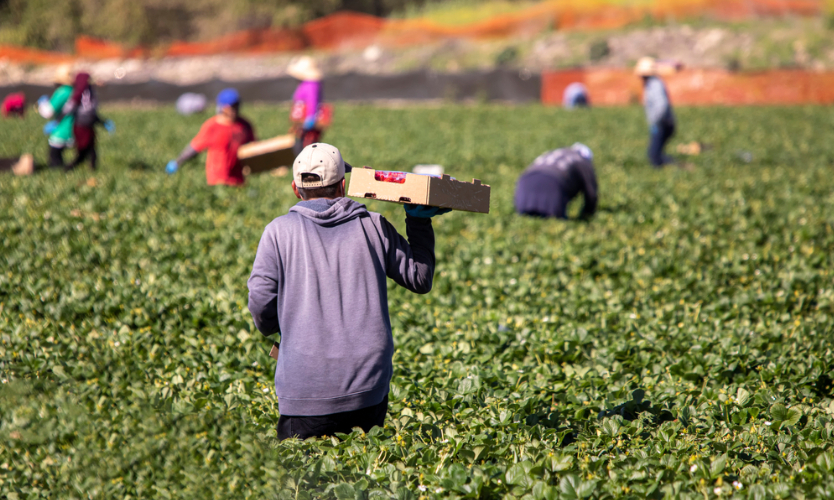
Farmworker heat presumption would cause more harm than good: CWCI


A California bill that would create a presumption of compensability for farmworkers who file heat-related workers compensation claims is unlikely to improve agricultural worker safety and may even create additional challenges for employers, the California Workers’ Compensation Institute said Monday. 

Senate Bill 1299 would likely “create more challenges than it would solve,” and is likely to result in “significant administrative friction costs,” the CWCI said in a news release.

The organization analyzed more than 3.2 million claims filed by California workers between 2019 and 2023 and found that only 659 of the 100,777 claims filed by farmworkers were heat-related.

“The small percentage of claims involving heat illnesses likely reflects the success of Cal/OSHA’s outdoor heat illness prevention standard,” the CWCI wrote.

That standard requires employers to offer workers access to shade and water and monitor employees who are still acclimatizing to heat, among other requirements. It was implemented in 2005.

The CWCI cited a recent UCLA study that found farmworker heat injuries “largely ceased” after Cal/OSHA adopted its heat standard.

Agricultural workers already have a lower workers comp claim denial rate than other outdoor occupations covered by California’s heat standard, the CWCI said.

The organization said the bill would also cause adjudication issues, since it would shift the initial determination of heat-related violations from the Occupational Safety and Health Appeals Board to the Workers’ Compensation Appeals Board, which has a “lack of subject matter expertise” on the issue. 


Source link

Exit mobile version