Best places Pie’s A- rating under review


Rating agency A.M. Best Co. Inc. on Friday said it has placed Pie Insurance Group’s A- financial strength rating “under review with negative implications.” 

Pie’s 2023 results included “material underwriting losses brought on by adverse reserve development in its New York book of business,” Oldwick, New Jersey-based Best said in a statement. Pie, an insurtech company formed in 2017 that mostly provides workers compensation coverage for small businesses, received its A- in February 2023.

“Although reserves have stabilized since third-quarter 2023, the magnitude of the development is concerning and has had an adverse impact on Pie’s risk-adjusted capital position,” Best said.

Pie’s ratings will remain under review until “strategic initiatives” have been executed, Best said.

Officials at Pie could not immediately be reached for comment.


Source link

Truck wash cited after worker dies from hydrogen sulfide exposure


The U.S. Occupational Safety and Health Administration said Thursday that it cited a Kansas truck washing company after a worker died from hydrogen sulfide gas exposure.

OSHA cited Liberal-based Red Barn Truck Wash & Service Center LLC for two willful and 24 serious violations and proposed $171,680 in penalties after one worker suffered fatal injuries and two others were hospitalized during the September 2023 incident.

The workers were cleaning out over-the-road tanker trailers when the fatality occurred.

Red Barn failed to evaluate the tanker trailers for hazardous conditions, including testing the atmosphere, and didn’t properly train workers on potential hazards found within confined spaces, OSHA said.

Hydrogen sulfide can be a natural byproduct existing in areas storing organic matter such as crops and other materials.

OSHA said Red Barn didn’t have proper respiratory and hearing protection programs and exposed workers cleaning trailers to fall hazards.

The company had 15 business days to contest the citation and proposed penalties. 


Source link

West Virginia aims to add cancers to firefighter presumption


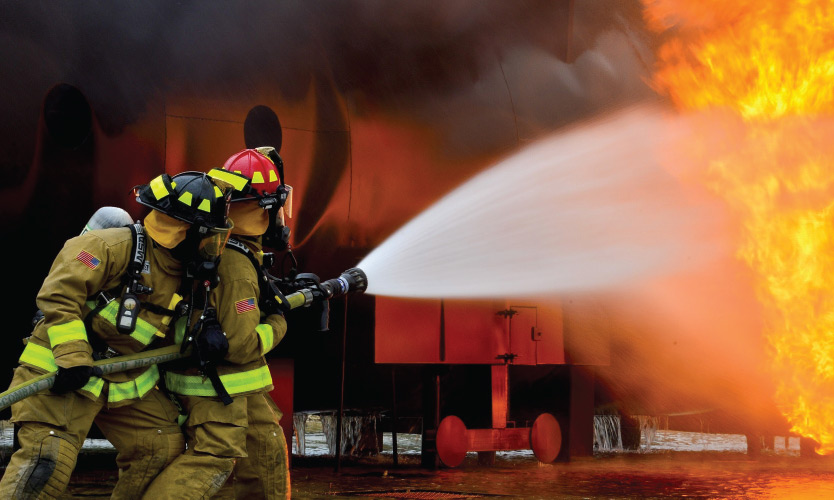
West Virginia lawmakers introduced legislation on Thursday that would add more types of cancers to the list of those accepted as occupational diseases for firefighters in the state.

S.B. 170 would add bladder cancer, mesothelioma and testicular cancer to the list of cancers that would fall under the state’s presumption. The amendments would expire on July 1, 2027, unless extended by the legislature.

Under the bill, qualifying firefighters with such cancers would be required to not have used tobacco products more than six times in a calendar year for at least 10 years. 


Source link

Connecticut lawmakers consider comprehensive warehouse safety bill


Lawmakers in Connecticut introduced a bill Thursday that addresses warehouse worker performance quotas and other issues that worker advocates say have led to a steady increase in repetitive motion injuries.

S.B. 412, which was referred to Joint Committee on Labor and Public Employees, focuses on work within “warehouse distribution centers.”

The bill states that whenever an employer makes a change to a quota that the affected employee must be provided “an updated written description of each quota for which such employee is subject to” within two days of the job description change. Employers that use quotas would also have to keep records regarding them.

Under the proposal, the state Workers, Compensation Commission would monitor the injury rates of employees working in warehouse distribution centers, and if “an employer is found to have an annual injury rate at or over one and one-half time the warehousing industry’s average annual injury rate” the commission must notify the state’s labor commissioner, who will determine whether to investigate potential violations.

The bill presumes a connection between adverse action against a worker who reports a violation, unless proven otherwise, and includes fines for employers of up to $3,000 for violations.


Source link

OSHA, Pennsylvania manufacturer settle safety litigation


The U.S. Occupational Safety and Health Administration said Wednesday that it has reached a settlement with a Pennsylvania manufacturer that resolved litigation over a health and safety citation.

OSHA said the agreement with Donora-based Regal Industrial Corp. affirmed four willful, 11 serious and two other-than-serious violations and $299,000 in penalties that were issued following a complaint-driven investigation in April 2022 at a Millville, New Jersey, work site.

The agency had cited Regal for numerous violations, including failure to train employees on chemical hazards and failure to provide machine guarding and fall protection.

The settlement requires Regal to implement enhanced abatement measures and establish a plan to control identified hazards.


Source link

Frozen food company cited after worker suffers amputation


The U.S. Occupational Safety and Health Administration said Wednesday that it cited a New Jersey frozen food company after a worker suffered an amputation injury in August 2023.

OSHA cited Robbinsville-based CJ TMI Manufacturing America LLC for four willful, one repeat and three serious violations and proposed $551,719 in penalties.

The agency did not disclose details of the amputation.

CJ TMI was inspected six times in the past five years and placed in OSHA’s Severe Violator Enforcement Program in 2021.

OSHA said in the latest citation that the company exposed workers to lockout/tagout hazards related to the inadvertent release of hazardous energy.

CJ TMI has 15 business days to contest the latest citation and proposed penalties.


Source link

Psychosocial factors can impede workers’ lower-back recovery: WCRI


BOSTON – Psychosocial factors can hamper recovery from lower-back pain and be a stronger cost driver than some catastrophic injuries, analysts with the Workers Compensation Research Institute said Tuesday.

These risk factors, which include fear of pain due to activity, negative coping, job dissatisfaction, perceived injustice and stressful work, as well as family and support system issues, can negatively affect recovery time for workers comp claimants dealing with lower back injuries, researchers said during a panel discussion at the 2024 WCRI Issues & Research Conference.

Researchers found a strong association between psychosocial risk factors and a longer duration of functional recovery after physical therapy care.

The findings, from data collected between 2017 and 2022, determined that workers comp patients had a higher prevalence of psychosocial risk factors than other patient populations.

Researchers found that one in three injured workers with low back pain were flagged as high-risk for psychosocial factors, higher than low-back-pain patients using private insurance or Medicare.

The differing functional outcomes depending upon payor type were attributed to factors such as socio-demographics, finances and comorbidities.

Workers comp claimants with elevated psychosocial risk factors had a lower likelihood of meaningful improvements in function, and many had a higher likelihood of “very limited” function at the time of discharge from physical therapy, said Vennela Thumula, a WCRI policy analyst.

Previous studies addressing psychosocial risk factors as they relate to functional recovery in low-back injury cases looked primarily at non-workers comp patient populations, “and the results varied widely,” said Randall Lea, a WCRI senior research fellow.

Unlike prior research, the latest study used a larger sample size, Mr. Lea said.

“We don’t know how often providers are screening for psychosocial factors,” he said.

The panelists said future studies could look at the psychosocial issue as it relates to different provider types and interventions other than physical therapy.

“It would be interesting to see if these trends hold true in other combinations,” Mr. Lea said.



Source link

Workers comp costs up despite general inflation decline


BOSTON – While inflation in the general economy has slowed since 2022, workers compensation payment growth is still at levels higher than in 2020, experts with the Workers Compensation Research Institute said Tuesday.

Changes in medical care utilization and mix of services continue to affect workers comp pricing, and the recent trend of health care labor shortages, especially in nursing, is also contributing to higher costs, panelists said during a session at the 2024 WCRI Issues & Research Conference.

Researchers continue to monitor medical fee schedule changes in states’ workers compensation systems, said Rebecca Yang, a WCRI senior policy analyst. Some states’ fee schedule updates are tied to general inflation while others are not.

Forty-four states and Washington D.C. have workers comp medical fee schedules for professional services, which act as an “effective tool for containing price growth,” Ms. Yang said.  

Twenty-six of those states have annual fee schedule updates, while the remainder update their fee schedules on a less frequent basis, said Olesya Fomenko, a WCRI economist.

Changes in Medicare are also driving workers comp price growth, Ms. Fomenko said.

The workers comp sector saw hospital and facility payment pricing growth last year due to factors such as Medicare fee schedule inflationary adjustments for hospital inpatient, hospital outpatient and ambulatory surgery center services, she said.

Ms. Fomenko said there were “some positive dynamics” with inflation and the general economy starting to slow last year. She noted the workers comp sector tends to lag behind such trends.

In the early part of the pandemic, utilization of medical services in workers comp decreased, but those levels have now bounced back up, another possible factor behind the current increase in comp medical payments, Ms. Fomenko said.


Source link

Insurance rate hikes accelerate in February


Commercial policyholders paid more for most major lines of coverage last month as premium renewal rates accelerated compared with January, according to a report Tuesday from Ivans Insurance Services, a unit of Applied Systems Inc.

Commercial property insurance rates saw the biggest overall increase in February at 10.8%, compared with 10.3% in January; commercial auto rates rose 10.3%, up from 7.4%; business owners policy rates increased 9.7%, up from 9.3%; umbrella rose 7%, up from 6.4%; and general liability climbed 6.2%, up from 5.4%.

Workers compensation rates continued to fall, but the rate of decrease slowed to -0.4% in February from -0.7% in January.


Source link

Exit mobile version