
Tag: Workers Comp

Nondependent daughter cannot sue over father’s workplace death: Court
A Maryland appeals court ruled Thursday that the nondependent daughter of a man killed during a work incident cannot bring a wrongful death claim against the employer because the case is barred by workers compensation exclusivity.
The Appellate Court of Maryland found a trial court didn’t err in dismissing a wrongful death action filed by Summer Ledford against Jenway Contracting Inc. because the matter is workers comp exclusive.
John Ledford fell to his death in February 2021, while on the job, and Ms. Ledford subsequently filed suit against the company claiming that Jenway’s negligence caused the death.
Ms. Ledford argued that because she wasn’t her father’s dependent, she had no right to benefits under the workers comp law, since recovery in comp is limited to covered employees or their dependents. She said a lawsuit was her only remedy.
The trial court ruled the employer was immune from suit because workers comp exclusive remedy applied.
The appeals court said the trial court’s legal rationale was correct, and that the lawsuit was properly dismissed.
The judges said while state courts have never held that workers comp exclusivity applies to nondependents, court precedent has held that except for two specific exceptions, an employer’s liability under the workers comp act is exclusive when a worker is injured or killed on the job.

OSHA proposes $1.8 million in penalties for repeat trenching violations
The U.S. Occupational Safety and Health Administration on Tuesday said it cited a Minnesota contractor and proposed $1.8 million in penalties for endangering employees with trenching hazards, the citation following a 2021 agreement with the federal government over similar failures.
OSHA cited International Falls-based Wagner Construction Inc. for six instance-by-instance repeat violations for exposing workers to cave-in hazards by not providing adequate protective systems.
Five other instance-by-instance repeat violations were identified relating to a failure to provide a safe means for employees to enter and exit trenches, the agency said.
The latest citation stems from a workplace inspection that found workers in June were endangered while working on a residential water main and related tasks in Minot.
The company in April 2021 signed a settlement agreement with OSHA promising to improve safety procedures and training relating to trenching hazards at three North Dakota job sites in 2019 and 2020, OSHA stated.
In the agreement, Wagner Construction pledged to make significant changes, including offering enhanced training on trenching and excavation safety, hiring a full-time compliance manager, and buying new safety equipment to protect workers from cave-in hazards, according to OSHA.

Single-digit rate hikes likely in 2024: Report
Increased claims, inflation and higher reinsurance costs will likely drive further insurance rate increases next year, and most buyers should expect single-digit increases, similar to the rate hikes they saw this year, according to a report from Woodruff Sawyer & Co.
In its annual P&C Looking Ahead Guide released Tuesday, the San Francisco-based brokerage said the hardening market that began in 2018 peaked in 2020, but buyers have continued to see increases in most major lines.
Easing inflation and other factors, though, should eventually lead to more moderation in rates, the report said.
“The combination of decelerating inflation and higher investment portfolio yields will improve insurer results, which should result in more favorable premiums – but that will likely not materialize until later in 2024,” the report said.
The relatively mild 2023 hurricane season should also temper property reinsurance rate increases, so insurers will likely see profits on their books of property business, the report said.
Commercial auto insurers, though, continue to see increased claims because of higher court awards and settlements, and increased repair costs, so auto rates will likely rise 6% to 9% next year, the report stated.
Commercial general liability insurers also remain wary of rising litigation so rates will likely rise 3% to 8% next year, Woodruff Sawyer said.
In excess liability lines, insurers continue to see more losses penetrating umbrella layers, so rates will likely increase between 7% and 15% for large companies and 4% to 10% for small and mid-sized companies. On higher excess layers, more capacity has entered the market so rates will likely rise 4% to 10% for large accounts and 2% to 8% for small and mid-sized accounts.
Workers compensation remains the most consistent source of profit for liability insurers, so rates for that line of coverage will likely be in the range of down 0.5% to up 1%, the report stated.

Average comp Medicare set-aside settlements increase in 2023
The average Medicare set-aside recommended by the Centers for Medicare and Medicaid’s Workers’ Compensation Review Contractor increased nearly 6% in the most recent fiscal year.
The average set-aside recommendation in the fiscal year that ended in June was $86,452.67, up 5.98% compared with the $81,571.75 average set-aside in the 2022 fiscal year.
The set-aside recommendations included an average $66,527.86 for medical treatment, up from $60,795.30, and an average $19,924.81 for prescription drugs, down from $20,776.46.
The average set-aside recommendation for the 15,743 claims reviewed in fiscal year 2023 was 21.95% higher than the average proposed set-aside of $70,887.33.
WorkCompCentral is a sister publication of Business Insurance. More stories here.

Rate increases accelerate in several insurance lines
Insurance premium renewal rates accelerated in several major lines of commercial insurance coverage in November, but the pace of increases eased in property, according to Ivans Insurance Services, a unit of Applied Systems Inc.
In its monthly index released Tuesday, the Tampa, Florida-based insurance exchange said commercial auto renewal rates increased 9.2% in November, compared with 8.5% in October; business owners policy premiums rose 8.9%, compared with 8.8%; umbrella liability was up 6.3%, compared with 6.2%; and workers compensation rates increased 0.2%, compared with a 1.3% decrease.
Commercial property rates increased 9.9%, down from the 10.4% increase in October; and general liability rates rose 5.7%, matching the prior month’s increase.

Texas comp health care costs, claims drop sharply
Health care costs in the workers compensation system in Texas decreased 30% from 2012 to 2022, with the largest drop in pharmacy benefits at 71%, according to a report released Tuesday by the Texas Workers’ Compensation Research and Evaluation Group.
The state also saw the number of claims decrease 20% and the average cost per claim drop 12% over those 10 years, according to the report.
Accounting for the largest decrease, the total cost of pharmacy services decreased from $136 million in 2012 to $39 million in 2022. The number of claims receiving pharmacy services dropped 54% and the average cost of pharmacy services fell 38%.
Other reductions were seen across the board, with the total cost of professional and hospital/institutional services in 2022 24% lower than in 2012, using current prices, and 41% lower if adjusted for inflation. Total professional costs decreased 26%, and the number of claims receiving professional services decreased 19%.
Analysts concluded that the trends “are most likely a result of a decrease in the total number of claims, as well as the implementation of evidence-based treatment guidelines, the pharmacy formulary, and the increased usage of certified health care networks.”
Concerns over pain-management alternatives prompt state audit
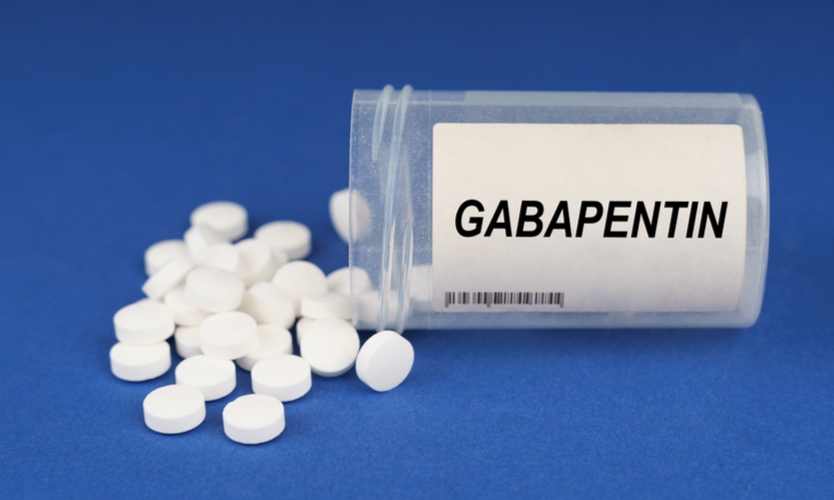
The workers compensation industry is raising concerns over gabapentinoids, a drug class that has risen in popularity as a pain-relieving alternative to opioids.
Experts worry that such drugs, increasingly being used off-label for pain management, are being prescribed in combination with opioids, which could increase the potential for a deadly overdose.
Gabapentin is an anti-seizure neuropathic drug that is considered a depressant that can slow breathing — increasingly so when combined with opioids. Pregabalin, known by the brand name Lyrica, is another generic neuropathic drug that experts say raises the same concerns. Together the drugs fall under the class known as gabapentinoids.
The Texas Division of Workers’ Compensation announced Nov. 15 that it will audit providers to ensure compliance with the state’s formulary that recommends against combining gabapentinoids with opioids. That audit will examine co-prescribing patterns from June 1, 2022, through May 31, 2023.
Workers compensation experts say the Texas audit will help draw attention to what many have flagged as a growing concern for injured workers.
“There has been well-documented literature for over a decade that talks about the abuse potential for gabapentin and the risk of respiratory depression,” said Reema Hammoud, Southfield, Michigan-based assistant vice president of clinical pharmacy for Sedgwick Claims Management Services Inc.
The frequency with which the drugs are prescribed in Texas is “not necessarily the concern,” a spokeswoman with the Texas Department of Insurance wrote in an email, adding that the focus is on “whether it is medically necessary or appropriate to combine the drugs with opioids.”
“Evidence-based medicine used in the Texas workers compensation system indicates that combining gabapentin or pregabalin and opioids is not recommended and may have dangerous side effects,” the spokeswoman wrote.
Gabapentin, approved by the U.S. Food and Drug Administration in 1993, remains unscheduled by the federal government, meaning it is less scrutinized. However, seven states have so far scheduled it as a controlled substance, and 12 states have added it to prescription drug monitoring programs — all over concerns it has a similar profile to addictive drugs that have severe side effects.
The newer pregabalin, first approved in 2004, is scheduled as a controlled substance by the federal government — a differentiation that has some experts baffled, as the drugs have similar profiles for addiction and side effects.
Federal regulators and advocates have called on the FDA to reschedule gabapentin as a controlled substance — a recommendation that hasn’t gained traction. The FDA in 2019 put a black box label — considered the most stringent for drugs — on gabapentin and pregabalin, warning of “serious breathing problems” for certain patient populations already taking central nervous system depressants – such as opioids — or those with lung problems.
For the workers compensation industry, which is typically liable for side effects, including death, for injured workers who are harmed by treatment, the drugs have gained additional scrutiny regardless of whether the federal government catches up.
“We’ve watched (the drugs) for a while because it’s long been reported that they are highly pursued by the communities that are abusing drugs, like opioids,” Nikki Wilson, Omaha, Nebraska-based senior director of clinical pharmacy services at Enlyte LLC, which provides benefits management services for injured workers. In Enlyte’s latest drug report for 2022, gabapentin and pregabalin were listed as the fastest-growing class of drugs prescribed to injured workers.
“Respiratory depression, of course, is how we get to overdose with opioids,” she said.
Combining gabapentin with opioids was associated with a nearly 60% increase in the odds of opioid-related death, according to data published by the medical journal PLOS Medicine in 2017.
The issue is problematic for those who take the nerve drugs prescribed to them by a doctor treating a work injury and who take opioids obtained illegally or outside of the workers comp network — which the industry is not always able to track, experts say.
To help manage the concern, many benefit managers are providing letters to physicians who prescribe gabapentin or pregabalin to injured workers, and many are focusing on patient education about the dangers.
“This co-prescribing is still a pattern,” said Johnny Taylor, Tampa, Florida-based assistant vice president, ancillary networks, pharmacy, at GBCare, part of Gallagher Bassett Services Inc.
“Because of this, we’ve developed a program where we use gabapentin, opioids in combination as part of our risk scoring for interventions. And those types of interventions could be in the form of a drug review, like a drug utilization assessment, or perhaps a peer-to-peer discussion with the prescriber.”

PetSmart ordered to authorize injured worker’s neck surgery: Court
The Tennessee Court of Workers’ Compensation Claims on Monday ordered PetSmart Inc. and its insurer to authorize neck surgery for a worker who says she herniated a cervical disc in June 2022.
Destiny Dyer sought surgery for her injury, which she said took place when a large dog whose nails she was trimming as part of her job as a groomer jerked its paw and caused her to lose her balance and become injured.
Ms. Dyer initially declined medical attention but later requested to see a doctor for shoulder and arm pain. PetSmart accepted the shoulder and arm injury as compensable, but an MRI scan later showed a herniated neck disc.
PetSmart denied the neck surgery because of questions over causation and because Ms. Dyer didn’t reveal the neck injury earlier.
In ordering the company to authorize surgery, the court found Ms. Dyer is likely to prevail at trial showing she gave timely notice of her accident and that the disc herniation arose out of her employment.

New Jersey bill would expand heart-attack benefits for first responders
A labor committee with the New Jersey Assembly on Thursday revived 2022 legislation that would include emergency dispatchers, emergency medical technicians, and volunteer emergency response workers to the list of first responders who qualify for benefits for cardiac events on presumption that their work caused their condition.
A.B. 161, now sent to the Assembly Appropriations Committee for further consideration, would also expand parameters for rebutting the presumption to include “use of casual factors such as horseplay, skylarking, self-infliction, voluntary intoxication, and illicit drug use.
“Rebuttal of the presumption based upon medical causation shall require clear and convincing medical evidence that the work experience was not a substantial cause of the cardiovascular or cerebrovascular injury,” the bill states.